Kenny Jacobs to voluntarily step down as chief executive of DAA after settling High Court action
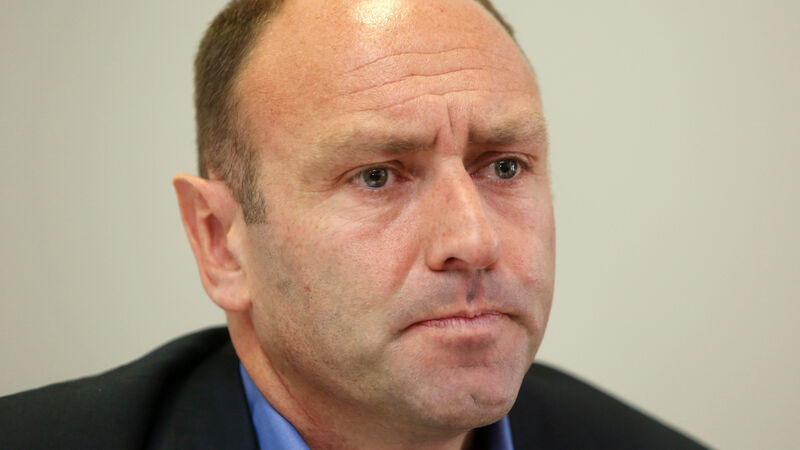
Kenny Jacobs initiated the action against Daa after he was suspended by the company in December, pending a new investigation into allegations made against him.
The Minister for Transport said DAA has settled its case with its outgoing Chief Executive, Kenny Jacobs, for "considerably less" than the €1m exit package previously reported.
Mr Jacobs will “voluntarily step down” as chief executive of DAA after he settled a lawsuit brought against the State airport operator, the High Court heard yesterday.
Lawyers for Jacobs told Judge Marguerite Bolger on Thursday the parties had resolved their dispute on mutually agreeable terms, under which Jacobs will step down from his position at DAA, operator of Dublin and Cork airports.
Jacobs initiated the action against DAA after he was suspended by the company in December, pending an investigation into allegations made against him.
In the action, Mr Jacobs had sought his return to work and declarations the DAA board had prejudged his removal from office.
On Thursday, Mairéad McKenna, counsel for DAA, said the case had settled on mutually agreeable terms and could be struck out.
Minister for Transport Darragh O'Brien previously refused to sign off on an almost €1m exit package and urged the board and Mr Jacobs to work through their disagreements. In a statement after the settlement, he said: "While as a shareholder I was not, in the legal circumstances, required to approve the settlement, the Board did keep my officials apprised of developments. The Board was aware of my dissatisfaction with the conciliated quantum, and I understand today’s settlement quantum is considerably less."
"It is important now that the DAA continues to focus its full attention on its core responsibilities, in particular the effective operation, management and future development of our airports, which are critical national infrastructure and central to economic connectivity and growth."
Under the agreement, Ms McKenna said Mr Jacobs would “voluntarily step down” from his role as chief executive of DAA. She said an order could be made for Jacobs’ legal costs.
Ms McKenna said both parties acknowledged the contribution made by DAA’s management team and staff to the operation and commercial success of the company, and the positive impact DAA has on the Irish economy.
Ms Justice Bolger made the order as sought, and congratulated the parties on reaching a settlement.
In a press statement, Mr Jacobs said he was “pleased” the dispute had been resolved.
“I am immensely proud of the outstanding performance DAA achieved in my time as CEO, with record operational, commercial and financial results.
“I am delighted with the very many improvements made for passengers at Dublin and Cork airports and the infrastructure expansion that supports aviation capacity growth and sustainability change, which are both vital to the Irish economy.
“Most of all, I want to sincerely thank the exceptional teams at Cork Airport, Dublin Airport, ARI and DAA International and wish them the very best in the future,” he said.
A spokeswoman for DAA said the airport operator would not be commenting beyond what was said in court.
The hearing of Mr Jacobs’ bid for an interlocutory injunction was due to begin on Thursday, running into Friday.
Following Mr Jacobs’ initiation of legal proceedings in early January, DAA gave a court undertaking to pause its investigation into the complaints against him, pending the outcome of the lawsuit. Lawyers for DAA said at the time the airport operator was “absolutely opposed” to Mr Jacobs’s case.
In a sworn statement to the court, Mr Jacobs had claimed the board’s decision to investigate about 20 alleged issues was “tainted by reasonable objective bias” and the outcome had been “predetermined”.
A previous, separate investigation conducted by barrister Mark Connaughton did not uphold two formal complaints made against MrJacobs early last year.
Mr Jacobs said in his written evidence Mr Connaughton rejected allegations the chief executive engaged in “sexist, misogynistic, racist, homophobic and ageist behaviours” in comments to or about employees.
When new allegations emerged, DAA initiated a fresh investigation against Mr Jacobs, and in December suspended him from his role with full pay. Barrister Kelley Smith was tapped to conduct this new investigation.
This followed transport minister Darragh O’Brien’s refusal to sign off on an exit package, known to amount to a figure of close to €1m, for Mr Jacobs that had emerged from mediation between both sides.
CONNECT WITH US TODAY



Be the first to know the latest news and updates