'These are not the grand historical artefacts': Museum's everyday items give true insight
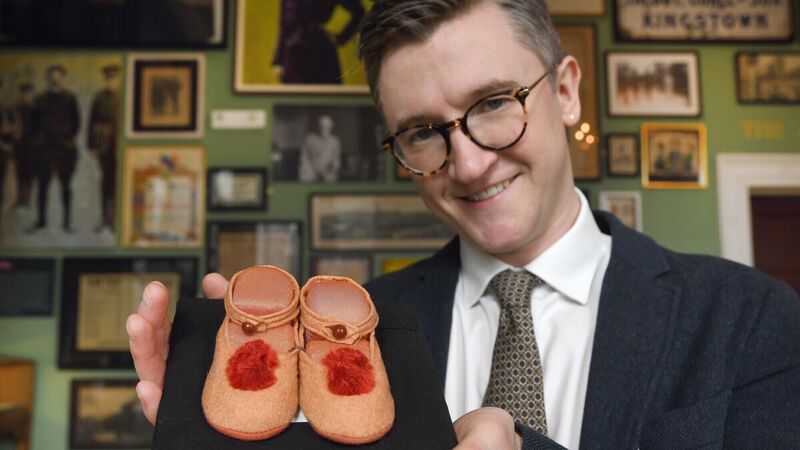
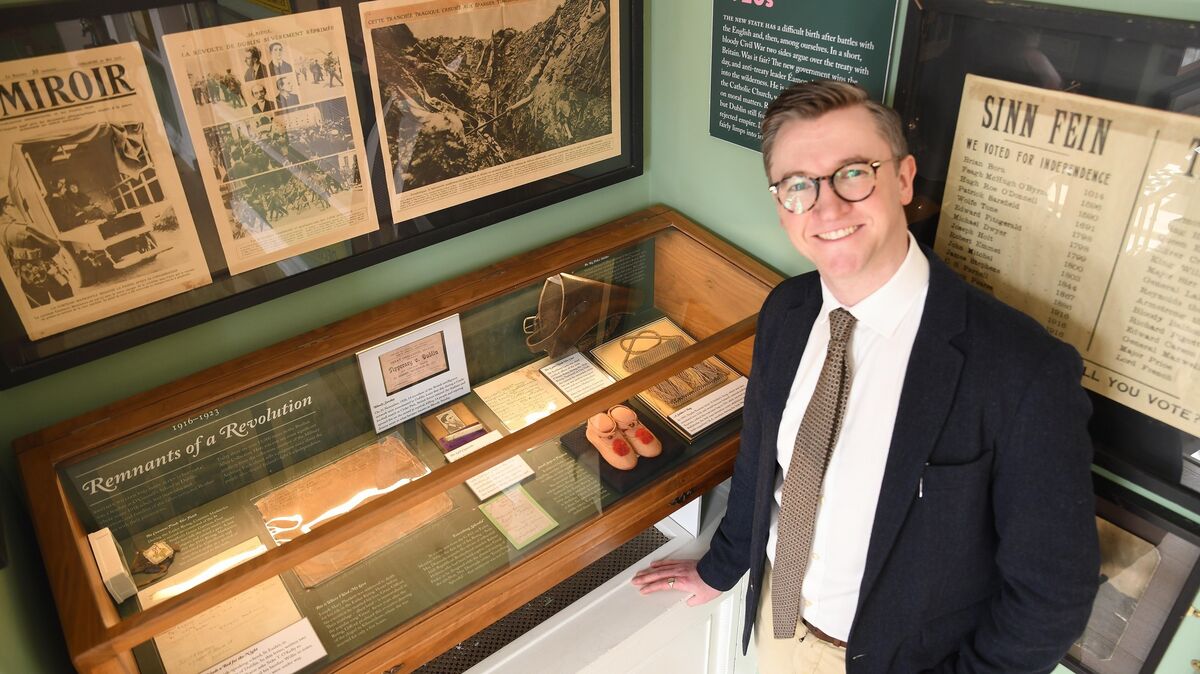
Daryl Hendley Rooney, curator at The Little Museum of Dublin, with a pair of children's shoes crafted by Kathleen Clarke while she was in prison. Picture: Moya Nolan
A cigarette retrieved from the pocket of William Pearse shortly after his execution at Kilmainham Gaol is just one of the items capturing imaginations at a Dublin museum.
The piece forms part of a new collection at the Little Museum of Dublin which was donated to the Edmund Rice Trust and presented to the Military Archives in 2016 to commemorate the centenary of the Easter Rising.
The collection of rarely seen artefacts will now be available to view at the museum over a five-year period.
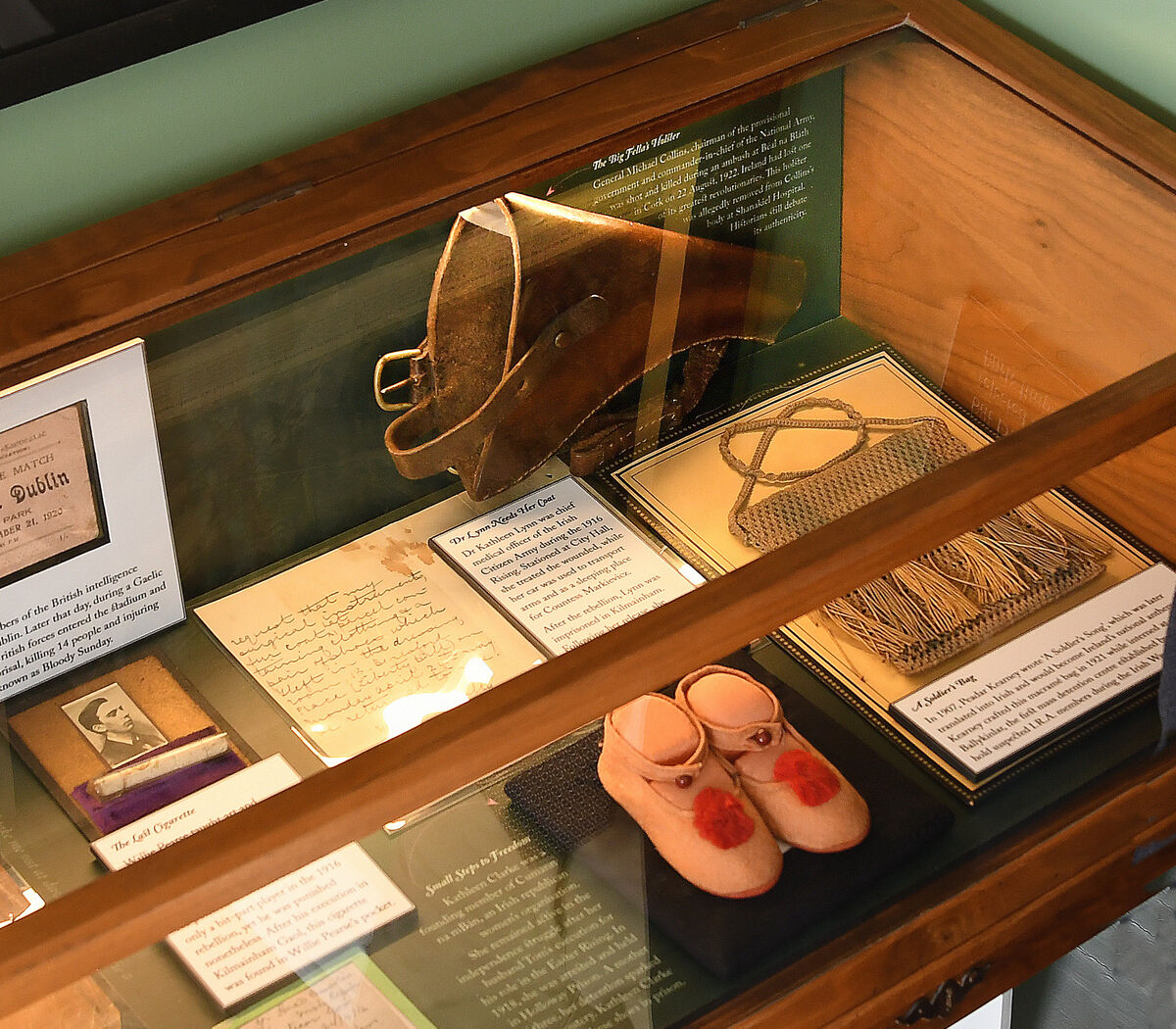
Mostly drawn from the Brother Allen Collection, the artefacts include a Bamba cigarette found in the pocket of William Pearse, brother of revolutionary Patrick Pearse, after his execution on May 4, 1916, in Kilmainham Gaol.
A pair of pink felt children’s shoes crafted by Kathleen Clarke, the widow of proclamation signatory Tom Clarke, while she was imprisoned in Holloway Prison in 1918 also feature.
Other collection pieces include a handwritten letter from Patrick Pearse penned to Seán T Ó Ceallaigh who served two terms as president from 1945 to 1959.
In the letter, which is dated April 22, 1916, Pearse asks Ó Ceallaigh if he can put him and his brother Willie up the night before the Easter rebellion.
A sketch of Kilmainham Prison Chapel by Grace Gifford is also sparking curiosity.
The prominent Irish artist and cartoonist had sketched the artwork to commemorate her marriage to Irish republican Joseph Mary Plunkett there prior to his execution on May 4, 1916.
The collection also includes a silk thread scapular worn by Countess Markievicz while in prison.
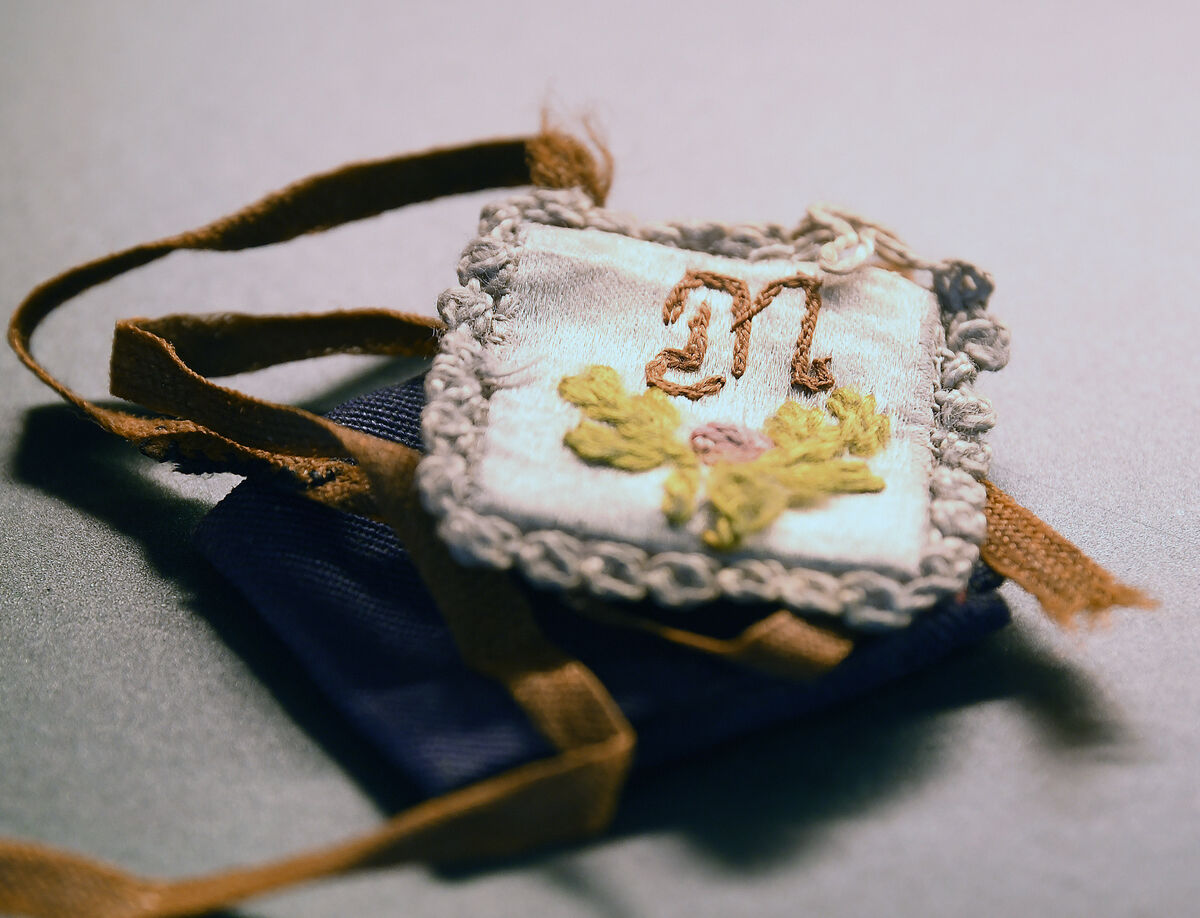
The Irish revolutionary nationalist had been imprisoned multiple times between 1911 and 1923.
A keepsake linked to another pioneering suffragette, Dr Kathleen Lynn, is also prompting curiosity from visitors.
The letter from the doctor and nationalist revolutionary, who served as chief medical officer of the Irish Citizen Army during the 1916 Easter Rising, outlines a request for the return of her belongings from the adjutant general’s office in Parkgate.
They included some medical equipment and a fur coat.
The letter was penned in Mountjoy Prison.
Lynn was imprisoned for a week in the Ship Street Barracks before being transferred to Richmond Barracks and later Kilmainham Gaol.
She served her custodial sentence alongside comrades Markievicz, Molony, and Madeleine ffrench-Mullen.
Daryl Hendley Rooney, curator of The Little Museum of Dublin, described what makes the collection so special.
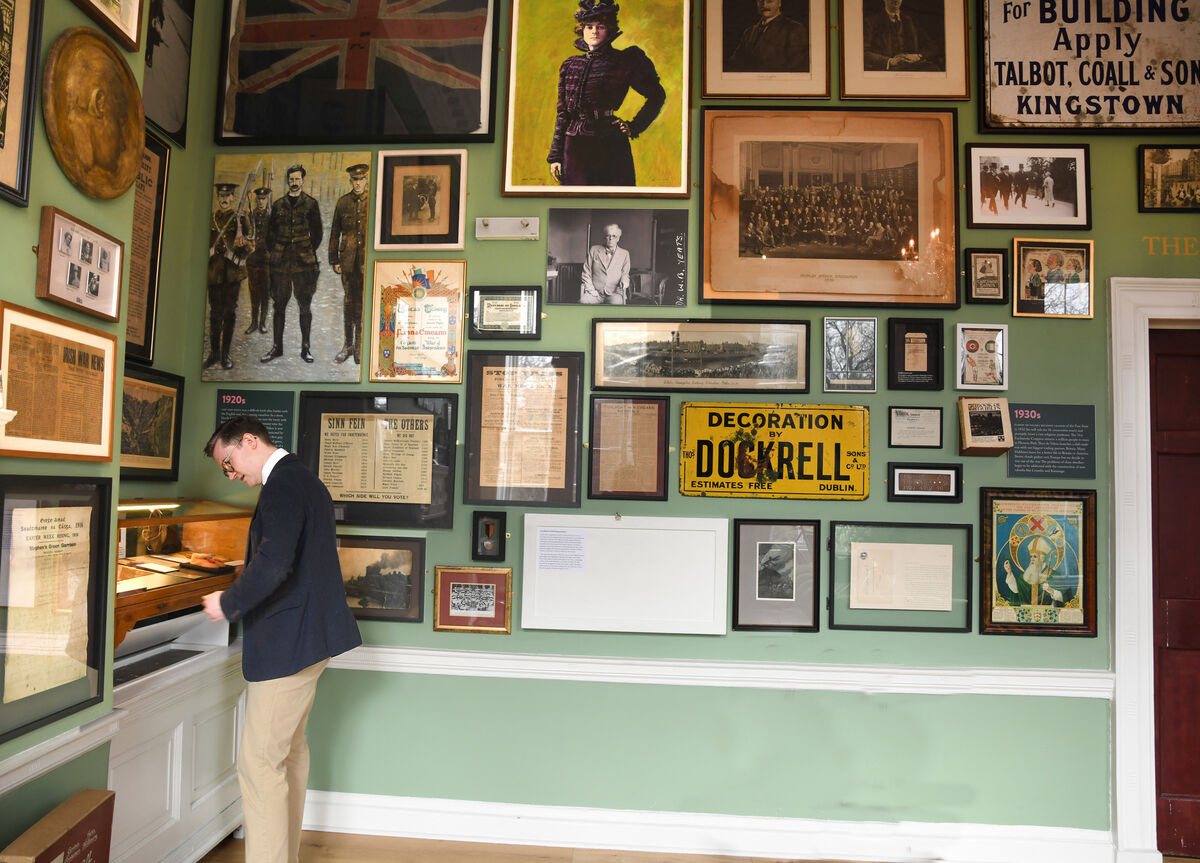
“Brother Allen was a teacher at the O’Connell School on North Richmond St," said Daryl.
"A lot of the rebels involved in the 1916 rising were alumni and some were students during the 1916 rising.
"Brother Allen had a very close relationship with a lot of them in the school.
"The survivors of the rebellion and their friends and family entrusted him with their artefacts over the years.
"People heard that brother Allen was acquiring them and preserving them for prosperity.
"He developed a school museum where the students would be brought for projects.
"A lot of alumni today still fondly remember brother Allen.
"A certain vintage would remember being brought to the museum.
"Brother Allen was a great storyteller, particularly because he knew these people and their families.”
He said that many of the items have a poignant element.
“The sketch of Kilmainham Prison Chapel by Grace Gifford was done on a piece of greaseproof paper.
"That’s very evocative when you think that her and her husband Joseph Mary Plunkett were only married a few hours before his execution.
"It’s an unusual collection because these are not the grand historical artefacts.
"They are more mundane and personal things which is what makes them so intriguing.”
The collection pays tribute to the unsung heroes of the 1916 Rising.
“Willie Pearse was a bit part player in the fight for independence.
"He was sentenced to death in the aftermath of the 1916 rebellion.
"After he was executed they were emptying out his pockets and found some Bamba cigarettes which was the cigarette company in Ireland at the time.”
He acknowledged the resilience of those associated with the collection.
“When Kathleen Clarke was imprisoned in 1918 in Holloway prison she was a single mother of three children.
"She made a pair of little felt shoes for one of her children.
"It gives you a poignant insight into the fortitude and the resilience of these people.
"What’s really interesting is that she continued to fight for independence even after the struggle took the life of her husband.”
CONNECT WITH US TODAY



Be the first to know the latest news and updates