A new Dublin exhibition brings you into the mind of a serial killer — here's what you need to know

As a new exhibition promising a glimpse inside the minds of serial killers opens, journalist and crime author Amanda Cassidy examines our enduring fascination with the darkest corners of the human psyche
A new Dublin exhibition brings you into the mind of a serial killer — here's what you need to know

Mind of a Serial Killer: The Experience has arrived in Dublin as part of a global tour

I spend my days imagining terrible things.

As a crime novelist, I write endlessly about people who lie, who betray those closest to them, and who make catastrophic decisions and then justify them. I am interested in relationships under strain and in flawed people navigating fear, shame, desire, and power. 

I’m curious about how childhood may have affected my characters, and the things that might allow someone to cross a line and keep going. How unreliable are they as a narrator? How close are the relationships of the people they think they know best? 

For me, at least, crime fiction also offers a peculiar sort of comfort. Because on the page, the darkness I create has boundaries. Consequences must arrive or my readers won’t be satisfied. Justice, however compromised, must exist in my fictional world. In fact, that’s the beauty of why I write it.

Crime novelist Amanda Cassidy at her home in Foxrock, Dublin. Photo: Gareth Chaney

True crime, unfortunately, offers no such reassurance.

And yet so many of us are drawn to it all the same. True crime has surged into the mainstream as a type of almost cultural preoccupation. Podcasts, documentaries, books, and live experiences draw vast audiences. Research from Edison, a well-established audience-measurement company, suggests that now more than four in five adults consume true crime in some form. But what’s behind our fascination with the macabre?

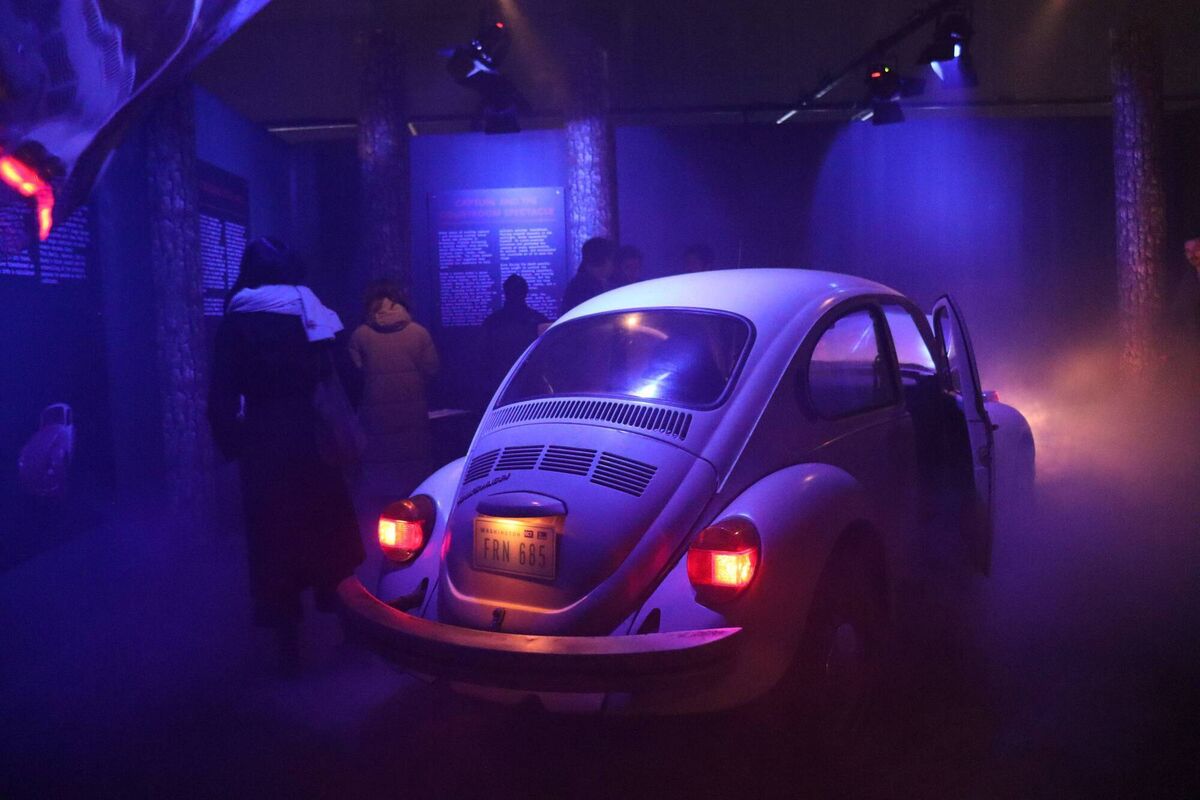
That’s one of the central questions posed in the immersive exhibition, Mind of a Serial Killer: The Experience, which has arrived in Dublin as part of a global tour. The event, running in Dublin’s RDS, has been created by John Zaller, chief creative officer at Exhibition Hub. Zaller has spent more than 25 years designing large-scale touring exhibitions that blend theatrical set design, historical research, and narrative structure. He says this project was one of the most psychologically demanding he’s ever worked on.
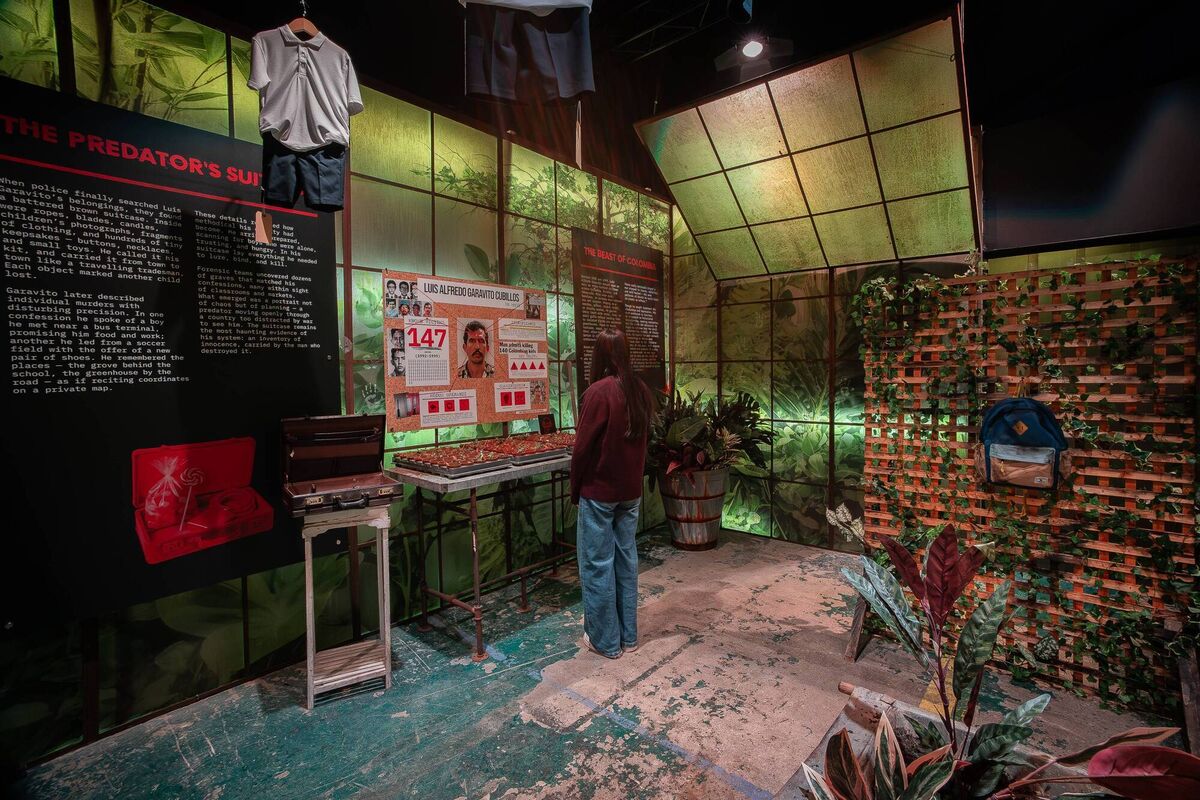
The event is a blend of theatrical set design, historical research, and narrative structure.

“I’ve worked on a lot of immersive experiences over the years, but this one was much more challenging,” Zaller says. “Mainly because of the nature of the content. I had to spend a long time inside these stories, researching these individuals, understanding what they did, how they operated, and why. That’s not something you come away from unchanged.”

The exhibition examines some of the most notorious serial killers of the last century, including Ted Bundy, Jeffrey Dahmer, John Wayne Gacy, Ed Gein, and Andrei Chikatilo. But Zaller says that notoriety is not the point.
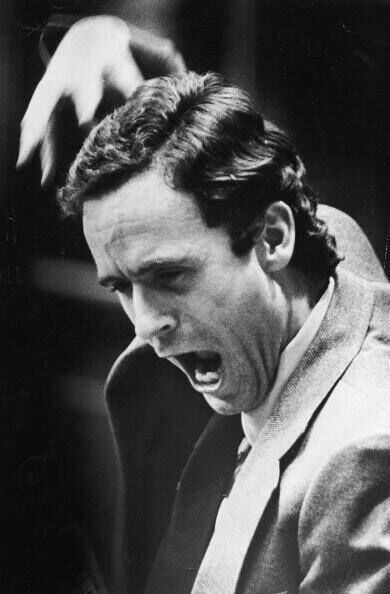
Serial killer Ted Bundy acting up in courtroom after the judge had departed. (Photo by Bill Frakes/Time & Life Pictures/Getty Images)

“When people say they’re fascinated by serial killers because they’re monsters, that explanation lets us off too easily,” the Atlanta native says. “In a way, it creates distance. It allows us to say, these people are not like us, end of story. But what really pulls people in is the damage underneath. Remember, these are profoundly broken individuals, who didn’t arrive fully formed. In many situations, something fractured along the way, often very early, perhaps in their biology or their environment. People want to understand how that happens.”

That desire to understand is, of course, deeply human.

“We are pattern-seeking by nature,” Zaller explains. “When something horrific happens, we instinctively try to organise it. We look for motive and warning signs. We want to believe that if we can map how someone gets there, maybe we can prevent it from happening again.”

“This exhibition is built around that need for structure, so we’ve spread across more than 20 scenically recreated environments, where visitors can move through domestic spaces and institutional settings as investigators rather than spectators. Early rooms are modelled on FBI behavioural analysis units, introducing profiling frameworks and criminal research tools that help organise what would otherwise feel overwhelming. As you move through the rooms, you’re not just seeing what happened. You’re being asked to understand, as far as it’s possible, the internal logic that allowed these horrific acts to happen over and over again.”
Ed Gein, a notorious serial killer

So, did Zaller himself have a better idea of why some of these serial killers did what they did after curating this exhibition?

“I believe that it’s almost never one thing,” he says. “It’s usually a combination of internal flaws and external pressures. Multiple stressors that someone doesn’t have the emotional, social or psychological tools to cope with. In some cases, there’s severe mental illness. In others, it’s a gradual distortion of reality and in others, possibly sheer madness.

What makes people uncomfortable is that these individuals are still human. We are all human. We want to try to understand that line that separates us.

As a fiction writer, I explore flawed characters because perfection is uninteresting. I write about domestic spaces and intimate relationships because that is where danger often feels most real. Crime fiction, particularly by women, frequently centres in the home, and the family, or other private spheres. Much of my writing asks what happens when the familiar becomes unsafe. Exploring this proximity through a fiction lens may explain why crime has become the most commercially successful genre in Irish writing. Many of Ireland’s most
internationally visible authors today are crime writers. Their novels are increasingly being adapted for television, often with great success. Andrea Mara’s All Her Fault, for example, was recently turned into a gripping TV drama starring Succession actress Sarah Snook, while an adaptation of Cork author Catherine Ryan Howard’s pandemic thriller 56 Days is set to arrive on Amazon Prime on February 18. These stories have found eager global audiences, drawn to dark narratives they can engage with from a safe distance.

Zaller says the same impulse is why Mind of a Serial Killer: The Experience is proving so popular: “True crime also allows people to experience danger but at the same time, you’re not there. You’re not at risk. You can pause and analyse, and that creates a sense of control in a world that often feels unpredictable. In other words, you’re engaging with fear in a way that feels contained. The closer we get, maybe the more we believe we might locate the moment where something went wrong. The fracture of a decision that turned a person into a perpetrator.”

With my crime writing hat on, I also see how our preoccupation with such horror is about trying to reassure ourselves that the boundary between ordinary life and unimaginable harm is somehow real and visible. And perhaps, it is about asking whether recognising that boundary might protect us from ever crossing it ourselves. But even by that logic, why would I want to open a replica of Jeffrey Dahmer’s fridge?
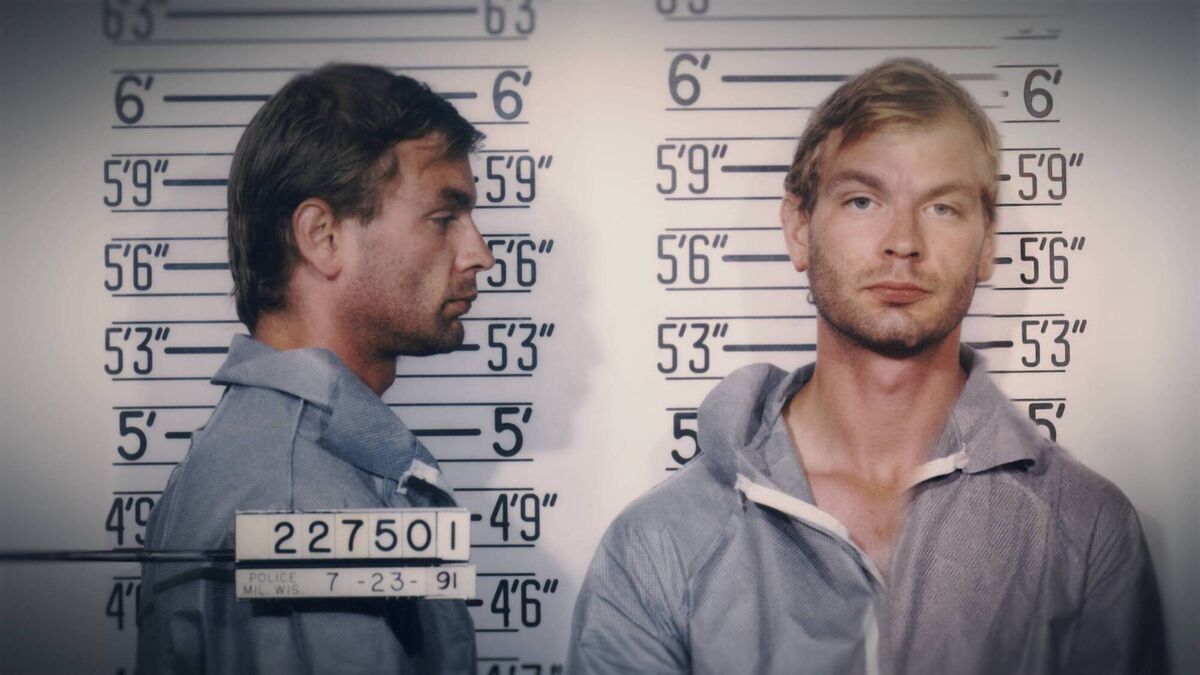
Why would I want to open a replica of Jeffrey Dahmer’s fridge? “Because that’s where the ordinary becomes the most disturbing,” Zaller points out.

“Because that’s where the ordinary becomes the most disturbing,” Zaller points out. “It’s even more shocking to us because the places where these people carried out their horrors weren’t lairs. They were kitchens, living rooms, even cars. These are spaces that should feel safe, leaving people wondering, how could someone do this, but also, how could this exist alongside normal life?”

Despite all that, the exhibition is acutely aware of the ethical line it walks.
Amanda Cassidy: "The places where these people carried out their horrors weren’t lairs. They were kitchens, living rooms, even cars." 

“We’re not trying to shock people,” Zaller says. “The very things that allow society to function — trust, routine, social etiquette — are the same things that get exploited and twisted by these individuals. That’s what makes it so frightening. These crimes are not impressive. They are acts of devastation.”

“One of the things that struck me most during research was how familiar the killers’ names are, and how little we know about the victims. That imbalance should shape how we talk about violence.”

The emotional arc of the exhibition is designed to correct that imbalance. Visitors enter through a claustrophobic corridor of shattered mirrors, quotations from killers overhead. As the experience progresses, context replaces myth. Investigative voices replace any notions of notoriety. The final spaces are more reflective, and focused on those lost rather than those who inflicted the harm.

“When you strip away the mythology of the serial killer, all that’s left is failure,” Zaller explains. “It was a failure of systems, and of intervention. It is about a trail of lives affected far beyond the headlines. This isn’t about glorifying these individuals, it’s about holding up a dark mirror and asking what it reflects back about us. If people walk out thinking only about the crimes,” he concludes, “then we’ve failed. If they walk out thinking about humanity and vulnerability, then we’ve done exactly what we set out to do.”

  • Mind of a Serial Killer: The Experience is currently running at the Royal Dublin Society (RDS) with individual visits lasting around 90 minutes. Tickets from €12.90.
  • Amanda Cassidy is the bestselling author of five crime novels including The Stranger Inside.

More in this section