Hey bruh! A Dad's guide to understanding the language of Gen Alpha
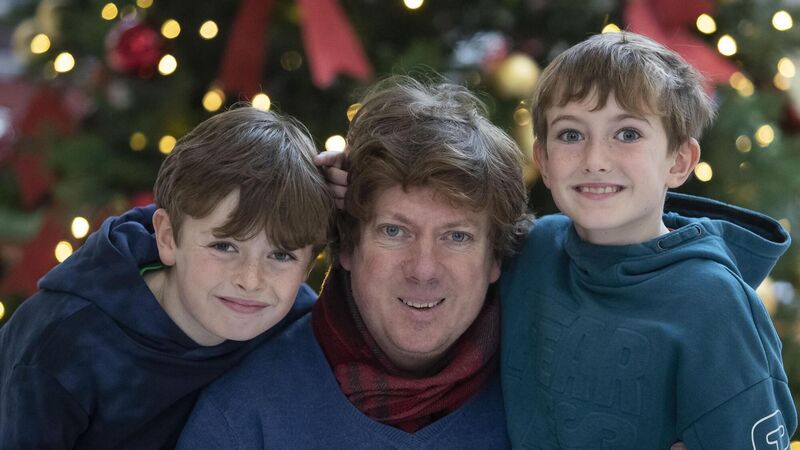
Jonathan de Burca Butler pictured in Rathmines with his sons, Fionn, 10, and Luke, 8. Picture Colin Keegan, Collins Dublin
As Jonathan deBurca Butler begins to recognise the differences between the lexicon he uses versus that of his sons, he finds out from the experts why different generations speak the way they do.
“Bruh!” yells Fionn, as his Fortnite skin is blown apart by an unseen assailant.
“This guy is so goated. He’s cracked. Did you see that Conor? Conor? Wait. Where’s Conor? Is he AFK?”
“He’s AFK,” says Luke, his brother.
“Bruh,” says Fionn again. This time with a hint of disappointment in his voice.
I’m getting dinner ready and though my kids are in the next room playing on this well-known computer game, they couldn’t be further away.
It’s not just that they are both online, wearing obscenely oversized headphones and chatting to their friends as they try to survive the pitfalls of the virtual island Athena, but it’s also the language they are using.
I haven’t a clue what they’re saying. Hang on, let me rephrase that: I know what they are saying, but I just don’t get the words they are using to say it.
Every generation goes through the same emotions. They are faced with various challenges and enjoy, hopefully, great experiences with similar traits.
The emotion we express in reaction to those challenges and experiences are surely the same but each generation seems to use different words to express them.
Where Fionn uses “bruh” I’d have used “damn” or “ah come on” when I was his age.
Where he uses “goated” (a brilliant adjective that stems from the acronym “goat” meaning “greatest of all time”), I’d have used “deadly”.
To my mother and father, “deadly” was completely different in the same way my nephew’s Gen Z use of “sick” as a positive adjective is well… sick to me.
“The language you use really depends on who you are talking to,” says Gail Flanagan, from the School of Modern Languages and Applied Linguistics at University of Limerick.
“How you speak with your friends as opposed to how you would speak at work or with your grandmother is often completely different.
“Different registers would have different vocabulary and even different grammatical structures that we switch on and off depending on the surroundings we are in.”
Gail points out that the invention of a generational lexis is simply a type of code that identifies the speaker with the group he or she wants to be associated with.
“Generations invent their own lexis to distinguish themselves from others,” she explains.
“It’s an identity marker. They want to be part of a peer group and they want to exclude other generations. They don’t necessarily do it consciously but if we, for example, try to use Fortnite speak or gaming speak in general that really wouldn’t go down well.”

To paraphrase: “We sound completely uncool (or is that ungroovy?) when we try to use the language our kids use.
This apparent gulf in word usage is probably a relatively recent phenomenon and has as much to do with human migration from rural to urban surroundings where cultures mixed, language was more fluid and the use of words was less constrained.
Undoubtedly, the invention of pop culture and the teenager as well as the proliferation of first, television, and now, internet phenomena like YouTube and TikTok have fed into the intergenerational shift.
No longer do young people have to migrate to experience new culture and language. It comes to them.
Much of the language difference is down to technology. It is worth bearing in mind that Generation Alpha are the first generation to have tablets and smartphones handed to them from the day they were born.
“In my day, it was more movies that had an influence,” says Gail, a member of the greatest generation of them all, Generation X.
“It was a bit more slow-paced. We’d be weeks or months behind the USA for example.
“Now, kids could be watching anything from anywhere in the world and it will get picked up and put into the generation’s lexicon. Today it’s instantaneous.”
One phenomenon that Gail has noticed in recent years is the increased use of acronyms. LOL — is it laugh out loud or lots of love? — has been around a while; IRL — in real life — is a more recent addition and from the same gaming world is my own personal favourite; AFK — away from keyboard. I LOLed a lot when I heard that the first time.
Of course like most dads, I have tried to influence the glossary of Generation Alpha (that’s the next group of teens folks) and insert my own acronyms into their complicated world.
Underneath it all, my kids might suspect that I’m not really taking their new language seriously. And while, for the moment, it remains just a bit of banter, I might well be setting myself up for a bit of a fall if I keep it going into their teens.
“Parents and children may appear to speak the same language as each other but developmentally we are separated by a chasm that is both emotional and cognitive,” says Joanna Fortune, a psychotherapist and author of 15-Minute Parenting.
“That can render us in a state of near constant misunderstanding, where it is not so much the language we need to learn but insight into each other’s minds and the meaning we ascribe to the use of language.
“When it comes to parenting, I would always advocate adopting an inquisitive stance, that is holding a position of curiosity over certainty.
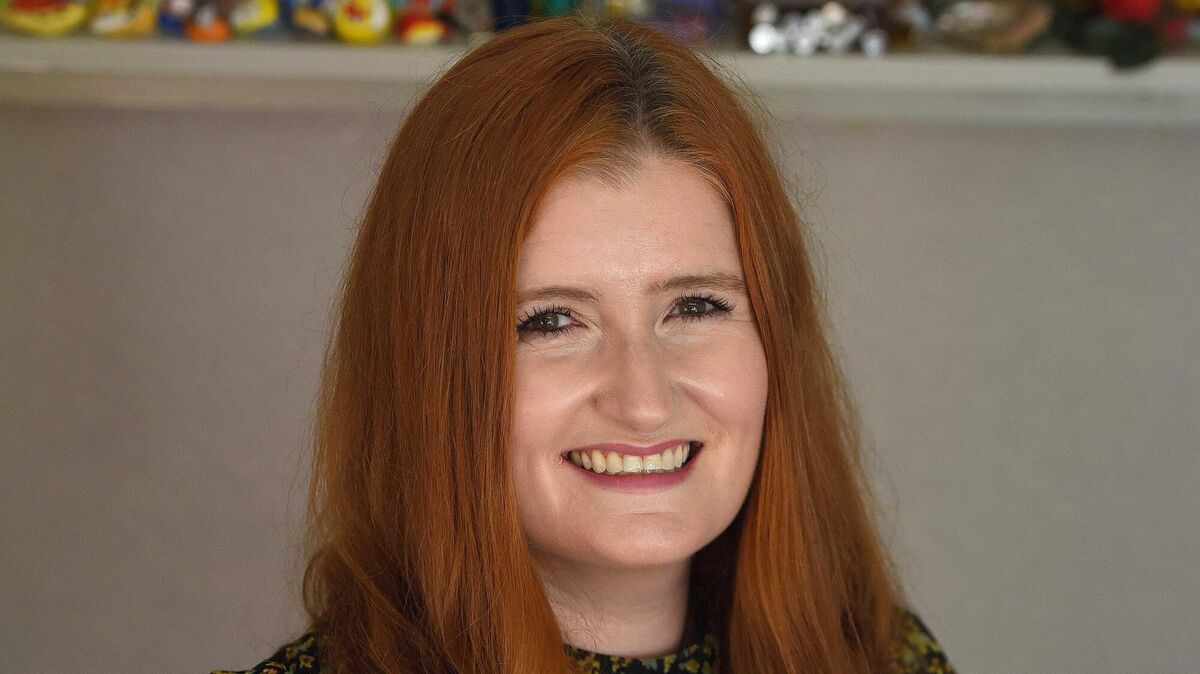
“I’d advise showing curiosity rather than ridiculing how a word or phrase is being used; I know what that word means to me but I am curious what it means to you”.
Joanna points out that playing with language starts from a very early age before developing into something more sophisticated.
“We are born into a sea of language and sound,” she says.
“As a young child developing our capacity for language we play with sound and meaning and each sound can convey a meaning. This is called phoneme, a sound that holds meaning. If we consider sounds like oops, uh-oh, agghhh all of which instantly hold and convey meaning without being a word per se.
“In this way we play with sound as part of language development and sound provides us with a sensuous experience for our mouths as we play with language acquisition itself.
“This playfulness with language is again evident later in life in the guise of poetry or song, or even the playfulness of taking a familiar word or phrase and using it in a new way to convey new meaning.”
At the end of the day, it seems to boil down to one simple thing: Young people’s desire to be different from the parents that came before them. Something that every generation can relate to.
An interjection that conveys disappointment or a sense of disbelief.
Though the roots of this expression may well go back decades, it has become popular through rap. It means stop lying.
Away from Keyboard
Very good
Place of Interest/Point of Interest
Another gaming term that means a person is trying too hard.
Stemming from the acronym the “goat”, meaning “greatest of all time”, this adjective describes someone who is very good at something.
CONNECT WITH US TODAY



Be the first to know the latest news and updates