Explore Glenary in the Comeragh Mountains — a place of poor land but rich history
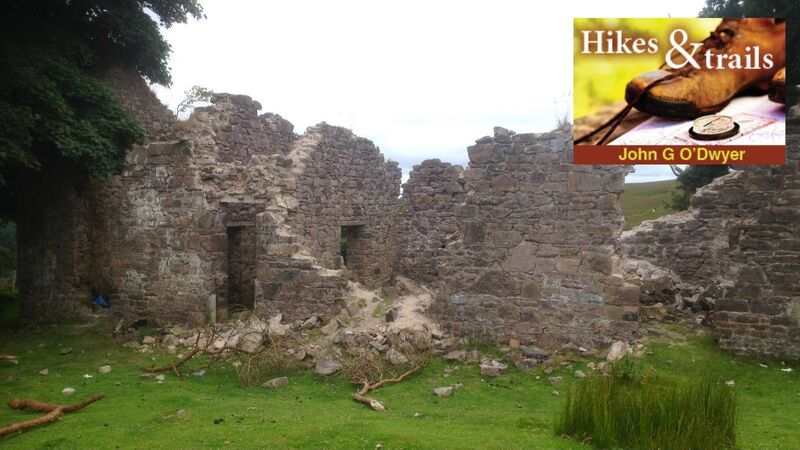
Sequestered amidst the Comeragh Mountains, this was a place of poor land and a way of life that carried many challenges. Pictured, the ruined homestead of the Ireland family. Pictures: John G O'Dwyer
Beginning the 20th century, Clonmel was an affluent town. At the most upstream navigation on the River Suir and with a prosperous agricultural hinterland in South Tipperary, it developed into a major manufacturing centre.
Flour milling, brewing and textiles were the main industries. These were mostly Quaker-owned, with much of the product exported through the thriving port of Waterford.
Yet, only a couple of kilometres south of Clonmel, life was entirely different. Here, an Irish-speaking community worked to survive in the scenic but secluded Glenary Valley. Sequestered amidst the Comeragh Mountains, it was a place of poor land and a way of life that carried many challenges.
To explore Glenary, which nowadays serves as a green museum to a bygone era, start from Carey’s Castle Carpark and follow the signs to the Castle. Originally known as Glenabbey, this area was once an out-farm or grange of the Cistercian abbey at Inishlounaght near Clonmel, before the suppression of the Irish monasteries in the 16th century.
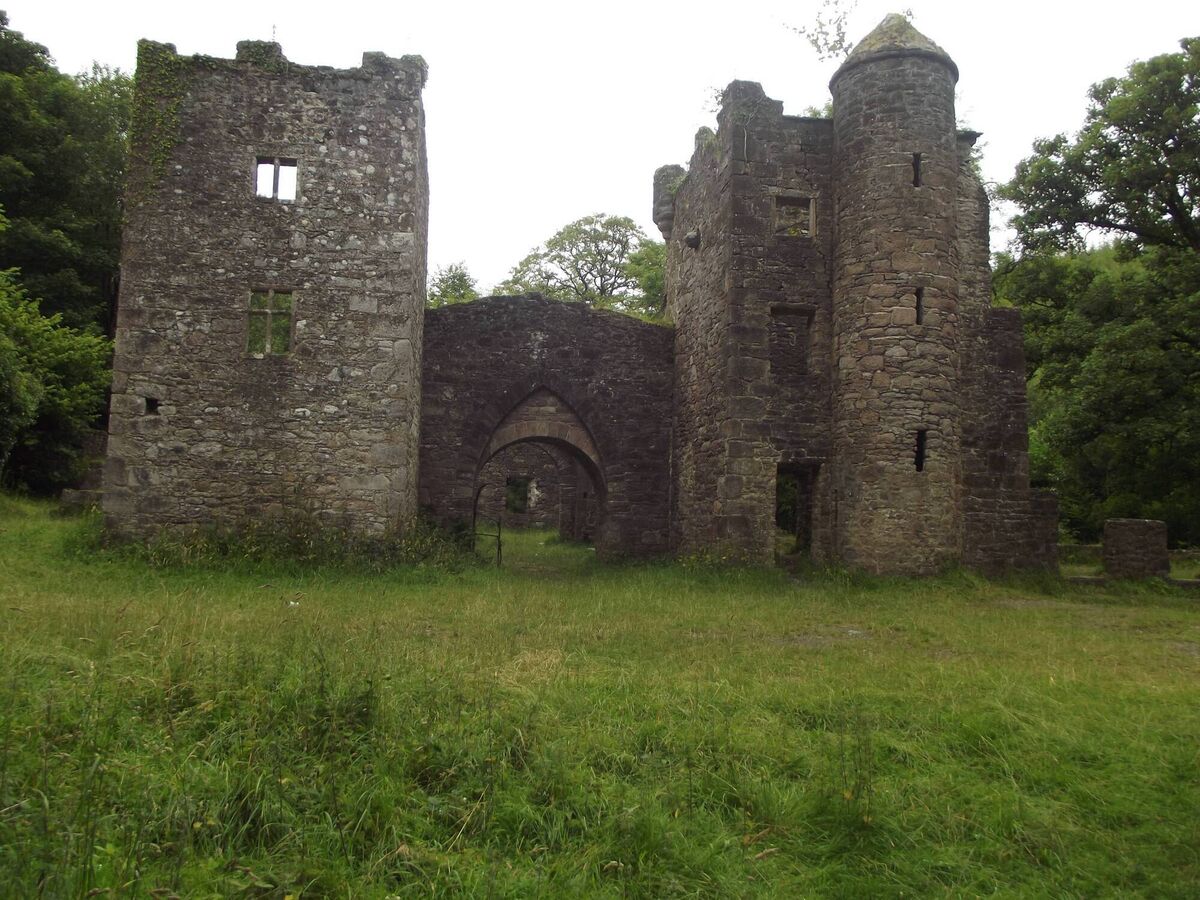
At the beginning of the 19th century, the land came into the hands of the wealthy Carey family of Clonmel. Here, they built an idiosyncratic castle that is a mismatch of architectural styles: a Celtic Tower and Norman keep rest rather uneasily beside several Romanesque and Gothic features. Clearly, something of a vanity project, the Castle was always going to be difficult to sustain and was sold to the Nuttall Greene family of nearby Kilmanahan in the late 1830s. This was a prescient move by the Careys, as the arrival of the Great Famine not only created suffering and death for ordinary people, it also initiated huge problems for the landed classes. The Greenes were forced to sell the bankrupt property through the Encumbered Estates Court and soon after the Castle fell into ruin.
Having explored the Castle, you can usually hop across the Glenary River on stepping stones, when water levels are relatively low, and then continue left along a forest roadway. Eventually, to your left, you will notice a field system and some overgrown ruins, which are located on private property. This is all that remains of the once-flourishing village of Glenary, which in the early century had a population of more than 200 and remained, despite its proximity to the entirely English-speaking town of Clonmel, an Irish-speaking community into the twentieth century.
Unable to maintain its population in more affluent times, it was finally abandoned in the early 1960s. A genial man named Tom Burke, became the last resident to leave, having lived all his life in the glen. In his later years, he became well-known for his Friday expeditions across the hills to Clonmel with the purpose of shopping and collecting the old-age pension, before he passed away in 1968.
Beyond ramble briefly along an informal path through woodland and then reach open mountainside. Follow the rough path and continue past the recently clear-felled Coumwhelan Wood to recross the Glenary River. Go uphill and then left to reach the crumbling remains of a stone-built farmstead. Known as Park Grub, it was once the upland home of the Ireland family. Ironically, William Ireland, the head of the household, was in the early part of the twentieth century the only non-Irish resident in Glenary.
Born in Wales, he moved to Ireland and married a Longford woman before coming to take up the position as a gamekeeper for Lord Waterford of Curraghmore. Shooting game birds, such as red grouse, was a particularly popular pastime among the aristocracy. Gamekeepers were, therefore, highly valued for their ability to ensure a plentiful stock of game for the much-anticipated first day of the shooting season, which was commonly described as the Glorious Twelfth of August.
Ireland didn't remain long as a gamekeeper and passed away prematurely in 1915. It was almost inevitable that afterwards, his wife and six children would lose the unequal struggle with the hillside. Inexorably, the forces of nature are now busy rewilding the Ireland family’s once-productive fields.
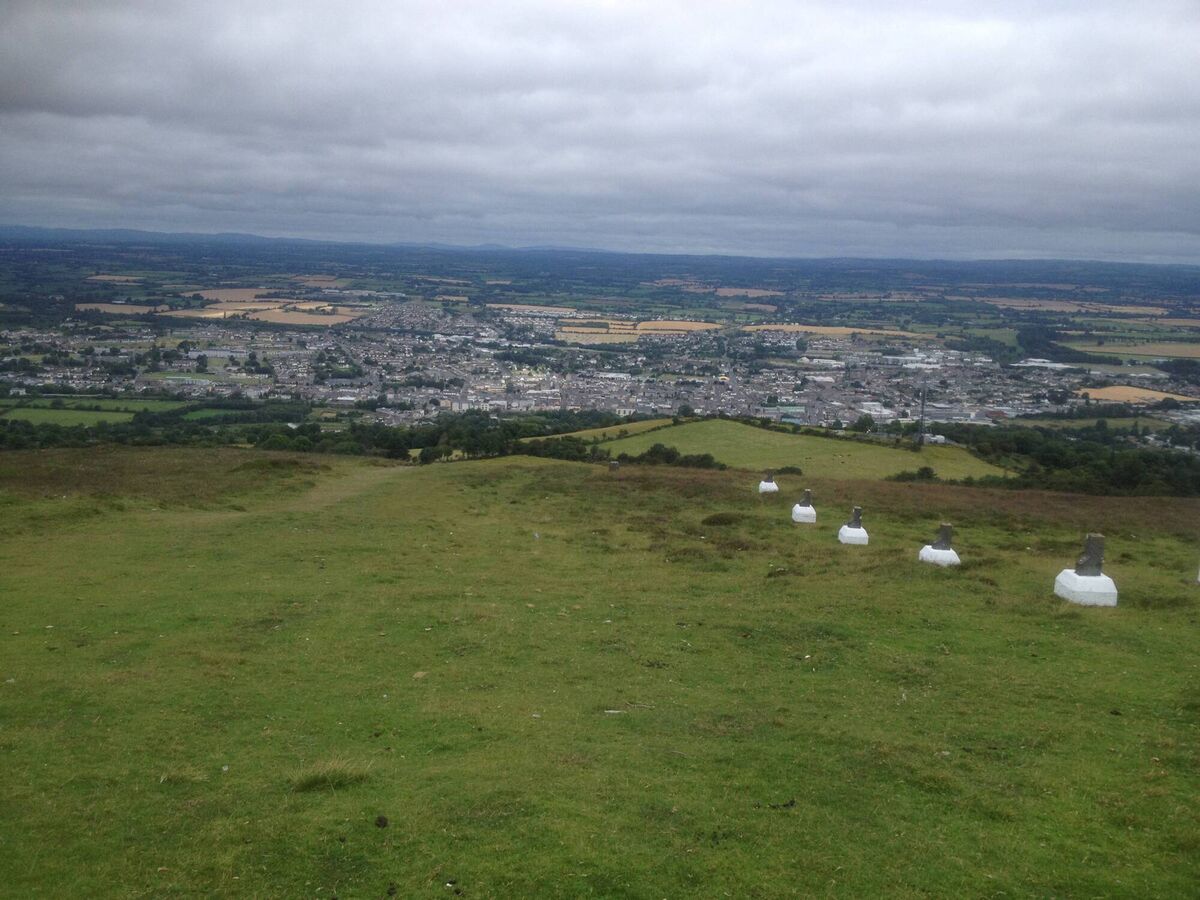
Now, tag the path north and then northwest to reach a high point on the summit of Scouthea Hill, which offers a sweeping panorama over Clonmel to Slievenamon and the expansive plains of South Tipperary beyond.
Here, local people constructed an altar and a large white cross to celebrate the Holy Year declared by Pope Pius XII in 1950. Mass is still celebrated here on the August Bank Holiday each year.
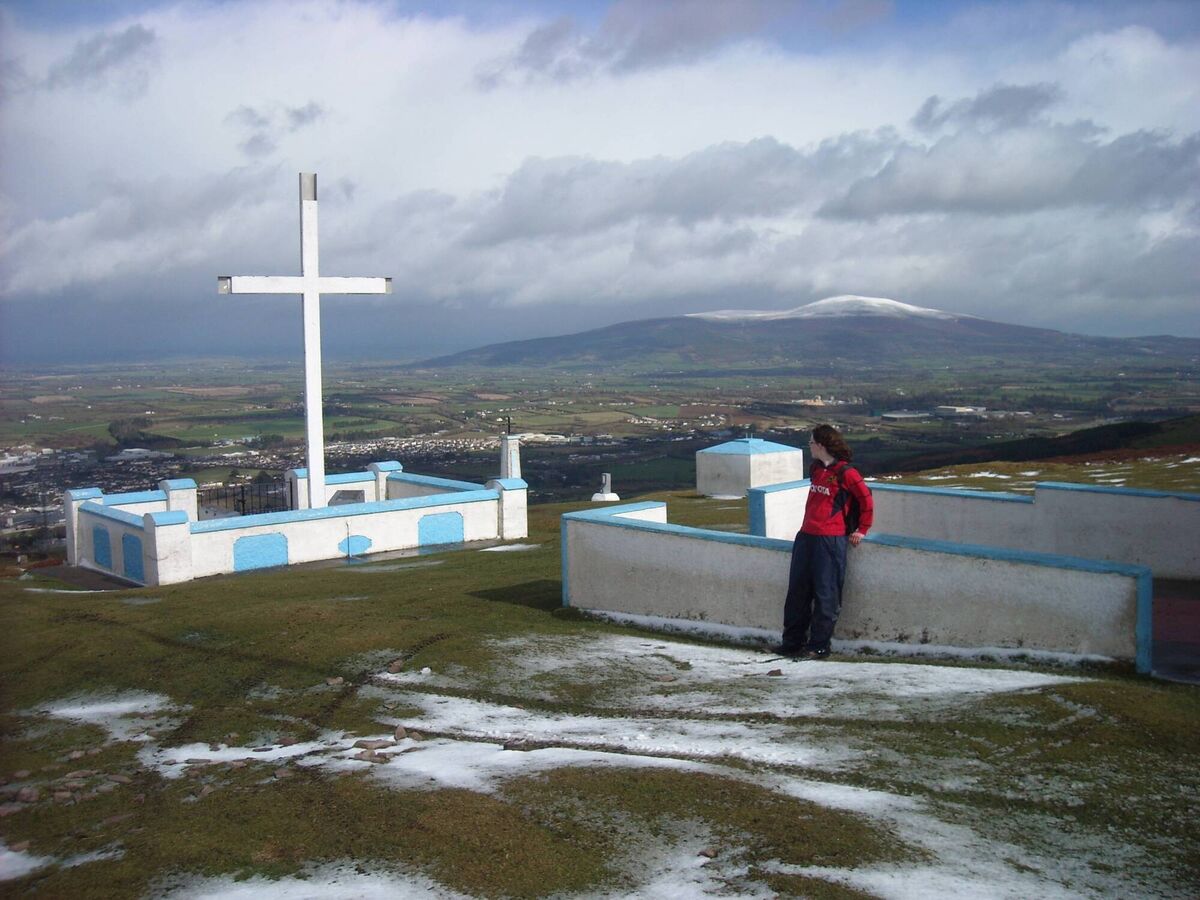
From the Holy Year Cross, head downhill in a westerly direction to coalesce with the waymarkers for the East Munster Way. Then, track the East Munster Way over a stile and into woodland, where the yellow arrows will eventually convey you down to a minor road. Go right here and then right again at a T-Junction to regain Carey's Castle Carpark, having enjoyed a highly varied three-hour outing.
- The latest edition of John G O'Dwyer's book is out now from publishers, Currach Books
CONNECT WITH US TODAY



Be the first to know the latest news and updates