Pádraic Fogarty: Sheep farming hits the end of the road
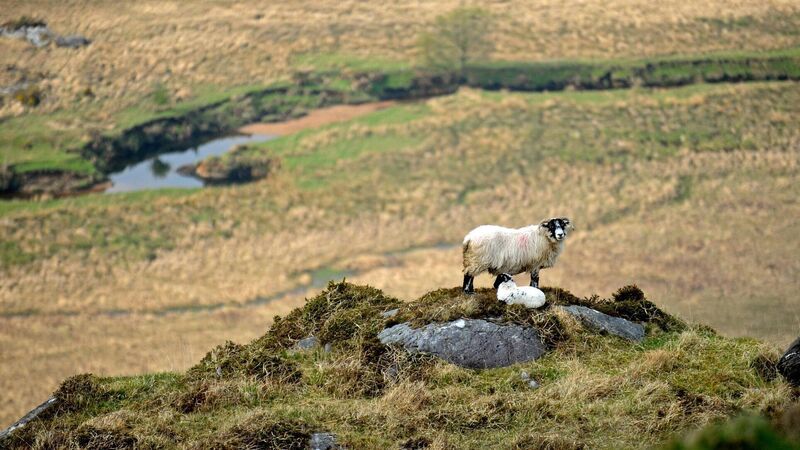
Free-roaming sheep on hills and grasslands year-round has led to the severe degradation of habitats. Picture: Denis Minihane
Cows and cattle come under a lot of scrutiny in the climate debate, but we are not paying enough attention to their farmyard cousins: sheep. According to a recent census from the Department of Agriculture, Food and the Marine, there were four million sheep in the Republic at the end of 2022.
Like bovines, sheep also emit greenhouse gases and, while figures vary, the authoritative ‘Our World in Data’ website indicates that emissions from lamb and mutton are roughly 40% of those from bovines. Studies from Teagasc indicate that emissions of methane — a potent greenhouse gas — from sheep may be only 10% of those from beef animals and less again compared to a dairy cow. However, given the number of sheep in the country, this is an important source of climate pollution even if it is lower than that from bovines.
However, the negative environmental impacts of sheep are out of all proportion to the direct emissions from the animals themselves. Perhaps half of the sheep in Ireland are on hills and these are usually peatlands, critical stores of carbon that are themselves typically degraded and so are substantial sources of carbon dioxide. Emissions from these peatlands are not counted in our national inventory as they are considered to be ‘unmanaged’ and so in a natural state... but this is far from the reality.
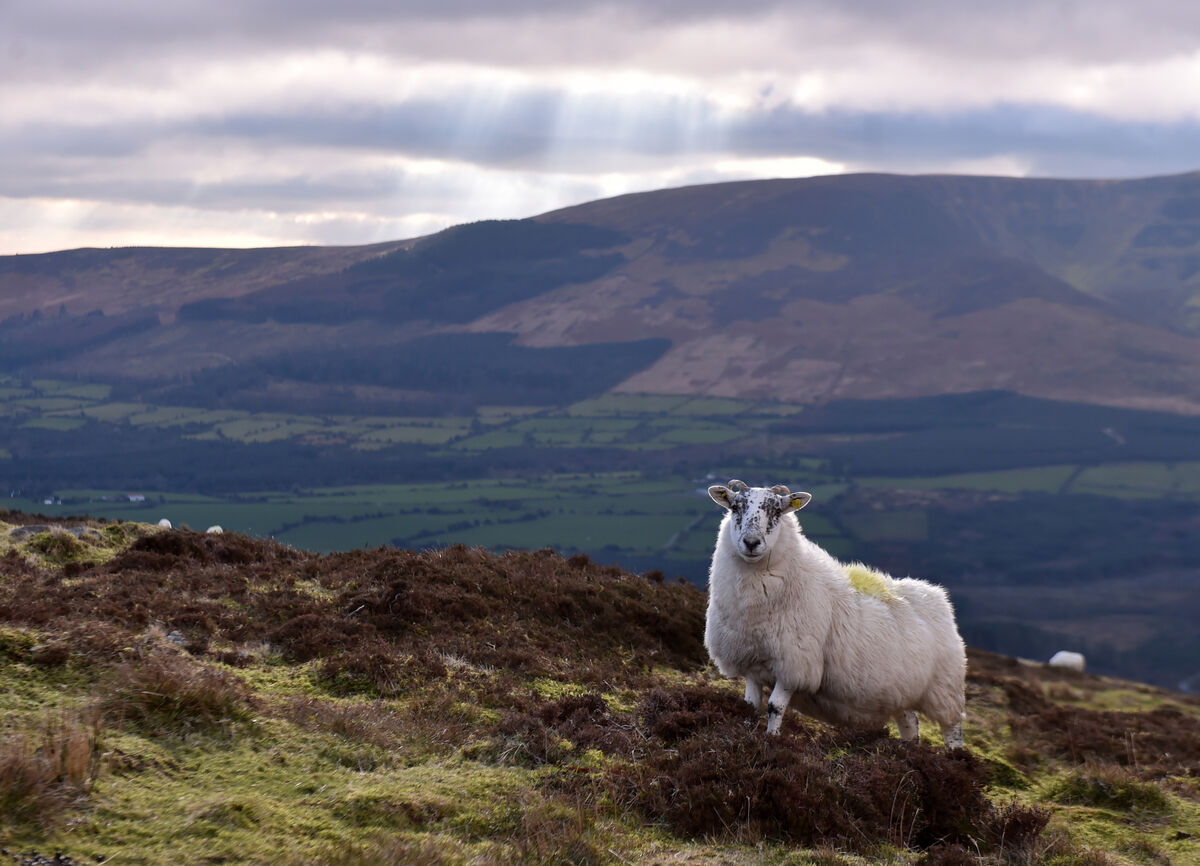
And our hills are important for reasons far beyond their ability to hold carbon. They are valued places of heritage and history, areas where people still live and work and many are of high biodiversity value.
At least they were. According to the National Parks and Wildlife Service, all of the important upland habitats are in bad condition and all are threatened by overgrazing from sheep. Too many sheep, free-roaming across the hills and coastal grasslands from one end of the year to the next has led to severe degradation of habitats.
To talk about over-grazing by sheep can lead to the belief that there is somehow a right level of grazing but this misses what is termed the ‘opportunity cost’ of having farm animals in these areas. Without them, there would be natural ecosystems, particularly native forest or healthy open bogs, or a combination of both.
It is not possible to have intact bogs in the presence of livestock as the vegetation is simply not evolved to deal with large grazing animals. Sheep in particular, because they will go for the leaves of trees before they eat grasses, will prevent the regeneration of forests, even if the numbers are kept low.
Sheep also are dreadfully uneconomic. According to Teagasc research, the average farm income from sheep rearing in 2022 was €16,500 — a fraction above the poverty line. And 110% of this income is from taxpayer subsidies. In other words, it wouldn’t survive a day without public subventions.
According to the Irish Farmers’ Association, the income levels on sheep farms in 2022 dropped to a mere €7 per ewe. The organisation called for “immediate action” which is code for a taxpayer-funded bailout. They want the public to pay them €30 per ewe — more than four times the current market value. Payments per head of animal would also spell a return to the bad old days when it served as a perverse incentive to increase animal numbers, leading to ecological catastrophe on the hills.
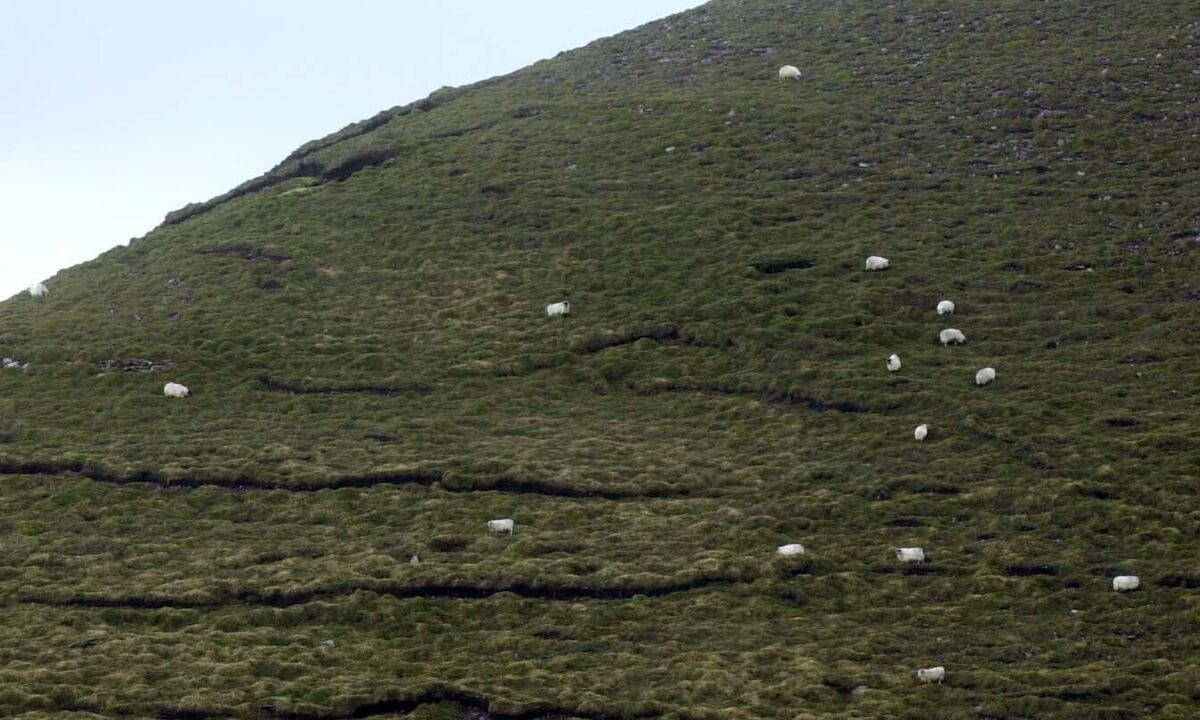
Sheep farming has hit a dead end, but merely allowing the farmers to fend for themselves would be a mistake.
Instead, the Government needs to spell out what a just transition means for sheep farmers. They should be given the choice of rewilding their land or to move into schemes that reward ‘high nature value farming’. This can mean switching from sheep to traditional breeds of cattle, which can, at low densities, help regenerate vegetation. Nevertheless, some areas are not suitable for farm animals of any kind, particularly bogs, and payments for bog restoration and protection must reflect the true value of these critically important landscapes to our country.
Many open hills and coastal grasslands areas are in commonage ownership and these are a problem as it is virtually impossible to get all owners to agree on management measures. Therefore, the State must start buying them and put them into trusts to be managed by local communities as nature reserves.
Farmers are understandably nervous at the thought of such drastic change and have been let down by the Government in the past. However, there can be no room for denial of the facts around sheep farming; it cannot continue in anything like the way it is done today.
CONNECT WITH US TODAY



Be the first to know the latest news and updates