Catherine Fulvio on how to teach the basics of cooking to the TikTok generation
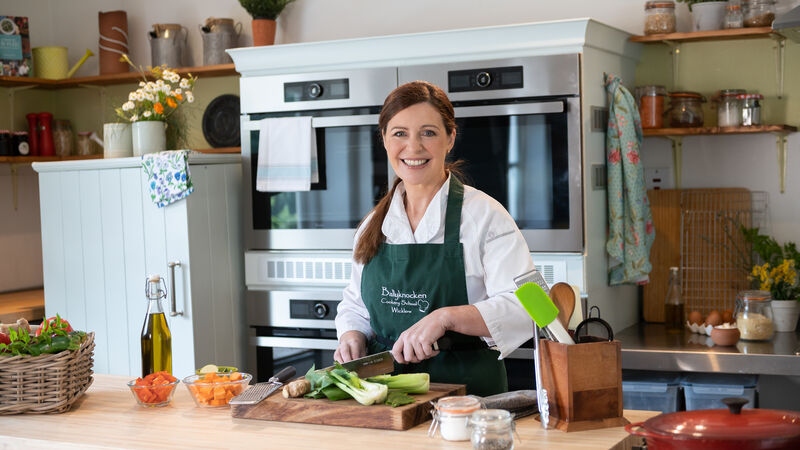
Catherine Fulvio’s online cooking course includes skills training, podcasts, and short video instructions with the TikTok generation in mind. Picture: Colin Shanahan
“Cooking from scratch gives you independence.”
Wexford chef, TV presenter, author, and cookery teacher Catherine Fulvio is determined to pass on this one simple idea to the transition year (TY) students who sign up for her online Cooking Essentials Certificate Course. A 13-week hands-on course that teenagers can do at home, it aims to teach them essential kitchen techniques, useful skills, and show why being able to cook is so important.
Fulvio, who established Ballyknocken Cookery School in the former milking parlour of her family farm in 2004, comes “from a long line of cooks”. Growing up at Ballyknocken House, where her mother ran a B&B, she was always immersed in food and cooking.
“I realised that I learned the skills naturally,” she says. “My mother and grandmother, because of the business, had the time to teach me.
“It was a means to an end,” she adds with a laugh, “they were teaching me so that I’d help them out in the kitchen. But I learned a huge amount by osmosis.”
Fulvio had observed a drop off in skills while working with the school groups that visit her cookery school: “I’ve seen kids who really don’t even know how to hold a knife, and I thought, ‘these are basic skills that we need to teach our teenagers’.”
At secondary school level, home economics is the only subject where students have the opportunity of learning how to cook. Despite calls over many years from Darina Allen and others to make home economics compulsory, it remains optional.
After getting first-hand experience of the transition year when her own children went through it, Fulvio identified TY as an ideal opportunity to acquire basic cooking competency.
“It’s the perfect year as you have the time,” she said. “My own son was doing TY during covid. I started teaching him [to cook], and the next thing we were making was hollandaise sauce and eggs Benedict and all sorts of things. I thought there is definitely an option here for teenagers to learn how to cook from scratch and be absolutely confident in the kitchen.”
Fulvio set about putting together an online certificate programme, neatly tying in with TY students interested in achieving Gaisce: The President’s Award. For Gaisce, participants need to dedicate an hour a week over a period of time — 13 weeks for the Bronze Award — in three challenge areas, and cooking is one of the choices listed.
Without a live classroom environment, Fulvio faced the challenge of ensuring students stayed engaged in learning by doing, rather than just observing.
“I’ve structured [the course] in many different ways. I’ve done short videos… because I know these are the TikTok kids who expect everything in five seconds,” Fulvio notes.
“There are video instructions, written recipes, and the core section on skills that they can keep going back to. I also put the recipes down as a mini podcast so they can just listen to it. There are printable tips, photographs, skills and ingredient sheets.
“You’re jumping from one thing to another so that it doesn’t become monotonous. Then you have the challenge of making the recipe at the end of the week, and you also have to do a multiple-choice quiz based on what you’ve learned. It’s not that complicated, but you have to pass it to move on to week two.”
Students also have email access to a tutor if they have any questions as they prepare recipes and learn different skills, working their way through soups, salads, bread, pasta making, meat, fish, and fruit.
Each recipe serves four people, so parents are setting themselves up for a night off cooking dinner.
“It’s giving the child responsibility,” says Fulvio.
Empowering teenagers by teaching them to cook also pays dividends in the long term, points out Fulvio: “It means you’re never reliant on processed meals or takeaways, no matter where you are in the world.
“You also learn about where your food comes from, so you understand the ingredients. This also translates into good health, good habits, and a sense of pride in what you serve up.”
Along with understanding where ingredients come from and what to do with them, cooking for Fulvio is about conviviality, “it’s something that friends can do together” and creativity.
“There are so many artistic and creative children who don’t realise how creative they are until they find themselves in the kitchen,” she says. “I encourage them to experiment all the way along by swapping herbs or adapting dishes or going and checking what’s in the fridge. So [cooking] teaches resourcefulness, and it encourages a deeper understanding of flavour.”
Fulvio also believes it helps teenagers become conscious about nutrition: “They see that their cooking isn’t just about convenience, but it’s about care. It’s care for their body, for the planet, for local producers. Cooking from scratch encourages balance, because you begin to appreciate portion size and wholesome ingredients and variety.”
Another useful aspect of learning to cook is the impact it can have on your wallet, especially as a student, often living away from home for the first time: “Things are tight around the country... Learning to cook is the most financially efficient thing you can do.”
For parents trying to arm children with life skills, cooking is essential. No matter what students do after school, they’re going to have to cook for themselves; so investing the time, headspace, and money — the 13-week course is €140 — during transition year can make a significant difference.
“It’s a great year for learning,” Fulvio says. “It really is about expressing yourself and learning skills for life.”
- More on Catherine Fulvio’s Cooking Essentials Certificate Course is available at catherinefulvio.com/student-and-transition-year