TB lesions detected in factories double
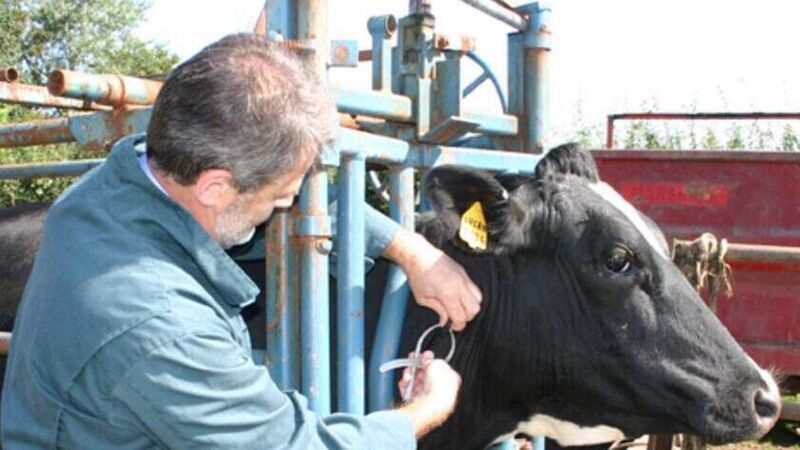
Skin test detections had not kept pace with the increasing background level of bovine TB, and the breakdown size increased. File picture
The background level of TB doubling in the national cattle herd was one of the reasons the Department of Agriculture, Food and the Marine came up with the new five-point eradication plan that will come into effect on April 1 next.
“The rate of factory lesions has essentially doubled between 2019 and 2024,” said Dr Damien Barrett, the vet who heads up the Ruminant Animal Health Division of the DAFM.
During a recent Teagasc webinar on bovine TB, he said there were 42,000 reactors in 2024 and 38,500 in 2025. “But 38,500 is about double what it was in 2017, 2018.”
“What's driving the current surge is that residual infection has assumed a greater importance as herd size has increased," he explained.
Half of recurring breakdowns are due to the presence of residual infection.
He said skin test detections had not kept pace with the increasing background level of bovine TB, and the breakdown size increased.
Dr Barrett said: “It was kind of unfortunate that we had our lowest levels of TB, as quotas were abolished. There was complacency,” he said. “The disease in that environment of complacency took its chance and took off,” he said.
“We're seeing an increased proportion of reactors coming from dairy-bred cattle and diminishing from suckler herds. That's probably reflecting the demographics of our national cattle population,” he said.
The DAFM recognised that its existing approach to TB eradication was not working effectively, hence the full introduction in April of all of the proposed measures in the new eradication plan.
“I think we can't wait around for a vaccine," he said.
It’s estimated that it may take at least 10 years to develop a vaccine.
"The other point about vaccination is that there are considerable trade implications, not just for live animals, but also for the produce of vaccinated cattle, dairy and beef produce, that it wouldn't meet the export certification criteria," he said.
The new TB plan will include increased pre-movement testing and biosecurity on farms.
Gamma Interferon blood testing for larger herds will be mandatory.
High-risk herds that suffer relapse will face six-monthly TB testing for up to three years.
In herds of 80 cows or more with major breakdowns, exposed cows (in the same management group as the reactors) will be restricted from moving to other herds for two years after the removal of the last reactors.