Domestic economy set to grow more than expected through the rest of the year
The Irish domestic economy is expected to grow more than expected through the rest of the year as the threat of tariffs dissipates but a growing number of “capacity constraints” is expected to have a “restraining impact” on the economy over the medium term, a new report from AIB shows.
The Irish domestic economy is expected to grow more than expected through the rest of the year as the threat of tariffs dissipates but a growing number of “capacity constraints” is expected to have a “restraining impact” on the economy over the medium term, a new report from AIB shows.
In its latest economic outlook report, AIB forecasts modified domestic demand - a measure of economic growth that strips away the impact of multinational corporations - to grow by 3.2% this year, with that growth slowing to 2.5% next year, and 2.7% in 2027.
This is an upgrade from the bank’s economic assessment in May.
“While the risks to the economic outlook remain tilted to the downside, some of the potentially severe tail risk we identified in our last outlook in May have diminished,” the report said.
The labour market will continue to grow but at a slower pace over the coming years. It is expected to grow by 2.1% this year, 1.7% next year, and 1.9% in 2027.
Chief economist at AIB David McNamara said earlier this year there was a lot of uncertainty regarding the impact of US tariffs on the Irish economy but that seems to have "dissipated for now” but there is still a “significant level of uncertainty around the economic outlook, around global trade policy, around ongoing geopolitical conflicts”.
In July, the US agreed to a 15% tariff on imported EU goods which is down from the 20% initially proposed on April 2. However, crucially for the Irish economy, there are opt-outs for specific sectors which includes generic pharmaceuticals and aircraft parts among others.
Ireland’s exports are heavily concentrated in pharmaceuticals particularly to the US market.
On the pharmaceutical sector, Mr McNamara noted that the surge in exports during the first half of the year were largely pharmaceutical companies sending products to the US before the imposition of tariffs.
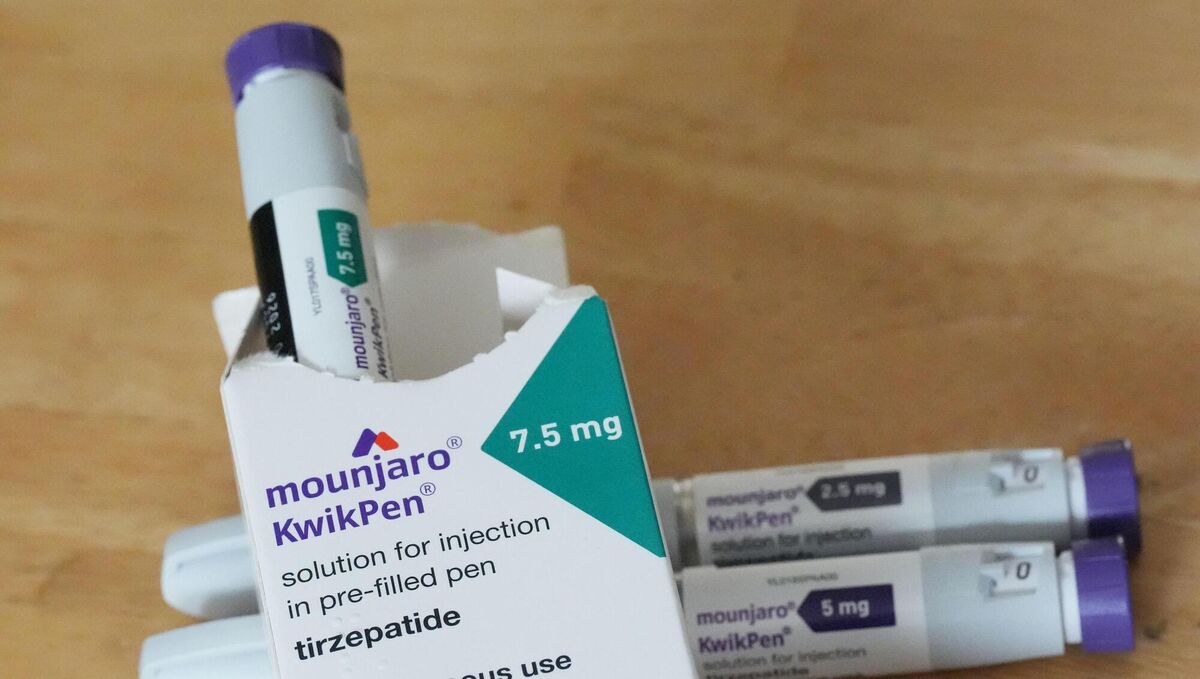
However, if you look at the breakdown of those products, “we're seeing the emergence of the weight loss drug market and Ireland being a key hub in that global supply chain”.
"Based on US trade data in the first half of this year, 56% of our pharma chemical exports to the US were one particular product, hormone peptide products related to this market. That’s gone from virtually zero last year,” he said.
He said that these weight-loss drugs are boosting the pharmaceutical sector in Ireland and in turn the country’s gross domestic product (GDP).
"We've forecast just a little under 10% [GDP] growth this year, and strong growth in the years ahead, driven by those exports, and that will mean strong growth in our corporation tax receipts as well.” Mr McNamara said the economy has been very resilient over the last six months and it is demonstrated that in terms of the strength of consumer spending, a strong labour market, and the domestic economy “chugging along”.
He added that they had concerns that reforms to US tax policies could have made Ireland much less attractive for foreign direct investment but that risk has also diminished.
“We expect business investment to be a little bit stronger, given we've more certainty, and we're expecting the consumer to continue to be robust. We will be an outperformer in a European context,” Mr McNamara said.
Mr McNamara said one of the reasons the economy is expected to slow is due to capacity constraints which limits growth at the same pace.
The report said these constraints are primarily related to housing, transport, social and utilities infrastructure.
“However, given the expected slowdown in private sector investment growth, this may free up capacity for continued growth in public capital investment to address these infrastructure shortfalls, particularly in housing,” the report said.
CONNECT WITH US TODAY



Be the first to know the latest news and updates