Anthony Daly: Limerick have planted a flag. Have they sowed a seed of doubt?
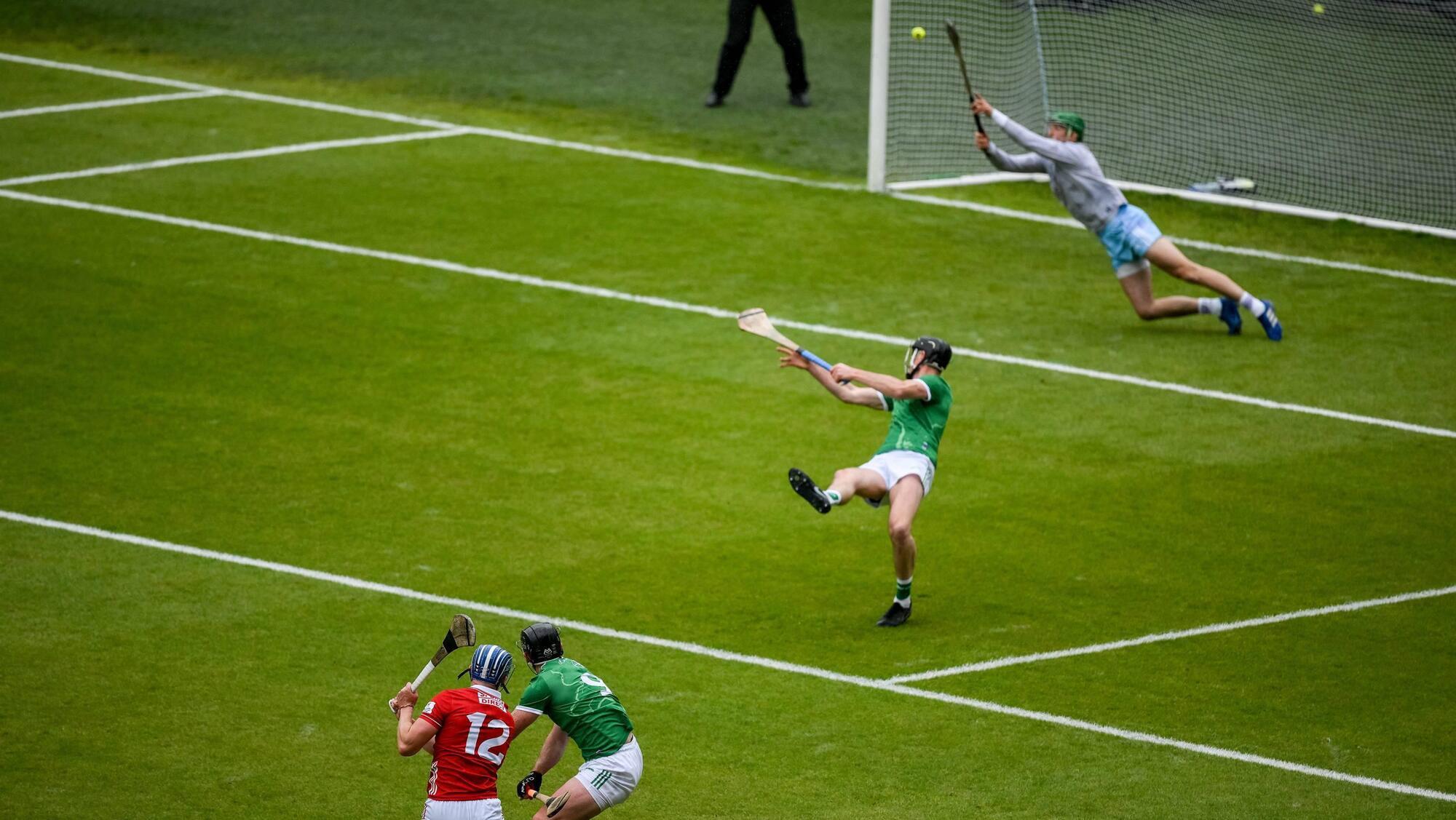

Despite all he achieved with Liverpool, one of the outstanding sporting images of Graham Souness' career was when he was manager of Galatasaray in 1995 and he nearly sparked a riot when placing a large club flag into the centre circle of the pitch of arch rivals Fenerbahçe after Gala had beaten them in the 1996 Turkish Cup final.
The image drew comparisons with Turkish hero Ulubatlı Hasan, who was killed as he planted the Ottoman flag at the end of the Siege of Constantinople, which earned Souness the nickname ‘Ulubatlı Souness’.
Darragh O’Donovan certainly won’t be called ‘Ulubatli O’Donovan’ after Sunday's Munster final but he certainly didn’t impress the Cork fans when planting a Limerick flag – which he grabbed off a Limerick supporter who had just embraced him – into the Páirc Uí Chaoimh pitch.
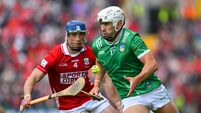
It was that kind of an afternoon for Limerick as they came to make a huge statement by beating Cork in a Munster final in the Park for the first time in their history.
It was obvious from the celebrations how much this meant to Limerick. I never saw John Kiely so animated at a final whistle. The Munster final defeat in the Gaelic Grounds last year really hurt them, while they were mad keen too to dispel this thought that Cork have their number. And they emphatically didn’t yesterday.

I watched the game from a studio in RTÉ and, while it was hard to get the same feel for the match and the occasion when so detached, it probably felt more underwhelming for me than it would have been if I was in the ground.
Read More
It was still compelling stuff. This rivalry has also got to a stage now too where we possibly expect too much from these teams. The weather was an obvious factor in a reduced level of quality from what we’ve got in recent meetings. Kiely said as much in his post-match interview when talking about gusts of wind. The rain made it even more difficult, but both still sides showed their class to be able to serve up such an enthralling contest.
It looked for so long throughout the second half, especially after Brian Hayes’ incredible goal, that Cork might be able to hold on. But the shot count of 42-23 in Limerick’s favour indicated that Limerick were the better team.
Cork had their complaints at the end when James Owens blew up earlier than they had hoped, but I struggled to see why. It was a long way out against the breeze but I still felt Patrick Collins should have opened his shoulders and had a go, as opposed to playing it to Mark Coleman, who passed to Tim O’Mahony, whose shot dropped short — although the final whistle had gone, bizarrely.
Cork may have had other issues with Owens’ refereeing; the free count was 18-13 against them. They got a penalty when Limerick had the very same claim turned down after Shane O’Brien was fouled by Niall O’Leary in the first half.
Owens did find a way to be overly fussy and pernickety. Players smell that kind of stuff and they start looking for frees, or trying to buy frees, which did go on. It’s just a pity that so much of the post-match discussion was about the referee.
It was a strange game because nobody really stood out. Nickie Quaid, who got the award, made two outstanding saves — but so did Collins.
Limerick were more in flow throughout, even if they were consistently missing chances. They dominated possession while they got far more from their bench, especially through Tom Morrissey and Adam English. I wasn’t sure if Aaron Gillane was injured or whether it was a tactical move but Kiely didn’t hang around in making that change, whipping Gillane in the 49th minute. Shane O’Brien followed Gillane in the 66th minute.
And Limerick still found a way to get it done, with Peter Casey coming up with two classic Caso type points, floating around the edge before finding that pocket of space and firing over.
The Cork forwards weren’t really firing but Ben O’Connor was extremely slow to trust his forward options off the bench. He eventually brought on Séamus Harnedy and Hugh O’Connor — but I felt he left it too long to do so. It was incredible for Cork to hit only one wide but they still had far too few shots in comparison to Limerick.
I’m sure Limerick celebrated this hard last night. I wouldn’t be surprised if they stopped off in Charleville on the way home to rub it in.
I’m sure there was good craic had by the Limerick supporters from around that area, especially with Ben only a few miles out the road in Newtownshandrum. Whatever happened, and however aggrieved they may have felt, Cork supporters can’t really dispute that Limerick are deserving champions.
AS Dublin were warming up behind the Sunday Game TV panel on Saturday evening near Hill 16, Joe Canning and I were looking for evidence as to how they might perform through their body language. Hindsight is always 20-20 vision but Joe and I thought that the Dubs looked nervous. You could even hear their S&C coach telling them to loosen up and enjoy the occasion.
Nobody knows if nerves contributed to their poor performance but the Dubs were nowhere near as tuned in or as locked in as their opponents. Cian O’Sullivan was a huge loss, they were too one-dimensional with their long ball tactic to John Hetherton. And, similar to last year’s All-Ireland semi-final against Cork, the Dubs just conceded too much.
Galway just pushed up on their puckout and forced Eddie Gibbons to go long before haring back the field with Cathal Mannion deep beside Cillian Trayers. When Galway worked the ball out and had the option of going long to Jason Rabbitte, Paddy Smyth was a sitting duck on Rabbitte because he was so isolated.
Dublin were always on the backfoot, especially when conceding so many cheap scores early on, with Darragh Neary’s goal a prime example. Paddy was just turned over too easily.
When Dublin got their first goal from Conal Ó Rian, they seemed to think that it went a long way towards solving their problems because they didn’t score again for another seven minutes, by which stage Galway had driven on again.
Rabbitte was very good. So was Aaron Niland. Conor Whelan turned in one of his best displays in Croke Park while Thomas Monaghan was outstanding. He was a deserved man-of-the-match but I’d have given the award to Cathal Mannion. Possession-wise, I’d say he was streets ahead of every other player on the pitch. You can’t give certain players the freedom of the park and whichever team they meet in the All-Ireland semi-final - Cork or Offaly - will be very conscious of not handing that freedom to Cathal.
Galway clearly didn’t give that time or space to Donal Burke. Either Darren Morrissey or Padraic Mannion got on to him, or into his space, to make sure there was no stage when Donal had ten or 15 yards of space to drift into. You have to admire Monaghan’s accuracy, but some of the points he got were struck with nobody within a country mile of him.
Dublin need Brian Hayes in so many areas of the field but I still felt that Dublin should have played Brian even deeper than they did to keep the game tighter and not be trying to come from behind. Galway’s second goal, the penalty from Niland, killed the game as a contest.
Dublin did have some positives, although not many. Conal Ó Rian did well, getting two goals, Fergal Whitely tried very hard, but Dublin were always chasing the match once their goal threat was snuffed out. And when you’re conceding four goals, you’re rarely going to win a game in Croke Park.
You’d really have to admire Galway and how well this team has developed and matured since such a disappointing campaign last year. They are full of running now, with a really slick running game, but this was another endorsement of Micheál Donoghue’s management. I’ve always been a huge admirer of him, as everyone in this column knows, but this reminded me of how much he’s like a version of Mickey Harte when he was successful with Tyrone – a ruthless interior behind a soft exterior. Galway have four weeks now to get ready for an All-Ireland semi-final at a venue where they have won a Leinster title.
Finally, Laois were fully deserving winners of the Joe McDonagh Cup on Saturday evening but I never saw such a poor shooting display from a team as Carlow produced. They had 15 more shots but you can’t miss that volume of chances and expect to win.
There was a lot to like about Laois. Stephen ‘Picky’ Maher has got himself into great shape, Cillian Dunne was brilliant at full-forward, Aidan Corby and David Dooley were excellent at midfield while Ian Shanahan – who won a Fitzgibbon with UL in February – was outstanding at the back. Leigh Cleere and Ryan Mullaney were impressive too.
Carlow never found their groove. If anything, they appeared to be trying too hard. Laois just look to have more to build on with their age profile, which is very positive. The next challenge now is to try and stabilise themselves in Leinster next year.
That won’t be easy, as Kildare discovered this summer, but there has been so much talk about a potential structural change in Leinster that it may happen. If it does, that would give teams like Laois and Kildare more of an opportunity to play for longer at the level they need to for them to really develop and prosper.
A collection of the latest sports news, reports and analysis from Cork.
CONNECT WITH US TODAY



Be the first to know the latest news and updates