Tommy Martin: Club glory all about wanting the parish to 'last ever more'
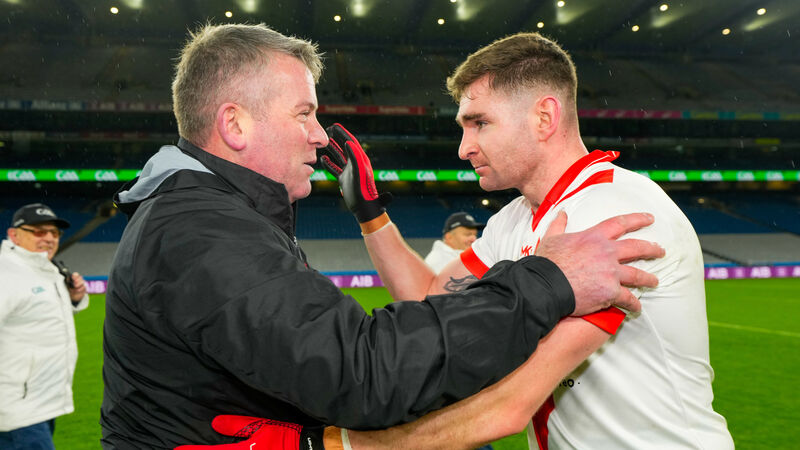
An Ghaeltacht chairman and selector Dara Ó Cinnéide celebrates with Éanna Ó Conchúir after the All-Ireland Club IFC win. Pic: ©INPHO/James Lawlor

It’s GAA club finals season and a reminder that, as Tolstoy might have said, all happy GAA clubs are alike, and each unhappy GAA club is unhappy in its own way.
There is a familiar ring to the tales that emerge from those clubs living the dream in these weeks across the codes and up and down the levels; classic tropes and familiar characters that recur. If the intercounty game is the GAA’s box office, these are its folk tales, the stuff that tells you what it is really for.
Last year’s soaraway success of the song ‘Killeagh’ by Kingfishr was not down to a sudden mass fascination with East Cork GAA circumstances, nor the current music industry vogue for moody young men with banjos. The song worked because of its universality: the call to blood and soil that anyone who’s been in a GAA club could hear. Everyone has some vague memory of a distant promotion campaign and a more prominent one of a youth spent raring and tearing and, on occasion, fighting for love.
The club championship has the same blend of the specific and the universal. Towns and villages bedecked in bunting. Tales of past defeats and adversities overcome. County stars who swear this is way better than getting a sponsored car and free pasta delivered to your house.
Siblings and cousins and their proud mammies and daddies. Tragedies and heartbreaks and tears – lots of tears. A club stalwart who, in 1976, reclaimed the pitch from a bog, equipped with only a single spade and flask of tea. For all of them, it’s about pride and place and how much they’re going to love sticking it to crowd in the parish next door.
Sometimes the marketing can wear a little thin, especially in those years when one of the big Dublin superclubs triumphs. You know, the ones whose membership is bigger than the population of Carlow and whose bar revenue matches the GDP of a small Caribbean island nation. Yes, even they will have stories of community spirit and struggle, or as much struggle as you can have when you are sponsored by a global investment bank.
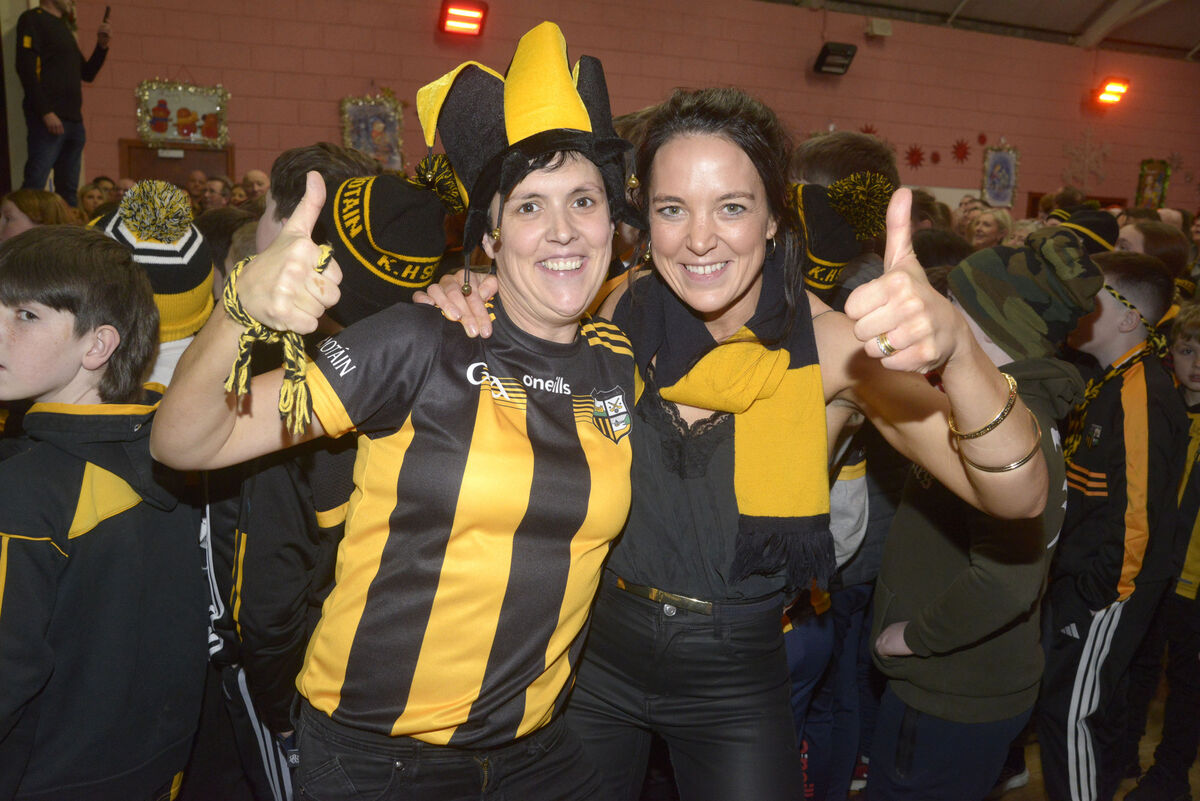
This year, the happy GAA clubs on the men’s football side are very much alike, given that most share the key characteristic of being from Kerry. Ballymacelligott and An Ghaeltacht took the All-Ireland junior and intermediate honours last weekend and Dingle are lining out in Sunday’s senior football final against St. Brigids of Roscommon.
(With Sam Maguire also residing in the Kingdom, you wonder if Jim Gavin is starting to look at his new rules and think that, in the words of J. Robert Oppenheimer upon seeing the detonation of the atomic bomb, "I am become death, the destroyer of worlds.")
Anyway, when Dara Ó Cinnéide, former Kerry star and chairman of An Ghaeltacht, pitched up on Off The Ball’s breakfast show on Wednesday, things began along familiar lines. The still-warm glow of the days after victory; the Monday club in the Boar’s Head on Capel Street; the young lads being let off the leash; the key moments that led to the steps of the Hogan Stand – manager Fergal Ó Sé coming on board, former Cork intercounty star Aidan Walsh blowing in to the area – and so on.
But it was when presenter Colm Boohig asked whether Ó Cinnéide derived love from the job of being club chairman that things got interesting. Safe to say, Ó Cinnéide reckons the actual job itself – AGMs, cajoling committees, keeping the whole show on the road – is an absolute pain in the tóin. Instead, he reckoned his role had a loftier purpose.
“It’s very important to me that they get the ‘why’,” he said of the young men wearing the club colours in Croke Park last Sunday and those supporting them. “That they get not just that we won 0-12 to 0-6, but why. That winning an All-Ireland is just the start of the process. What’s important to me is that the penny would drop with them, that they’d see that thing on our jersey there [referring to the motto on the club crest], ‘Sprid, Croí, Caid, Teanga’. That they get all that.”
Sprid – spirit, or courage; croí – heart; caid – the Kerry term for football that predates the 19th century codification of the game by the GAA; teanga – language. For Ó Cinnéide, these are the things An Ghaeltacht were playing for in Croke Park and as he elaborated on his subject, what followed was captivating radio that veered way off from the usual celebratory reflections of a club stalwart.
Ó Cinnéide is a well-known broadcaster in both national languages, so he had the skills to articulate how An Ghaeltacht’s victory was about defiance and the existential struggle for identity, the survival of their language and their community. It was part battle-cry, part lament and part cri de couer for the preservation of a way of life.
He took in the challenge of rural depopulation and the local campaign led by the traditional musician Brendan Begley against planning regulations that have hindered people building houses on the land they grew up on. How clubs struggling to field teams and amalgamating with their neighbours means the dissolution of long-held and sacred identity.
Or how his club’s success is of a piece with cooperative movements like those in the South Kerry Gaeltacht, referring to how the people in Dromid, home of Kerry manager Jack O’Connor, took over the only pub in the village on a community basis rather than let it close down altogether.
“Our backs are to the wall in terms of our identity,” he said, “in terms even of our language [being] under pressure. The fightback is coming deep from within the belly of a lot of people… We’re delighted to express that [mindset] in the last couple of weeks, to be able to say, this is what is happening here. We might be under pressure in ways but this is what we have.”
Crucially, Ó Cinnéide refused to romanticise what it means to live in such a place and to continue a way of life that blows against the prevailing winds. How it is a big thing to keep a football team going or decide to speak the Irish language when it would be much easier not to. How hard it is to resist the forces that pull people away from these areas, resulting in what he called bánú – desolation.
Coming from a similar place at the other end of the country, there was resonance in what Ó Cinnéide said. These are 'austere' places in winter, when the tourists have gone; places most young people yearn to leave to see the world and make a life for themselves. Persuading them to come back is a big ask, but the future of these places depends on it.
Or as Ó Cinnéide put it: “We’re here all the time – and that’s where the football comes in, it says we’re here, this is us, this is what we’re about. Sprid, croí, caid, teanga. This is what we’re all about.”
Here was the truth in the club championships’ often homogenised message. That, really, wanting “the parish to last ever more” is the whole point.