Fogarty Forum: If players want replays, the GAA should bring them back
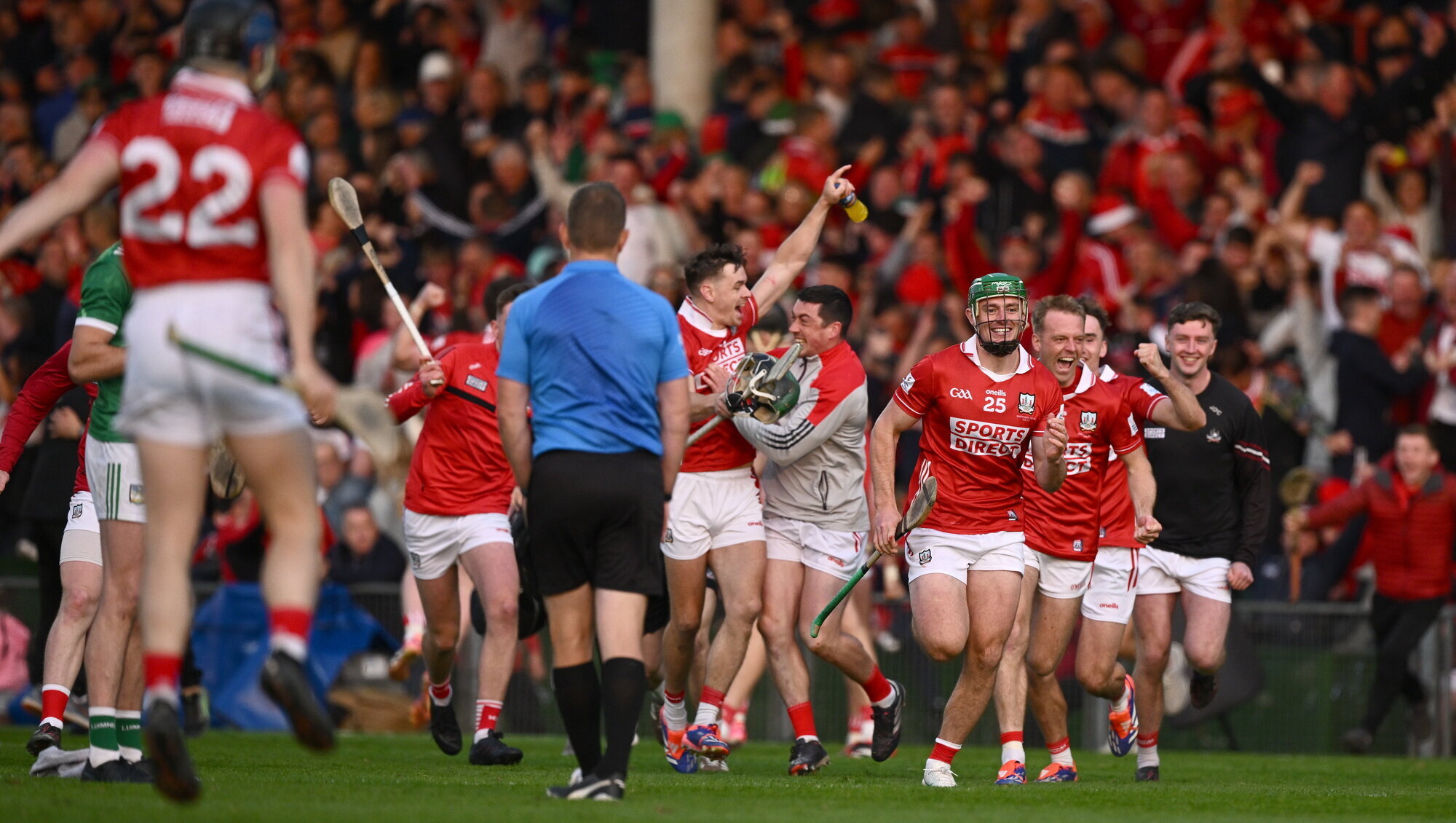
Penalty shootouts are a flawed way to decide matches. Asking the players who have experienced them if they want to keep them would be a start. Pic: Ray McManus/Sportsfile
Funny how things work out almost as if planned.
Four months ago, Cork GAA chief executive Kevin O’Donovan stood up at Annual Congress in Donegal and said his county were in favour of replays applying to All-Ireland finals after 70 minutes but not provincial finals following extra-time.
Cork’s attitude was founded on the provincial game not being a knock-out final per se and a replay causing the finalists more difficulty with the All-Ireland championship in mind. Therefore, they would be abstaining from the motion calling for both.
The proposal, if it hadn’t been withdrawn for further consideration, was discussed as it had been made possible by delegates voting for the new All-Ireland SFC format featuring fewer games. It would have applied to next year’s championship but O’Donovan’s contribution to the debate is obviously fitting seeing as Saturday’s Munster SHC final ended in victory for Cork following a penalty shootout.
Having been on the wrong side of last year’s extra-time All-Ireland final loss to Clare, Cork had been keen to see the replay applied at the end of normal time. Would O’Donovan have changed his tune had Limerick come out on top in the penalty shootout? Doubtful but there were a few Cork men slightly conflicted by what happened in the TUS Gaelic Grounds.
In an interview last year, O’Donovan’s predecessor Frank Murphy made his opposition to penalty shootouts and doing away with replays quite clear. “I think it’s shocking. And I think it should be rescinded.”
It’s a point Murphy has consistently made. In office in 2015, he warned: “The shortening of the period for our ‘shop window’ inter-county championships and the loss of most of September will diminish publicity and promotion of our games. Similarly, the dispensement with replays will adversely affect promotion, publicity, and finances needed to fund our activities at all levels.”
Also at Congress, Limerick secretary Mike O’Riordan claimed a replay would devalue the provincial competition. That stance may have been challenged over the last 48 hours. His manager John Kiely took the view that penalties was a harsh medium.
Joining O’Donovan and O’Riordan, Munster chief executive Kieran Leddy reiterated his point in The Abbey Hotel that provincial winners could be waiting five weeks for All-Ireland semi-finals in a normal year to allow for Leinster and Munster replays.
Let’s be honest, what occurred on Saturday was exceptional, the first penalty shootout that decided a Liam MacCarthy Cup game since provincial finals became winners on the day events in 2020 and only the fourth Munster SHC final in 33 years to be tied after regulation time.
At the same time, the usual 70-plus minutes has not been enough to split Limerick from Clare and Cork in two of the last four finals. It’s reached the point where contingency plans have to be reviewed.
In Limerick on Saturday, there were plenty of Ulster people, the likes of Peter Canavan, who have had their last three SFC finals go into extra-time, two of them to penalties. They have been highlighting the problem of no replays for a couple of years and now Munster feel their pain.
At Congress, Donegal chairwoman Mary Coughlan said penalties was no way to decide a provincial final despite her county winning on that basis last year. Before Armagh were to suffer again at Donegal’s hand this year but in extra-time, GAA president Jarlath Burns referenced how his county had suffered losing out on shootouts.
Ulster GAA chief executive Brian McAvoy suggested the idea of replays applying to provincial football championships and not to the Leinster and Munster SHCs. However, the top table were loathe to differentiate between the codes and the debate was parked until Special Congress in October.
In such a tight space, options have their pluses and minuses. The losers of a replay in SuperValu Páirc Uí Chaoimh would merit a two-week break to an All-Ireland quarter-final but as Leddy highlighted a five-week gap for the provincial winners would be a yawning one.
On the odd occasion there is a provincial final replay, arranging the All-Ireland semi-finals for separate weekends might be doable if the All-Ireland final was pushed out a week. However, semi-final weekend in Croke Park is a hurling highlight and breaking it up might be robbing Peter to pay Paul.
For all the talk that the Munster Council were overmilking their showcase by bumping up ticket prices for the second successive year, by not having a replay they left over €1m in net gate receipts on the table this past weekend.
The money argument shouldn’t be the motivating factor for a second day. An appreciation for the ringer players have to go through in penalties followed by the promotional worth of a replay should be the true factors.
There is no alternative without its own flaws but asking the players who have experienced these shootouts would be a start.
john.fogarty@examiner.ie
In front of the central area in the Mackey Stand on Saturday evening, Limerick’s players positioned themselves to be present for Rob Downey’s acceptance speech.
Wearing the pain of defeat and battle wounds, they sat and stood for the duration of his address. To do so, they had to wade through a sea of red as Cork supporters converged in front of the stand to see their captain lift the Mackey Cup for the first time.
The stony faces of the Limerick players said everything. “Remember this feeling” was Dónal Óg Cusack’s message to the Cork players on the field after they lost the 2003 All-Ireland final to Kilkenny. Now Limerick are the hunters again.
For the most part, Cork supporters were respectful but there was more than a couple of voices for who quite clearly victory wasn’t enough. Kyle Hayes and the false narrative that Limerick’s success has been created artificially by finances were the topic of taunts.
It will be said Hayes has made a rod for his own back and it must never be forgotten that Cillian McCarthy was the victim. Nevertheless, he has been judged by a court of law and what he has been subjected to at games he has more than contributed to goes beyond the pale.
On the flipside, there was the wholesome scene as All-Ireland winners of old, the likes of former manager Kieran Kingston and Seánie McGrath, waited patiently at a gate to congratulate the Cork players as they walked to the dressing room.
Two men who would know taking your win is as important as taking your beating.
The amateur status review committee’s work is cranking up judging by the recent questionnaire issued to the public and chairman David Hassan’s appearance on RTÉ Radio 1’s show on Sunday.
Some of the leading questions asked in the survey have raised eyebrows. “Do you think the GAA should reduce the length of the current inter-county season as a means of reducing the burden on amateur players?” is one of them. “Do you believe that following the conclusion of a player’s involvement with an inter-county team, there should be a mandatory period during which the player cannot play or train with his Club?” is another.
It was interesting to hear Hassan speak about the option of inter-county managers receiving a stipend in a quid pro quo agreement to uphold player welfare matters.
“Managers would still receive expenses and could be increased, but they could also receive a payment, a stipend paid for by the Association, for participation in an inter-county management qualification framework, which would require them to implement a range of player welfare measures.
“Things like return-to-training and instances where players are playing on multiple teams, ensuring dedicated rest periods, issues to do with injuries, so there is a raft of player welfare measures that concern the Association.”
Hassan is wholly aware of how polarising a subject this is, as former GAA director general Páraic Duffy realised only too well when he attempted to grasp the nettle in 2012.
There is a genuine fear that paying managers could be the thin end of the wedge and pave the way for players to seek remuneration too. Hassan mentioned the Gaelic Players Association regularly survey their membership but it should be highlighted less players are happy with the amateur status, 59% last year compared to 71% in 2023.
Attempts to regulate the GAA’s "shamateur" elements are well-placed but at what extra cost?