Donal Lenihan: Time to discuss Munster's elephant in the room
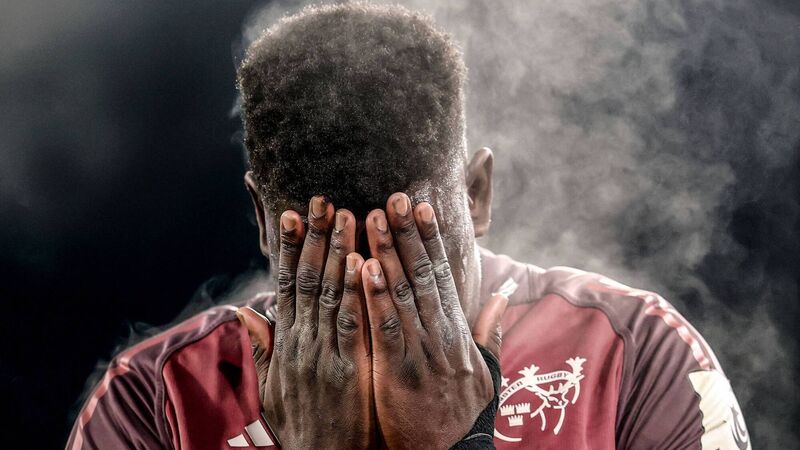
Steam coming off of Munster's Edwin Edogbo. Pic: Dan Sheridan/Inpho

WHEN Matthew Carley blew the final whistle on Munster’s Champions Cup campaign last Saturday, I couldn’t get out of Thomond Park fast enough. I was angry. Judging by the conversations around me, I wasn’t alone.
Back home by 9.15pm, I was able to catch the final quarter of Gloucester’s game against Toulon. A win for the Top 14 side relegated the west country men to bottom of Pool 2, one place below Munster.
As a consequence, Munster are destined for Challenge Cup rugby. After that game, I made the mistake of not penning my thoughts on events in Limerick for Monday’s Irish Examiner.
Lying in bed, my head was spinning with thoughts on the current state of Munster rugby. It was like watching clothes revolving in a washing machine. I couldn’t sleep. I looked at the clock at one stage. It was 4.28am.
Three hours later, my mind still in overdrive, I couldn’t take anymore. It was time to set my initial thoughts to paper for this column.
Just as well I’ve had time to review and edit those since. They were pretty scathing.
I’d originally intended that this column piece would focus on Andy Farrell’s potential squad selection, to be revealed today, for the Six Nations but, right now, there’s more pressing issues to be addressed.
What Clayton McMillan inherited when he arrived from New Zealand may not be what he was sold in the first place. As an organisation Munster is leaking heavily from top to bottom yet nobody seems prepared to grasp the nettle and address the issues.
From a strict rugby perspective, things aren’t that bad. Munster’s High Performance Unit in Limerick is first class, up there with the very best.
The players want for nothing in terms of training facilities, S&C, personal and team analysis, medical back up and individual support on a wide front.
The players appear happy with the quality of coaching even if it’s never perfect when a new head coach arrives and has a coaching team handed to him. That said, the likes of Mike Prendergast and Denis Leamy are quality operators who know Munster rugby inside out.
Based purely on what’s seen and heard, I’ve been impressed by the way McMillan set out his stall from the outset. I’ve never met the man, but I’m assured that he’s a top quality coach and person. He certainly comes across that way.
He does, however, bear culpability when it comes to setting the game plan that contributed to the defeat to Castres last weekend.
I’m blue in the face from stating here that in the current game, without explosive power and squad depth, you have little or no chance of competing seriously for silverware.
Unfortunately, the squad MacMillan inherited is chronically short on both. As a result, he has to design an alternative way to compete. Consequently,
Munster’s game plan against yet another big physical French outfit revolved around playing with width and high tempo in an attempt to take the legs from the visitors.
If you’re not powerful enough to play through them, you have to try and play around them. The problem with that is it requires a very high skill set when it comes to handling and passing. This group of players are short of that at present.
All New Zealand players, including McMillan’s Waikato Chiefs side that made it to three Super Rugby finals in a row, have that in abundance. He may be guilty of over-estimating Munster’s capabilities in that department.
By his own admission, one of the reasons he came here was "to grow my exposure to the game up in this part of the world".
Indications are he’s still coming to terms with the nuances of that.
When Munster’s handling errors are combined with defensive issues — they missed 29 tackles on Saturday — and a deficient kicking game, you’re bound to struggle. On the positive side, you can’t overlook the fact Munster scored five tries against Castres, sufficient to win most games.
Munster’s most prolific attacker on Saturday was South African winger Thaakir Abrahams yet it appears he’s set to leave at the end of the season along with Jean Kleyn.
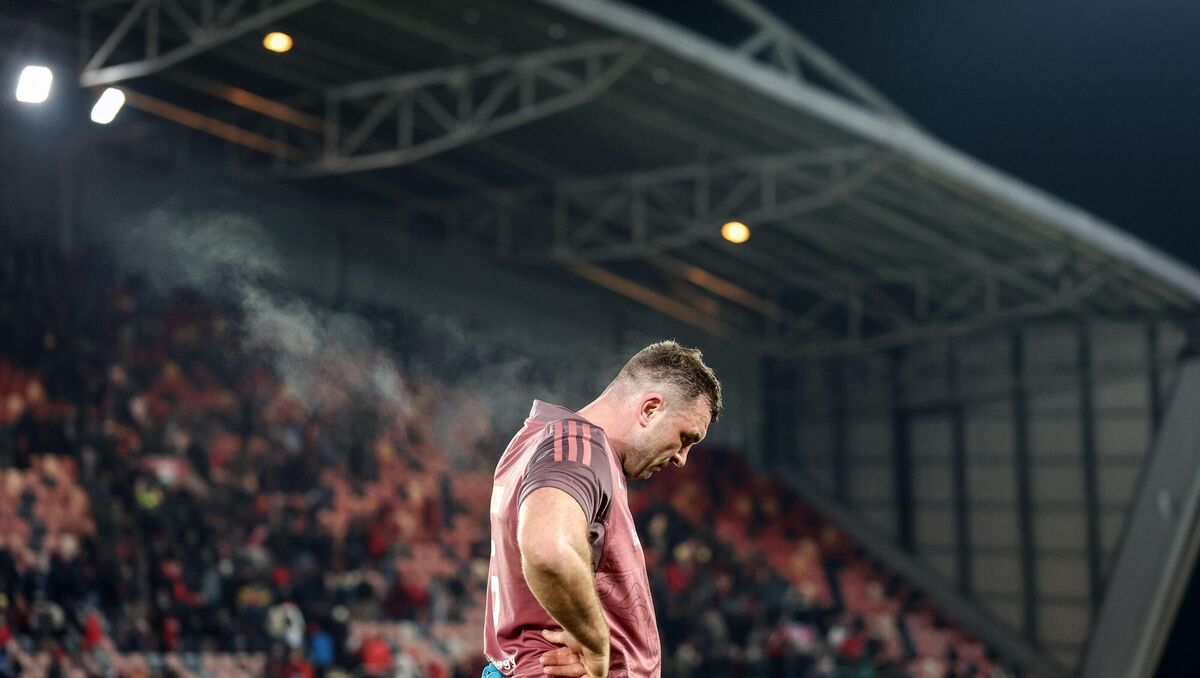
The latter’s departure can be absorbed once Edwin Edogbo’s reaches full match-fitness.
A decent pre-season of conditioning, devoid of injury setbacks, should be sufficient to address that. I also like the look of Evan O’Connell.
If the Challenge Cup is to be of any benefit to Munster then allocating more game time to Edogbo, Tony Butler, Brian Gleeson, Ronan Foxe, Michael Foy and Ruadhan Quinn would generate a more lasting benefit than winning it.
As it happens, an away fixture to Exeter Chiefs, currently third in the English Prem, is going to prove a big stumbling block anyway.
While the departure of Abrahams and Kleyn opens the door to sign two Non-Irish Qualified (NIQ) players, exiting the Champions Cup early is a blow to the coffers. Without money, the ability to attract top quality talent becomes increasingly difficult.
ON reflection, my post match anger was not directed at MacMillan or his players, but more with those tasked with running the game in the province.
To succeed in professional sport requires leadership and a clear vision from the top, something that’s lacking in Munster right now.
That reality has been staring us in the face for some time. I’ve been heavily immersed in club rugby in the province for a long time. The bedrock of Munster’s game has always been its clubs.
Unlike Leinster, we don’t have the depth or quality of schools that churn out top players, delivered by a highly organised system which has enabled their academy cherry pick the very best from that well established assembly line on an annual basis.
At least the IRFU has recognised this and is now directly involved in trying to replicate that process in some of our traditional rugby schools which, hopefully, will bear fruit down the line.
Despite some intense rivalries that can be traced back to my own playing days, it saddened me to see great Limerick clubs like Garryowen and Shannon being relegated to Division 1B and 2A of the All Ireland League respectively over the last two seasons.
Storied Cork clubs Dolphin and Sunday’s Well have also encountered difficult times of late and have also fallen down the ranks. This should have sent alarms bells ringing in the corridors of power in the province, yet they appear unconcerned. That worries me.
There’s already six Dublin clubs in Division 1A of the AIL. With Old Wesley currently sitting top of 1B and looking good for promotion, that may well increase to seven at the expense of another Munster club, Nenagh, who are currently rooted to the bottom of 1A. If that comes to pass, it would be a further blow as it’s brilliant to see a Tipperary club competing in the top tier of Irish rugby.
It’s also high time to address the elephant in the room. Whether we like it or not, there’s a clash between rugby interests in Limerick and Cork meaning key decisions aren’t always made with best interest of Munster rugby at heart.
That has to change.
To do so, firstly it has to be acknowledged and then eliminated. My persistence in calling for two top quality games to be staged in Cork, including the festive Leinster derby on rotation, has not been well received by some in charge.
This, despite the fact Munster bagged an extra €500,000 from staging the Gloucester game at Páirc Uí Chaoimh. I couldn’t give a damn if they decided to play in Knocknagoshel, as long as the decision is made in the best interest of Munster rugby.
This ridiculous pettiness has to stop. It’s where clear leadership is required. Don’t search for negative reasons why it shouldn’t happen, be proactive and maximise the benefits from making it happen.
Munster should be looking to Glasgow Warriors for inspiration given what they’ve achieve recently.
URC winners in 2024, they’re a top two seed in this season’s Champions Cup with a maximum return of 20 points, having beaten French giants Toulouse and former winners Saracens at Scotstoun.
I’ll leave the final word to Ireland’s recently departed director of high performance, David Nucifora, on his dealings with Munster rugby when interviewed by journalist Brendan Fanning for his excellent book Touching Distance.
“The battle down there (Munster) is to get people, whose emotions are always running high, to keep their noses out of stuff they have no business in. From my experience, it’s a full-time job."
“Until they do away with the parochial attitude and living in the past, they’re just not going to move forward. At some point, they’re going to have to bust open the cabal if they want to move consistently forward."
I couldn’t have said it better myself.