Eamon O'Shea: It is baffling why so few clubs trust their own members when it comes to training adults
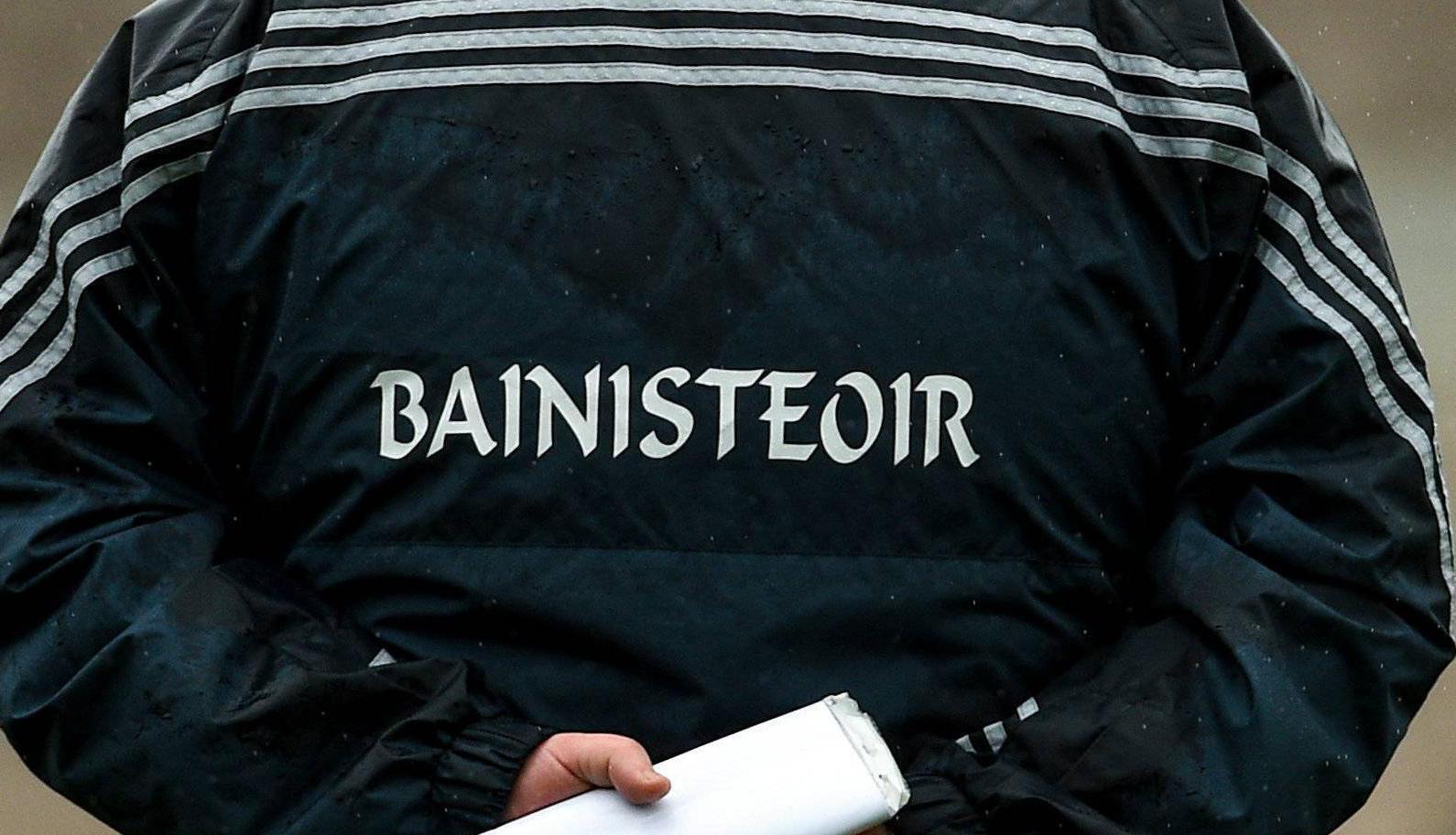
Caring is important, particularly if you believe that the GAA is different and carries social and community responsibilities beyond winning and losing. Pic: Diarmuid Greene/Sportsfile
In my last article I went through what typically happens before, during and after an inter-county training session and how all the various roles combine to deliver a high-quality production.
All very well says you, but do we need such a complex organisational structure — and anyway isn’t there a grassroots crusade to simplify and downgrade the inter-county game and season?
There is, but who to leave in and who to take out?
Take a role very close to my own heart — the maor uisce. I really enjoyed doing that job for Tipperary in 2019, mainly because of the freedom it bestowed. There was no need for a job description.
All you had was a bottle of water in your hand, a mind full of ideas and multiple sets of instructions from your manager.

You were also hidden in plain sight. So much so, that I was not listed in any match programme during the 2019 All-Ireland winning season and, therefore, officially a non-person.
The circus ghost! A John le Carré creation, giving and receiving information in enemy territory. Indispensable! How could anyone think of getting rid of such a role – low cost, life-saving and unseen?
Which brings us to the management team. Could we possibly make savings there? How about combining manager and coach roles?
Len Gaynor was in sole charge of Kilruane MacDonaghs during all my years as a club player and he never had a formal title or an accompanying coach, as far as I remember, yet I learned most of what I know about the game from him.
Read More
I know it’s like wishing to see Brian Clough appearing on our screens again, but the old-style polymath manager had many virtues, including the ability to determine the ethos and values within the dressing room first before worrying about what happened on the pitch.
The pitch could be left to players once rules of engagement were set and non-negotiables established. And I learned so much from my fellow players as a result, because we had to work it out for ourselves.
Left to our own devices, treated like adults, with minds of our own, we always knew, without Len saying very much, when and where we had to do better.
Mind you, he also put himself on as substitute a few times when he grew tired of our incompetence and the game was in the melting pot. No wonder we won so many tight matches.
Nowadays, of course, the biggest existential threat to many existing jobs is the recent acceleration of AI technology solutions.
And that threat applies to hurling coaches too. It takes AI about five seconds to produce a high-grade hurling coaching session, including providing information on multiple ways to counteract the most influential hurlers in the game, in detail and with remarkable accuracy.
Now, I know that AI algorithms are designed to be affirmative, even delusional, extrapolating wildly when knowledge is scarce, but then so do human coaches! Resorting to AI has the additional benefit of being cheaper than dipping into the human market for coaches, so maybe that will be next pivot for financially compromised clubs and counties.
But while AI may be smarter than many human coaches, it will unlikely ever care as much – thank God for that say any referees reading this piece. But I am talking about coaches who genuinely care about the people they are coaching, not the performative types.
Therefore, rather than reaching for AI solutions, maybe we should be cultivating home-bred coaches from within and empowering them to operate independently off a blueprint that is recognisable, durable and sustainable to everybody connected to the club or county.
It is baffling why so few clubs trust their own members when it comes to training adults.
Caring is important, particularly if you believe that the GAA is different and carries social and community responsibilities beyond winning and losing.
If you are thinking about developing and upskilling your own coaches maybe encourage them to read the short, but brilliant, essay on Kindness by the Czech immunologist/poet/writer Miroslav Holub.
Holub’s view is that you should hold off on both power and judgment as much as possible in your dealings with other people. Practice empathy instead. You do not always have to be right, or even be seen to be right, even when you are right. Give the benefit of the doubt to young people especially, those trying to learn – break the ball in their direction. A gentle nudge is all most people need to take off.
Data gatherers and data generators are often next in the firing line when it comes to discussions about downsizing. However, the game is much more structured now and every available space on the pitch is codified, creating a genuine need for more data. Where I would see some scope for cutting back is in the way data is produced. There is currently too much replication.
Centralising GAA data production and making it a commons, freely available to all, would be an easy and important act of downsizing. This could be done under the auspices of the already established GAA’s Games Intelligence Unit.
Good data, therefore, remains essential for coaches and players. However, one of the unintended consequences of an over-emphasis on data is that it may lead to players spending too much time watching video clips of games instead of practising and developing their craft.
In an amateur game, where time is finite, compromises are inevitable. And one of these compromises, in my experience, is that adult players are now spending less time on personal practice; for example, striking on both sides, judging distances, touch and catching.
Moreover, data availability makes it easier to coach structure rather than technical skills, so we also end up spending less collective time on the latter and too much on stopping the opposition playing. This has created a worrying degree of uniformity and sameness on the pitch, contributing to monotony and boredom for players and spectators.
Change is inevitable and natural, but we need to find more balance in how we shape, influence and interpret the ancient game of hurling – data occupies the mind, but the twin engines of hurling performance, heart and soul also need to be nurtured. I suspect this view is seen as outdated nowadays, maybe correctly, but some caution is needed.
Finally, maybe we could cut back on some of the mindset curators that currently inhabit GAA dressing rooms of all types, club and county?
Perhaps, but in my experience, sports psychologists are very beneficial for some players.
The marginal gains to performance can be huge when the fit between psychologist and player is right.
Consequently, I would be cautious about diminishing their influence within inter-county set-ups. Their tenure tends to be naturally time-bound anyway, making them less a burden on the overall budget.
However, maybe we could be more creative when it comes to minding the mind, more long-term and less dependent on professional expertise. I have always used poetry as an antidote to pressure, especially during periods of high stress in both real life and in sport. At various times, reading poetry, has calmed me and allowed me to focus on what, and whom, are truly important in my life.
Poets are also likely to be among the least demanding and least costly resource in the world for hard-pressed clubs and county boards. They just want people to read their poetry and take their own meaning from the lines in front of them. Such simplicity can yield significant benefits.
I can sense your scepticism dear reader. But why not poetry? Remember the great liberating poem by the late Paul Durcan:
Durcan knew a thing or two about freedom and Jamesie was the living embodiment of it on the hurling pitch, as were the Clare team he was part of, managed by the ultimate Hurling Diviner, Ger Loughnane.
Thanks to Maureen Kenneally, now of Druid Theatre, I shared a stage with Paul Durcan in May 2015, in the Source Arts Centre in Thurles, dashing across from training in Morris Park to pay homage to the great man. Now there was an intellect and a performer.
As we waited to go on stage, I saw the familiar nervousness of the elite performer – on stage I witnessed creativity, genius, kindness, vulnerability, fun and playful control over an adoring audience.
He even posed the question to me on stage whether Lionel Messi would be good enough to play for Tipperary?
Naturally, I responded in the negative. Durcan was in my county and he owned the place – hurling is the life blood of Thurles, but that night it was the poet they were coming to see.
At the very end of the performance, he turned to me and whispered, ‘Viva la revolución’. That night I was carried back home to Galway on a magic carpet!