Derek McGrath: Have Clare a plan to disrupt Limerick's flow?
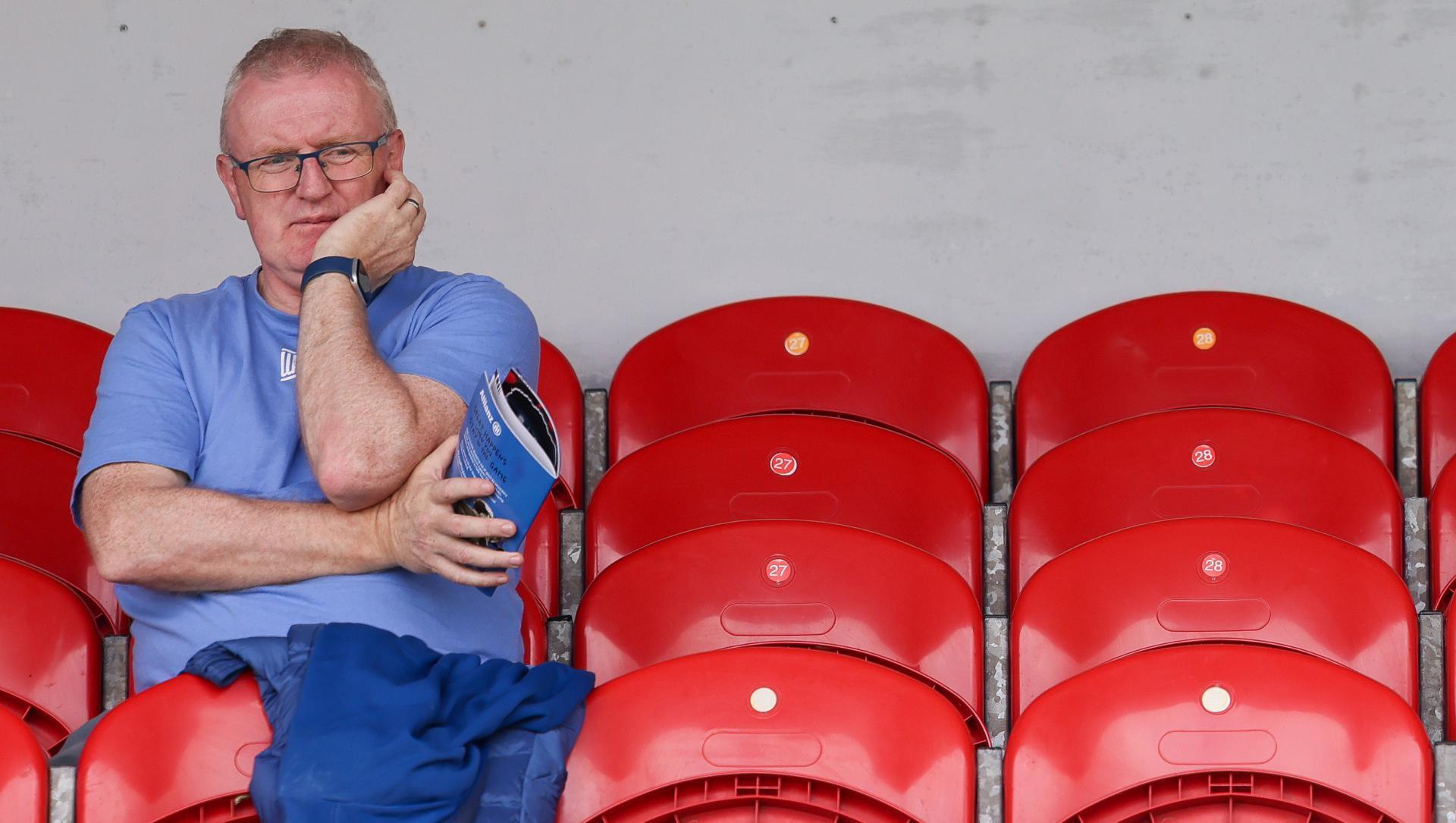
Clare hurling manager Brian Lohan before the Banner footballers' game against Kerry last weekend. Pic: INPHO/Natasha Barton
This weekend’s clash between Limerick and Clare firmly belongs in the season-shaping category. A game not just defined by rivalry, but by urgency, psychology and the battle for rhythm.
It might sound contrarian, even counter-intuitive, to link the Munster Championship to the monotonous pursuit of sticking to the system. Don’t be misguided. The system is not just about tactical principles, but can focus as much on the behavioural and cultural traits and togetherness of the group.
For many teams, the conversation increasingly centres on finding flow. This sweet spot of performance, where instinct overrides hesitation, clarity replaces doubt and execution becomes almost automatic.
Read More
In either camp, Tony Griffin and Caroline Currid will have facilitated the chase for this feeling that Jim Afremow describes in his book 'The Champions Mind' as “when athletes are in flow they are not thinking about doing, they are simply doing”. Terms like 'must-win', 'pressure', and 'season-defining' will have dominated the outside noise this week. Inside a different process will be tangible.
During the opening 20 minutes last Sunday everything about Limerick's play pointed towards alignment. The key metrics were based around pace, energy and tempo. Their tempo was electric but never rushed. There was visible urgency not born of panic but of intent.
Previewing the football championship some weeks ago. Éamonn Fitzmaurice provided both depth and reason . Describing the fusion of pressing with ensuring you have a good defensive set-up is something Limerick generally manage better than any other team. At the weekend, they did it perfectly prior to Shane Barrett's goal.
Anyone coach, at any level, who is telling their players that they must restrict themselves to their own positions should watch Cathal O'Neill just before the throw-in. Located deep between the 21 and 45, once the ball is thrown in he sprints from the left-half-forward position to the right-hand side of the throw-in. Shackles off, possession gathered, first touch secured, he offloads to Diarmaid Byrnes for the first score of the day. He has chased the flow by being loose, all-in and going for it. Winning the throw-in is a mini goal that many teams set, akin to the Kerry footballers' use of Gavin White on the break last year.
With a zonal defensive set-up involving Hayes, Byrnes and O'Donoghue holding their positions, and a sextet of forwards fully pushed up, Limerick want you to go long. What’s clearly been worked on is the obsessive desire to get back to help. For the first Patrick Collins puckout on 28 seconds, a full court press is the target.
Cian Lynch is right up on Tim O'Mahony, while Adam English trades off slightly on Tommy O'Connell. Pause the TV four seconds later and the six Limerick backs are accompanied in their own half by English and Cian Lynch as midfielders and at least three of Cathal O'Neill, Gearóid Hegarty, Aidan O'Connor, David Reidy or Peter Casey.
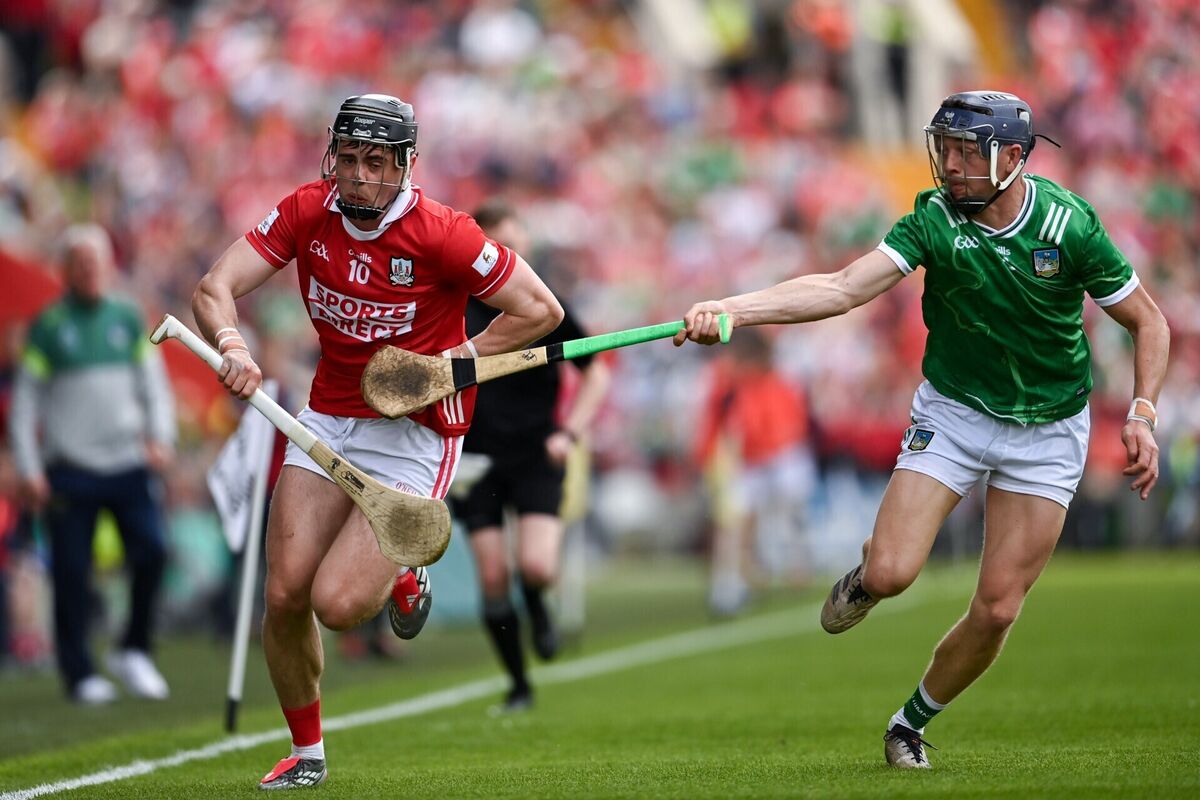
The average time to get defensively reset on long Cork puckouts prior to Shane Barrett's goal is four seconds. This continued for the opening period and obviously became much more difficult to sustain with 14 men.
Allied to Limerick tiring, Cork finally ensured that their forwards engaged in the middle third, presenting Limerick a wall of red to run into as opposed to a prairie of green grass.
The main focus of Limerick analyst Seanie O'Donnell seemed to be based on Rob Downey's short puckout success against Tipperary. On seven mins and three seconds, Kiely can be sees bellowing “fuckin' press up on him”.
Chasing a tackle count on the limited times that Cork went short is Limerick's bread and butter. If a ball is clipped from an opposition first receiver to a half back unchallenged, the Monday review would not make great viewing for the forwards.
Much of Kinnerk and O'Donnell's focus will be on the energy and urgency that Limerick displayed to race into the lead. Given the depth and security provided by the half forwards, Cian Lynch, Adam English and Barry Nash became the in-behind runners often not picked out with dink balls over the top.
Clare arrive into this contest with momentum and perspective. Their forwards heralded, their backs questioned, the next match can often see a reversal of fortune.
Coaches Brendan Bugler and Shane Hassett will have worked endlessly on ensuring their defensive scrambling is way more effective than in both the Dublin and Waterford games.
For large parts the last day Clare dictated phases, managed possession and showed patience in their build-up play. It was effective, the crowd loved it, but it was a game that allowed for that kind of rhythm.
On the edge of the D, Shane O'Donnell wandered effectively with Rodgers and Duggan constant outlets for a marauding half-forward line and midfield. Replicating this template for the Waterford game too closely may well play into Limerick's hands. Lohan’s positioning of his key players will be interesting.
Éibhear Quilligan may learn from Patrick Collins' early hesitancy with faster restarts, not allowing Limerick to become defensively set. Duggan as an old-school lie-on-top-of-Hayes from puckouts may be an option or they may look at the joy Brian Hayes got in behind Kyle, and ask Duggan to tip it down for a David Reidy or Tony Kelly.
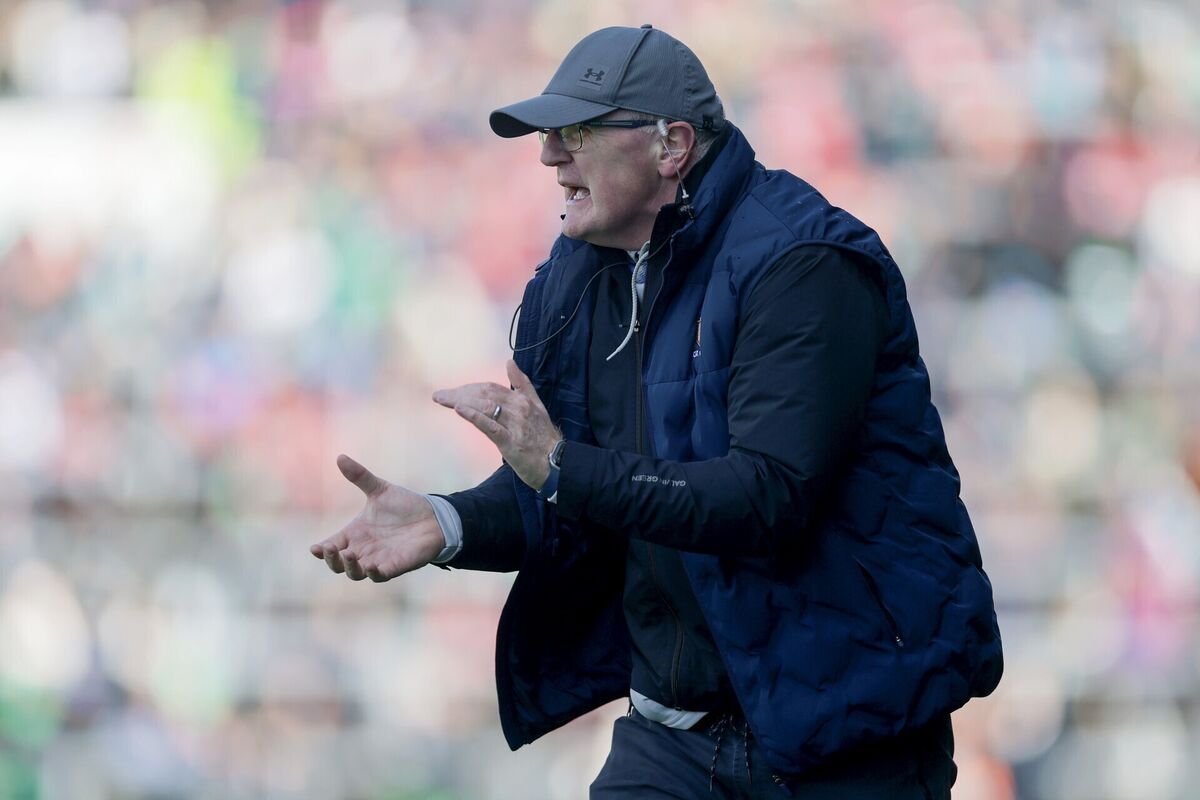
Kelly at 11, alternating regularly with either O' Donnell or Rodgers may serve them better than having their three killers in front of the Limerick zonal arc.
Clare may be better served by disrupting Limerick's rhythm with their best players Kelly, Rodgers, Taylor, Duggan and O'Donnell in the middle third, trying to play give and goes, breaking the tackle, and creating space in between the endline and the football arc, as opposed to hitting crossfield ball into their inside three.
Kelly may present a similar conundrum to William O'Donoghue that Shane Barrett did and Lohan might be tempted to give him even more licence to go D to D all day hunting any won ruck at its edges for the pop pass. If, and it’s a big if, space eventually arrives in Cusack Park, Clare can then play 30-yard clips in front of their inside two as opposed to long aimless deliveries. Clare's challenge is to mix the pursuit of their own performance with preventing the fluency and flow of Limerick's. Where they controlled the tempo against Waterford, they may seek to disrupt it against Limerick at crucial times.
Kiely’s interview post Cork conveyed little sense of panic. His messaging was calm, measures resolutely positive and totally deliberate. The emotional consistency post-game of Lohan, Queally and Kiely is no accident and is a reflection of the work of performance psychologists Griffin, Sullivan and Currid.
For Limerick this weekend the focus will not be on the magnitude of the occasion but on the simplicity of the next action. In that sense they are unlikely to frame this as a must-win rather than one where they must execute well. All the players will know that the mind performs better when it's free from outcome obsession.
The real difference then may be psychological. Witnessing the Clare players stroll through the town of Ennis, coffees in hand, on the morning of the Waterford game, they too are living in the present.
Lads with an inner perspective and habits aligned to know what matters in life. Therefore a prediction is a fine balance. The game is about what will hold when the chaos comes. In those moments teams do not rise to the occasion they fall back on what is ingrained, their habits, their system.
The outcome may not be decided by pressure at all but by the strength of what they fall back on. Limerick to edge it.