Fogarty Forum: Hurling made to wear ill-fitting football hand-me-down
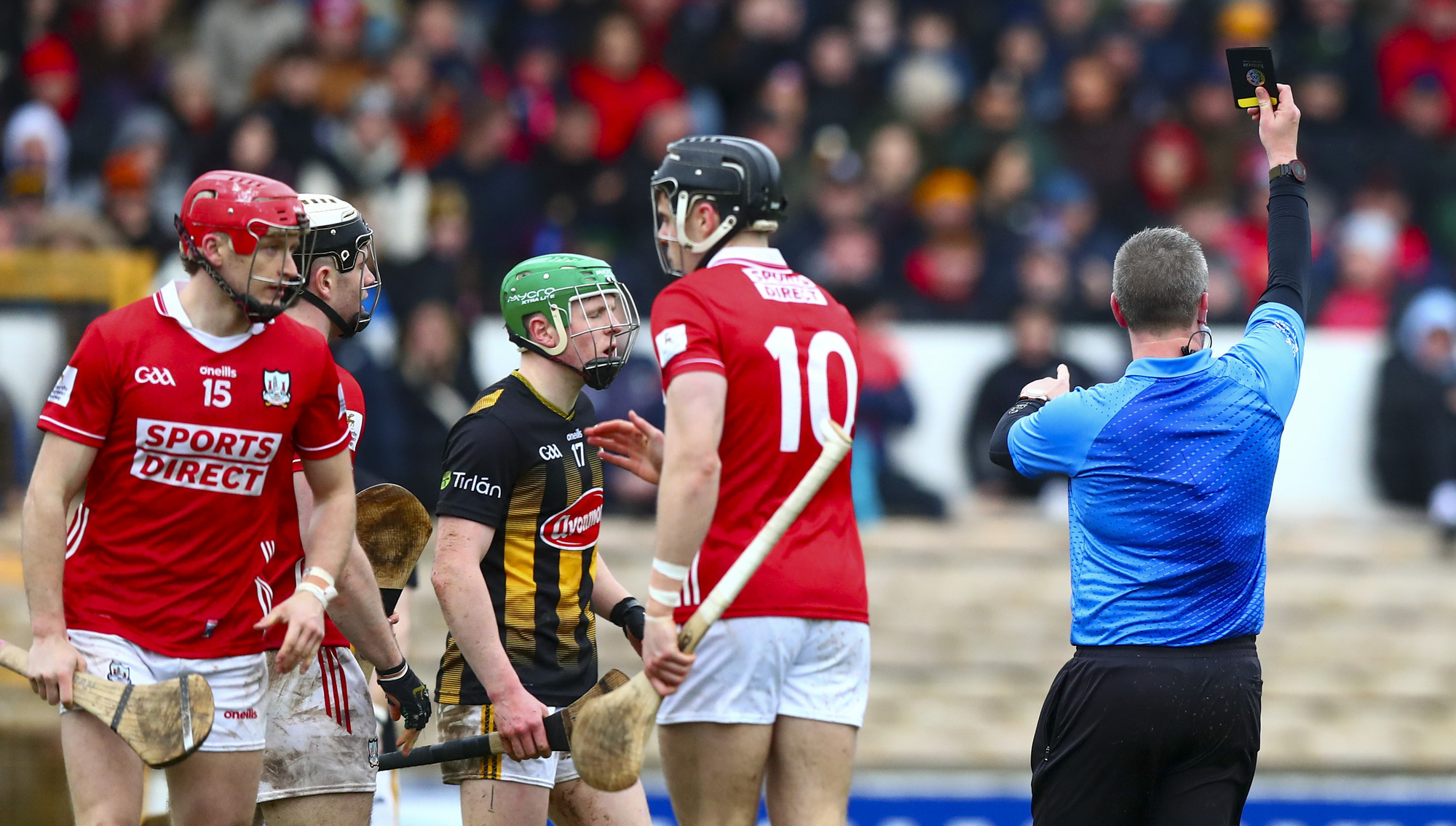
Thomas Walsh shows Kilkenny's Ivan Bolger a black card. Pic: Inpho

As sure as TJ Reid will surpass Patrick Horgan as hurling’s top scorer this summer, the black card was going to be extended to hurling.
Voted in for Gaelic football at Congress in 2013, GAA president Liam O’Neill knew it was only a matter of time before something similar was going to be introduced to the other code.
Initially, O’Neill was non-committal. Knowing the hurling fraternity’s suspicion of change and dubiousness about the game benefitting from cures aimed at football’s ills, he kept schtum.
However, it had always been his belief hurling wasn’t above cynicism and by December 2013 he was comfortable enough to said he would “love to see it come into hurling”.
Read More

If he hoped his creation of Liam Sheedy-led Hurling 2020 committee, following on the first Football Review Committee (FRC) led by the late Eugene McGee, would deliver it, he would have been disappointed.
“Based on our consultation process, and irrespective of the lack of consistent implementation of the black card in football in 2014, there is no appetite for the introduction of another colour card in hurling,” concluded their report, published in January 2015.
Hurling was always going to be a monkey caught slowly. It may have taken six years but in 2021 eventually it came in at inter-county level for cynical fouls preventing goal-scoring opportunities.
It needed refining, of course – Clare’s Aidan McCarthy’s questionable sin-binning in the 2021 Munster semi-final made sure of that – and some of the decisions made in this year’s league are open to scrutiny but it has endured.
Gaelic football and hurling are more cousins than sisters but it stands to reason that they should share as many rules as possible. As they have so many of the same traits, not to mention personnel, compatibility is essential.
When we asked Jim Gavin in November 2024 about the problems dual club referees may face applying two sets of rules (the advantage is now discretionary in football, it lasts five seconds in hurling), the FRC chairman said “not to be continuously searching out the dark matter in life”.
Watching some club games, you do wonder at times if football’s new rules are being applied to hurling.
That’s not to say hurling can't benefit from the fine work done by Gavin and the FRC.
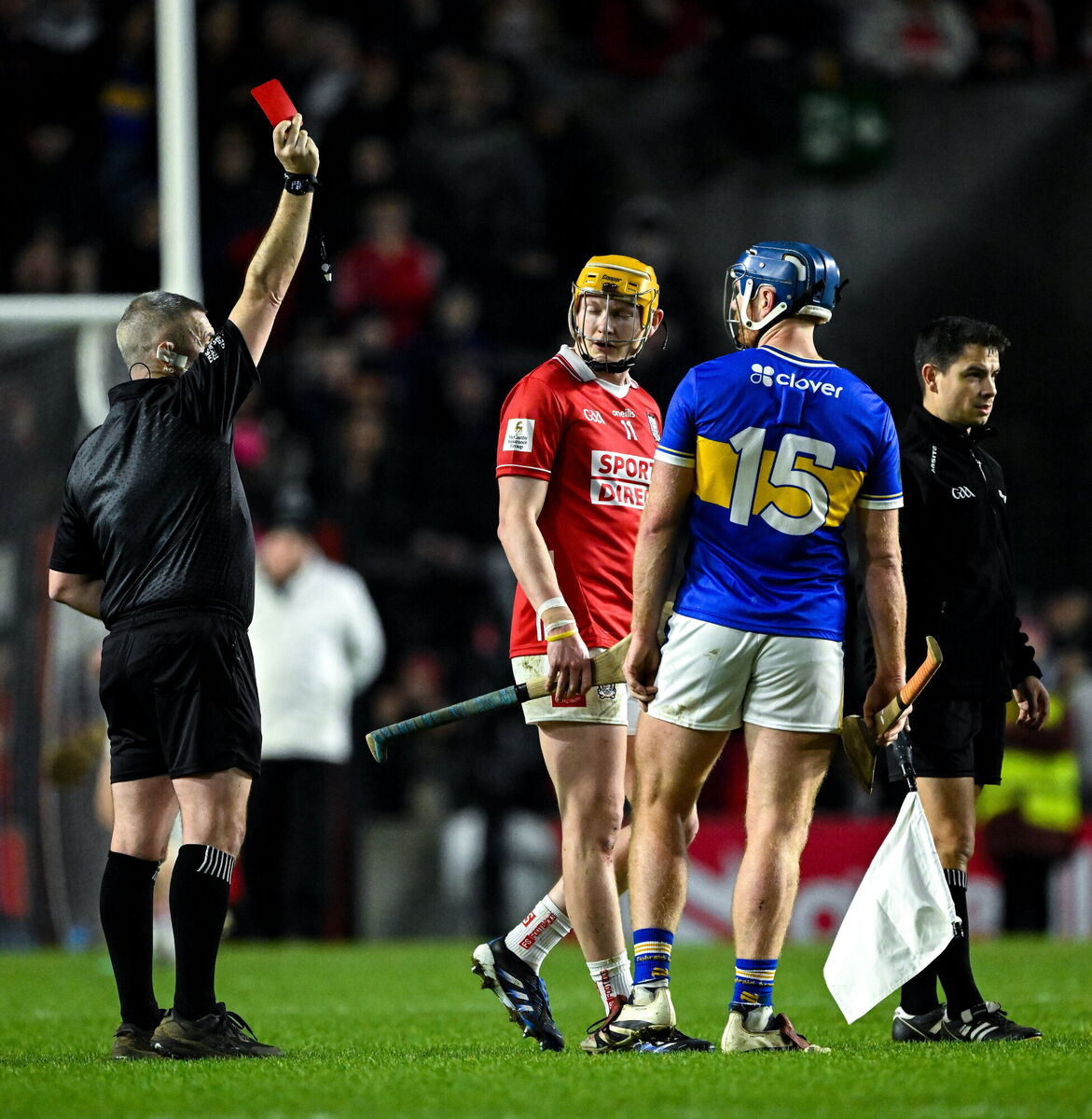
Their quasi-definition of a melee – black carding the third man and any thereafter entering a row other than to break it up – should have been extended to hurling. It sure would have cleaned up the Cork-Tipperary mess back in February.
In fairness to the Hurling Development Committee (HDC), they were quick to propose a variation of the dissent rule, which has made staggeringly positive changes to discipline in Gaelic football. From this past weekend, a free will be brought up 30 metres as opposed to 13m.
If only the HDC were as swift to have recommended culling the All-Ireland senior preliminary quarter-finals.
Had they made the proposal last year, they could have afforded the fixture-makers the chance to run the McDonagh Cup like the Tailteann Cup up to the semi-finals of the code’s top tier competition.
Instead, there will be just five senior inter-county hurling games after the Munster final.
If the HDC were too slow on that count, they were too quick to endorse football’s 20m free for dissent from the sidelines, another rule that came into force last weekend.
One cross word about a decision from a manager or selector and the ball will be brought in front of the posts on the 20m line.
Hurling’s 20m free, virtually a penalty but for the amount of players that are permitted on the line, is not the same as it is in football where it is a point attempt. A more reasonable punishment would have been a free from the apex of the D, a 33m free.
Instead, what we might see for the first time in Limerick this Sunday is wildly disproportionate and heavy-handed, and it is only now dawning on managers what the repercussions of contesting a decision might entail.
When Cork and Limerick managers Ben O’Connor and John Kiely recently gave their support to the dissent rule, they referred to the on-field part of it. How players had to learn to bite their tongue. Neither mentioned how they too will have to mind their p’s and q’s.
The HDC’s recommendation, admittedly backed by 95.1% of delegates last month, was one made in a vacuum and surprisingly former managers, one of them the illustrious Brian Cody, and current managers were party to it.
Unquestionably, hurling sidelines should be quieter. O’Neill had sought to reduce the numbers occupying them, but for the HDC to slap this punitive penalty on managers is to deny it is a game of emotion and instant reactions.
Hurling shouldn’t be receiving Gaelic football’s hand-me-downs but that’s not on football: it’s on the hurling administrators who insisted they wear them.
And so the clock/hooter finishes the league as it started it: in controversy.
There will be no told-you-sos from this quarter about wasting time with recycled play and cynical play. Not when 11 years ago we were all in favour of the technology being used.
The one constant doubter has been GAA director of club, players and games administration Feargal McGill.
In 2015, he produced a report on behalf of the Central Competitions Control Committee (CCCC) following a trial of the clock/hooter in college games.
Over a decade before James Conlon made that black card foul to kill the clock against Cork on Sunday (yes, the free should have advanced 50 metres), McGill warned about teams fouling “in the closing minutes until the hooter sounded to protect a lead. The time taken to book or caution players in such circumstances eats further into the time available”.
Long before Down attempted to kill the clock to set up a winning point attempt on Saturday, McGill wrote of “negative possession” at the end of games which “did not make for entertaining viewing”.
Last year, McGill and CCCC chairman Brian Carroll outlined a series of issues that had arisen with the clock/hooter during the league. That was before Meath’s winning goal against Westmeath that possibly came after the hooter.
“It remains the view of the CCCC that in order to avoid reputational damage further down the line, games should end once the ball goes dead AFTER the hooter or final whistle has sounded.”
Central Council eventually took the hint and for the conclusion of the league and championship the hooter confirmed the last play, not the end of a half, only for the Football Review Committee to revert to the original working of it.
That has already proven a mistake.
The hooter really should be consigned to the scrapheap, but at the very least the amended version should return for the championship.
Sunday marked the second time in four days that David Clifford was on the receiving end of a final defeat. On Wednesday, he was in charge of St Brendan’s College as they lost the Kerry Schools Dunloe Cup decider to Tralee CBS.
At the final whistle, a deluge of rain hit Austin Stack Park prompting the St Brendan’s players to make a dart for the dressing room, which also meant skipping The Green’s cup presentation.
Except Mr Clifford wasn’t having any of it and insisted the players return to the field to witness their opponents receive the reward for their victory.
Basically, the instruction was to respect the result and take your beating.
On Sunday, he took his and was just as gracious in defeat, keen to shake hands with as many Donegal hands as he could at the final whistle.
Even if he, like Jack O’Connor, probably knew late last week that a Kerry victory was unlikely after the exertions of the drawn game against Armagh the previous Sunday displayed themselves in the form of injuries and lethargy.
Last Wednesday, he might have been just as realistic about The Sem’s chances when they were down three of their key players. It didn’t matter.
On such occasions, turning up is what matters most.
Email: john.fogarty@examiner.ie