My life in books: 'Spike Milligan always makes me smile'
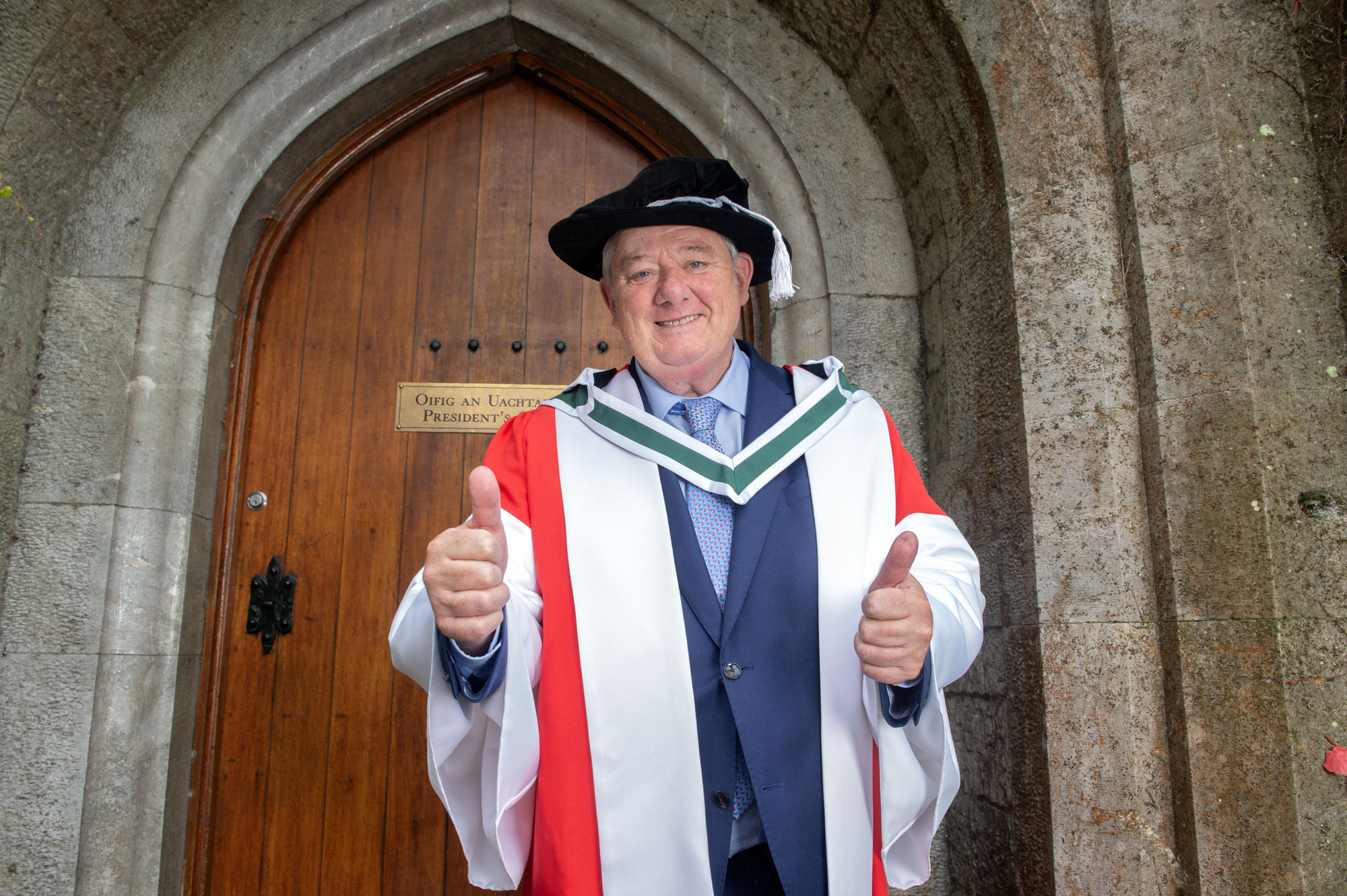
John Creedon: Tao Te Ching is a constant companion on my travels. Picture: Michael MacSweeney/Provision
My work has me on the road and staying in hotels, so my bedside lockers are varied. However, my constant companion is the , the collected wisdom of Chinese philosopher Lao Tzu who lived close on 3,000 years ago. Although his school of philosophy predates even Buddhism and Christianity, I feel it still stands the test of time as a guide for life. I’m reading by Eamonn Sweeney — a man works his way through his own frailties over the course of the GAA championship season.
edited by Seán Dunne. It’s a real treasury of great pieces about Cork or by Cork people. The variety of material is staggering, from Seán’s introduction to a soldier’s letter from the battlefield at The Battle of Kinsale in 1601. There’s a wonderful review of Charles Dickens’ one-man show at the Cork Opera House where he premieres his new work and an account by Thackeray of his carriage journey through ‘the petit-bourgeois suburbs of Blackrock’ on his way to the Ursuline Convent.
There are many — I don’t have great staying power, unless I’m actually writing a book. Try as I might, I couldn’t get my head around .
Soundings, our secondary school English book, is a remarkable collection of poetry and prose.
I still smile when I recall the wild carry-on in Spike Milligan’s , and which I read as a teenager. It was liberating to discover that books could be full of ridiculous scenarios and mad funny. More recently, Pete McCarthy’s Irish travelogue had me in convulsions of laughter.
Leaving Cert Maths.
I’m not sure it hugely changed my mind, but Dostoyevsky’s had me questioning everything from my own prejudices to the subtleties of family dynamics.
Thirty years ago, while travelling through Malawi in Central Africa, I picked up a book by Julius Nyerere, who was president of Tanzania after it became independent from Britain.
When asked how he could refuse inward investment from the Russians, who were offering Aeroflot flights and Lada factories, and the Americans, who dangled Ford and Coca-Cola factories at a time when Malawi was struggling economically, he replied: ‘Yes, my people are very poor. But my people also say that when two elephants go to war, it’s the grass that gets trampled.’ I’ve been quoting the man ever since.
My next one. I’d better get cracking!
I loved by Yann Martel, which I read while travelling by boat around the Aegean Sea. It is about a dramatic shipwreck and a castaway’s desperate attempts to survive. That book seeped into my dreams every night.
Although I worked as a library assistant with Cork City Libraries back in the 1970s and know the Dewey System for organising bookshelves, I have to confess my own shelves are chaotic. I simply lump them together under very general headings.
Silence.
An incontinent old dog on his last legs called Charley. At a time when I needed to spend some time with myself, a great friend gave me a loan of his camper van and a copy of John Steinbeck’s . I packed my own two dogs and headed into the hills around Sliabh Luachra for a week. Steinbeck’s ruminations on life and death provided my food for thought each night as I joined my dogs in the snoring chorus.