Theatre review: Emma Donoghue's tale of 1918 has a renewed prescience
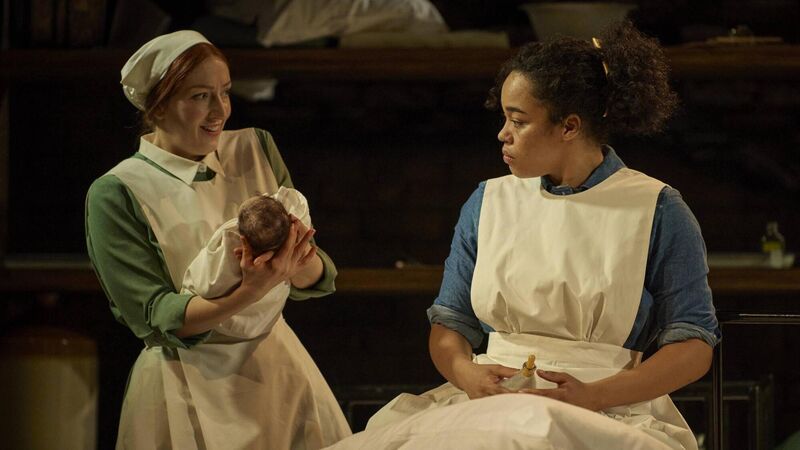
Sarah Morris and Ghaliah Conroy in The Pull of the Stars, at the Gate Theatre. Picture: Ros Kavanagh
- The Pull of the Stars
- Gate Theatre, Dublin,
- ★★★☆☆
When Emma Donoghue embarked on a novel set during the Spanish flu pandemic, 100 years on, she could hardly have imagined it would land in a world of uncanny echoes of that very time, with its own updated version of a bewildering, all-encompassing global health emergency.
That The Pull of the Stars was a startling bit of prescience during the covid years is easily forgotten from the point of view of 2024, as this stage adaptation at the Gate slips all too comfortably into the rather crowded Decade of Centenaries field. It’s not that we’ve been here before, as such, more that we feel we’ve been here for quite a while already.
“Here” is 1918, two years on from the Easter Rising, the flu pandemic adding to the misery of the war years. A makeshift quarantine ward at the top of a Dublin maternity hospital becomes a microcosm for the city at that time, throwing together the haves from posh suburbs, and the inner-city have-nots. That social division is personified by Mrs Garrett (India Mullen), haughtily dismissive of the teenage tenement mother in the cot next to hers, Mary Tierney (played with apt innocence by Gate newcomer Ciara Byrne).
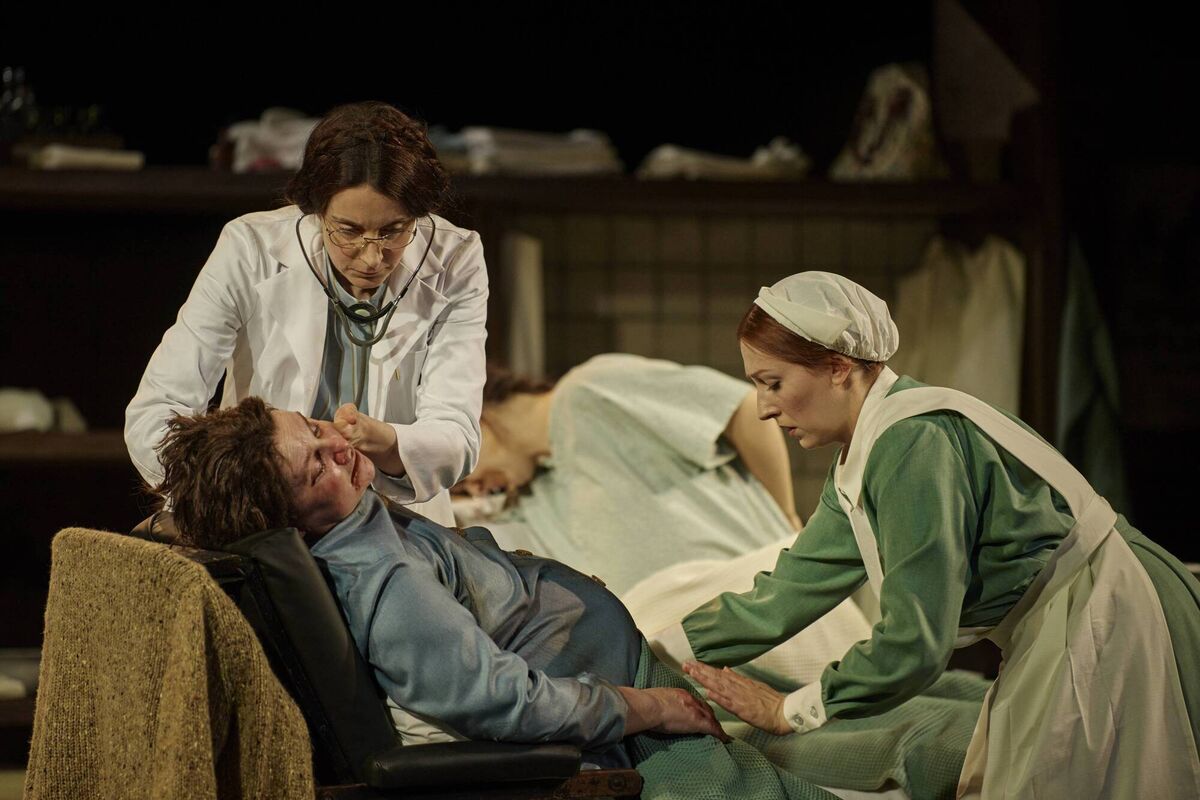
The ward is run with bright efficiency by a resourceful midwife, Julia Power (Sarah Morris) and overseen by Dr Kathleen Lynn, a real-life feminist campaigner and Irish revolutionary. She’s played here in a well-observed turn by Maeve Fitzgerald, her bluff, no-nonsense demeanour combining with a genuine concern for her patients to give a convincing portrait of a practical humanitarian.
Into all this, from the Magdalene laundry across the road, is brought Honor Noonan, a swollen, delirious, beaten-down, umpteenth-time-expectant mother, personifying, of course, the “illegitimate” children and “fallen” women the nascent Irish state would go on abusing and failing for decades to come. Una Kavanagh is compelling in the role, while Ghaliah Conroy, who accompanies her, plays the irrepressible orphan Bridie Sweeney.
Donoghue’s adaptation wears its feminism, anger, and indignation anything but lightly. Strident lines of then-radical, now-banal politics pepper the scenes. It’s not that these ideals, for more humane maternity care, for a country that cherishes all its children equally, are ticked boxes, or that we can smugly move on and pat ourselves on the back.
It’s just that, dramatically, there isn’t much to grasp or grapple with. The nun in charge of the laundry across the road being told to shut her "filthy mouth” is far more likely to elicit a yawn than a gasp these days.
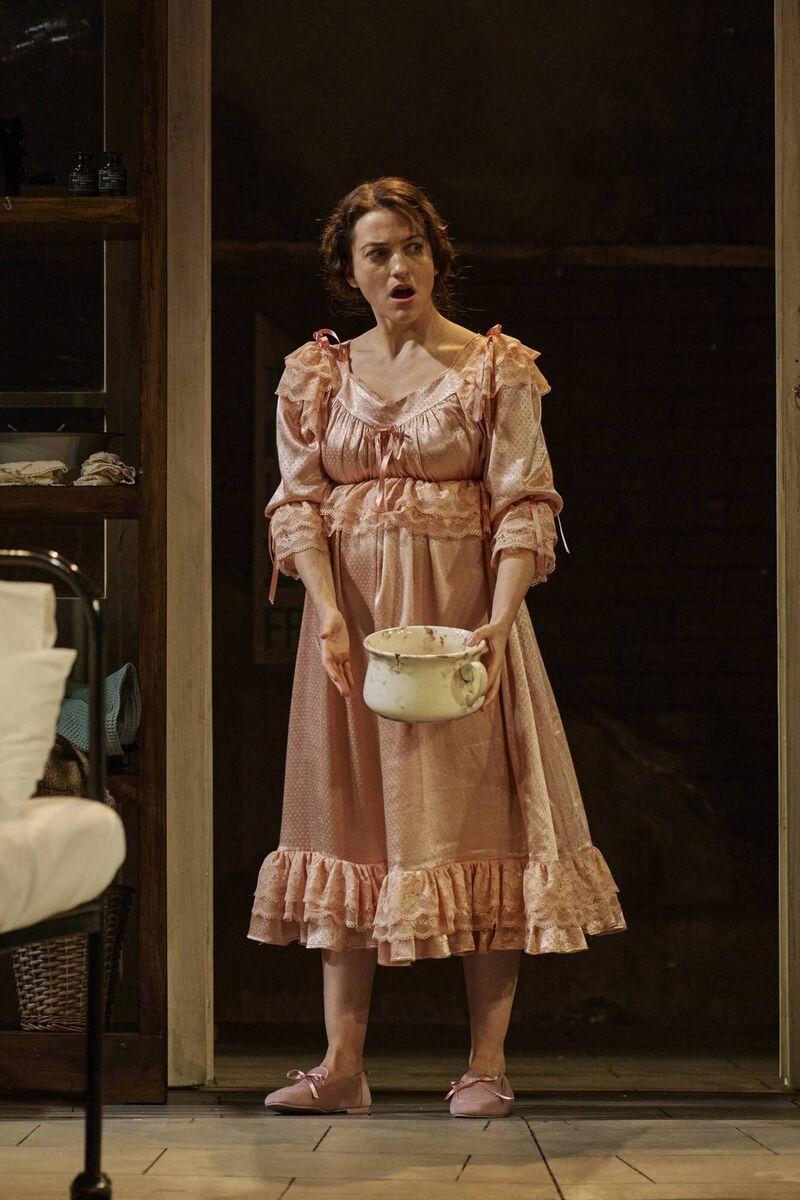
Furthermore, the audience is invited to flatter itself into thinking they would have held such views in 1918 too; would they, like Nurse Power, have had the scales fall quickly from their eyes, and see the rotten system of indentured labour, abuse, and exploitation that was the Catholic Church’s helping hand when it came to caring for women and children who fell outside the prescribed parameters of the family.
Director Louise Lowe is on very familiar ground too, of course, having spent much of her career delving into Dublin’s past to create some of the most startling productions the city has seen – usually in unlikely, repurposed spaces.
One of those recently was the National Maternity Hospital, where moments of dance would confront the tiny audience in narrow wards and examination rooms. Here, something of that approach intermingles with the realist drama, as a choreography on casters, of beds and wheelchairs, of pushing, writhing and pain, is stylised by movement director Sue Mythen against Rob Moloney’s brooding soundscape.
Such expressionistic moments help the transition from melodrama to moments when Morris’s nurse Power turns narrator, articulating the dreams and aspirations she has in what is the touching, human heart of this play: her budding, unlikely relationship with Bridie, and its transformative effect on her life.
- Until May 12