Will the Michelin awards herald Ireland’s first Michelin three-starred restaurant?
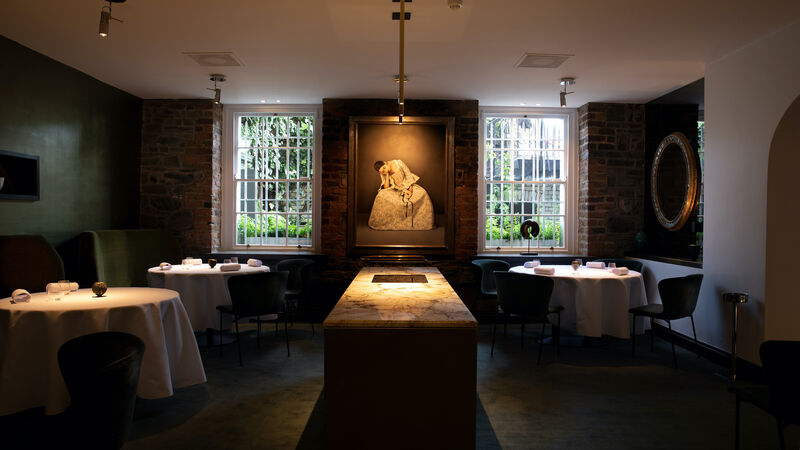
Of the five two-starred restaurants, the smart money is currently on chef Mickael Viljanen’s Chapter One.

In 1974, the world-renowned Michelin guide turned its attention to Ireland for the very first time. One Michelin star went to The Russell, in Dublin, a pyrrhic victory, the hotel already sold before the announcement.
The other went to Arbutus Lodge, effectively leaving it in a group of just one. Most of the country, if they even knew about it, could hardly have cared less.
Last year, Declan Ryan, the man who led the family-owned Cork restaurant to these stellar heights, said: “It came as a shock, but Michelin wasn't in the Irish consciousness at the time.
"We probably got page 4 in the [then Cork] Examiner; it wasn't a big deal. In Ireland there was an egalitarian feeling that this kind of thing was only for the privileged. While we were busting a gut and certainly weren't privileged, it was very hard to do what we were doing cheaply.”
The following year, Arbutus was joined in the Michelin star club by Ballymaloe House and Ballylickey House, all three based in Co Cork. Ballylickey held its star for just one year and, for the remainder of the 1970s, the remaining pair were Ireland’s only starred restaurants.
The 1980s were little better. In fact, Irish hospitality was a culinary Lanigan’s Ball, one establishment stepping in as another stepped out, or sometimes stepping out for good with no replacement at all for an extinguished star.
Lingering post-famine guilt, copper-fastened by penitential Catholic autocracy meant gastronomic pleasure was up there with any other sins of the flesh but that was a moot point as a basket case economy meant there was insufficient domestic wealth to support multiple Michelin-starred restaurants.
Real change in the numbers began with the advent of the Celtic Tiger in the mid-90s, reflected in a gradual rise of starred restaurants and Ireland’s first two-starred restaurant, Dublin’s Patrick Guilbaud, as the Irish dining public learned how to spend. Then the Celtic Tiger crashed. It was the best thing ever to happen to Irish fine dining.
There may have been a temporary stay on the wallet but there was no holding back the boundless culinary enthusiasms of a new wave of young and widely travelled Irish chefs.
Not only were they prepared to innovate and improvise their way out of a tight financial spot, but they were also determined to leave behind much of the fusion froth of Celtic Tiger and instead cook with a pronounced focus on the one element unique to Ireland — our superlative produce, from both land and from sea.
Chef Enda McEvoy’s travels had included time in Rene Redzepi’s Noma, the Copenhagen restaurant then in its pomp as the globally renowned instigator of the locavore movement.
In 2011, JP McMahon and Drigin Gaffey opened Aniar, in Galway, with McEvoy heading up the kitchen. Within a year, they had a first star. McEvoy left not long after and two years later opened Loam, also in Galway, replicating his feat in Aniar and almost immediately earning another star.
There have been great chef champions of Irish produce through the decades, with Myrtle Allen, the greatest of them all, with Ross Lewis flying the flag in the 90s and into the new century.
But Aniar/Loam was the beginning of modern Irish hospitality’s fathoms-deep dive into our native produce, seeking to create a definable modern Irish cuisine in the process.
Any early zealotry around this burgeoning local produce-led movement has long since levelled off but it is now a given that top Irish restaurants build their menus on a bedrock of finest Irish produce.
There are now 23 Michelin-starred restaurants in Ireland, five with two stars. Next Monday, the awards will be unveiled in the Dublin Convention Centre, the first time the ceremony has ever been held in Ireland. Adding further fuel to an already feverish buzz is a conviction it will herald Ireland’s first-ever Michelin three-starred restaurant.
Of the five two-starred restaurants, the smart money is currently on chef Mickael Viljanen’s Chapter One while chef Ahmet Dede’s food keeps hitting new heights, year on year, at his and Maria Archer’s Dede at the Customs House, in West Cork; meanwhile, chef Damien Grey’s Liath has continually surprised from leftfield at every turn — what odds would you get, I wonder, on all three hitting the magic number?
By all accounts, ‘food tourism’ is back on Fáilte Ireland’s agenda, so the seeming official disinterest around the arrival of the Michelin awards in Dublin for the first time is baffling, it surely being a superb opportunity to showcase our now world-class hospitality sector.
So, kudos to the industry itself for taking matters in hand. As hundreds of highly influential chefs, restaurateurs and food media descend on Dublin, food and hospitality PR company Host are collaborating with some of the best bars and kitchens in the capital to stage The Chef Sessions.
Events on the programme include: Marcus O’Laoire x Thom Lawson at Rei Momo (Feb 7, 6pm-late), a tongue-in-cheek homage to the old school nightclub chicken supper; Barry Sun X Hang Dai (Feb 8, 4pm-5pm; 7.15pm-8.30pm) offers supper plus cocktail or champagne for €80, Barry cooking from his North Chinese roots; Cúán Greene — no doubt harbouring his own Michelin ambitions for Ómós, which opens later this year — cooks ‘franks’ at Frank’s (Feb 8, from 5pm), one of my favourite Dublin establishments, with hot dogs for €10 on a first come, first served, basis until they’re gone; Rob Krawczyk x Row Wines (Feb 9, 1pm-3pm) as Michelin-starred Rob, of Restaurant Chestnut, turns out an extra-special ‘starry’ cheese toastie.
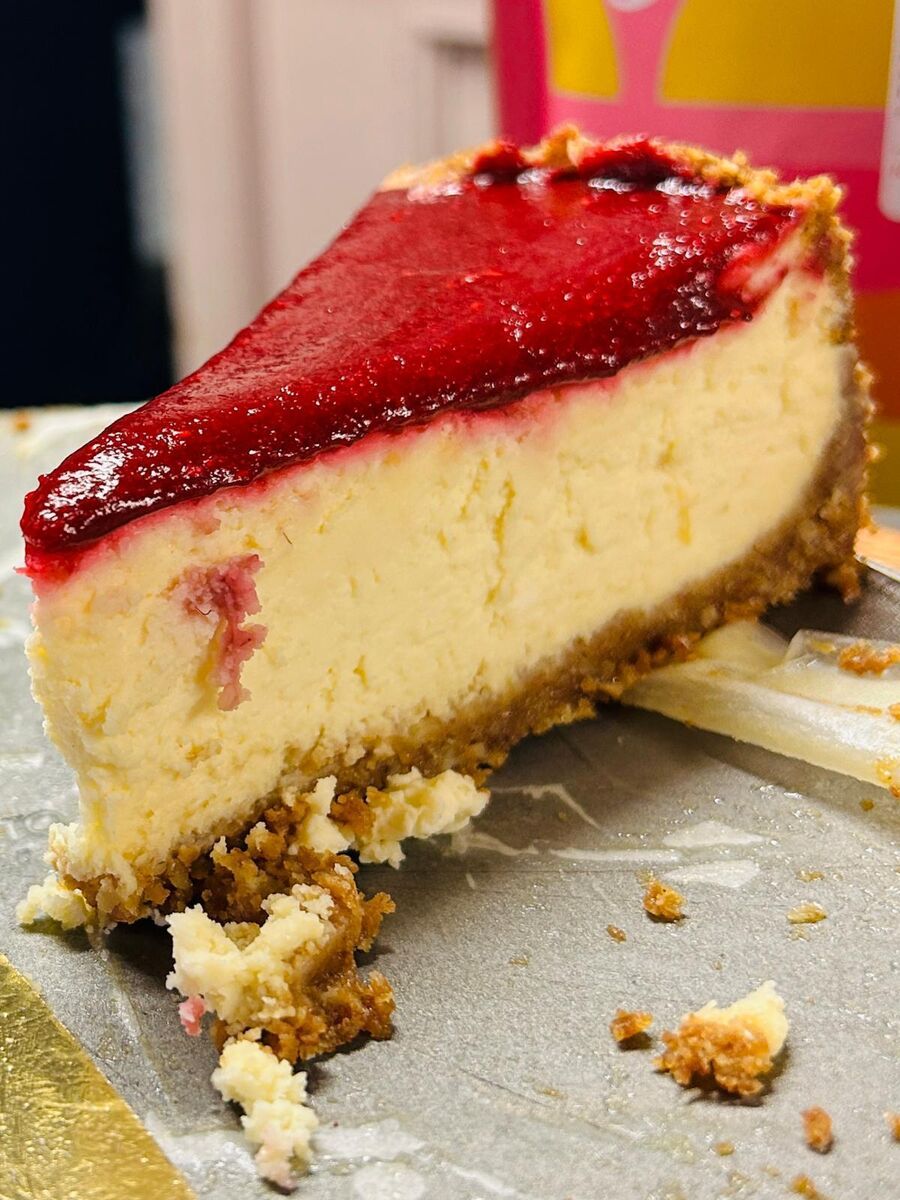
I’m always up for culinary innovation and tasty new creations but my best bite this week was a distinctly old school slice of New York-style baked cheesecake: crunchy sweet-savoury biscuit base, rich cream cheese filling, topped with tart-sweet raspberry coulis.
That it was all washed down with a splendid 3FE coffee in what may well be my most favourite café space in the country, the verdant, plant-filled and fiercely funky Wunderkaffee, in Farran, Co Cork, was truly the metaphorical cherry on top.
Instagram: @wunderkaffee_farran_village.