Joe McNamee: 'Old Dublin pubs are one of the best things about our capital city'
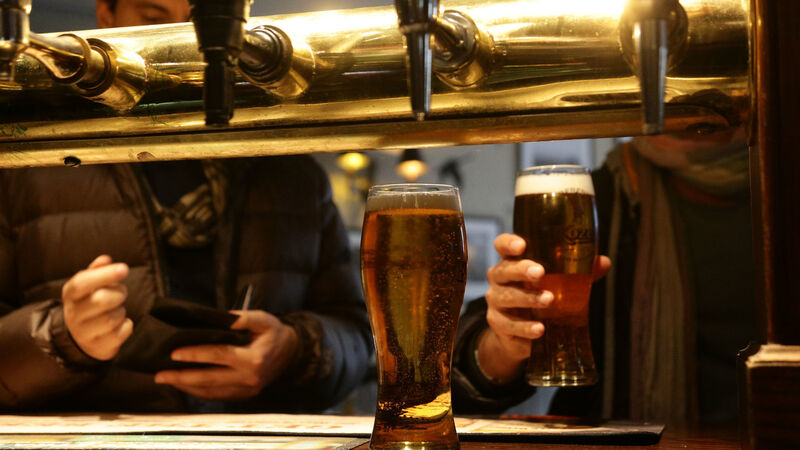
If The Irish Pub maintains a certain academic detachment, The Dublin Pub (TDP) is at times akin to sitting at the bar and hearing it all first-hand from a highly informed fellow imbiber.

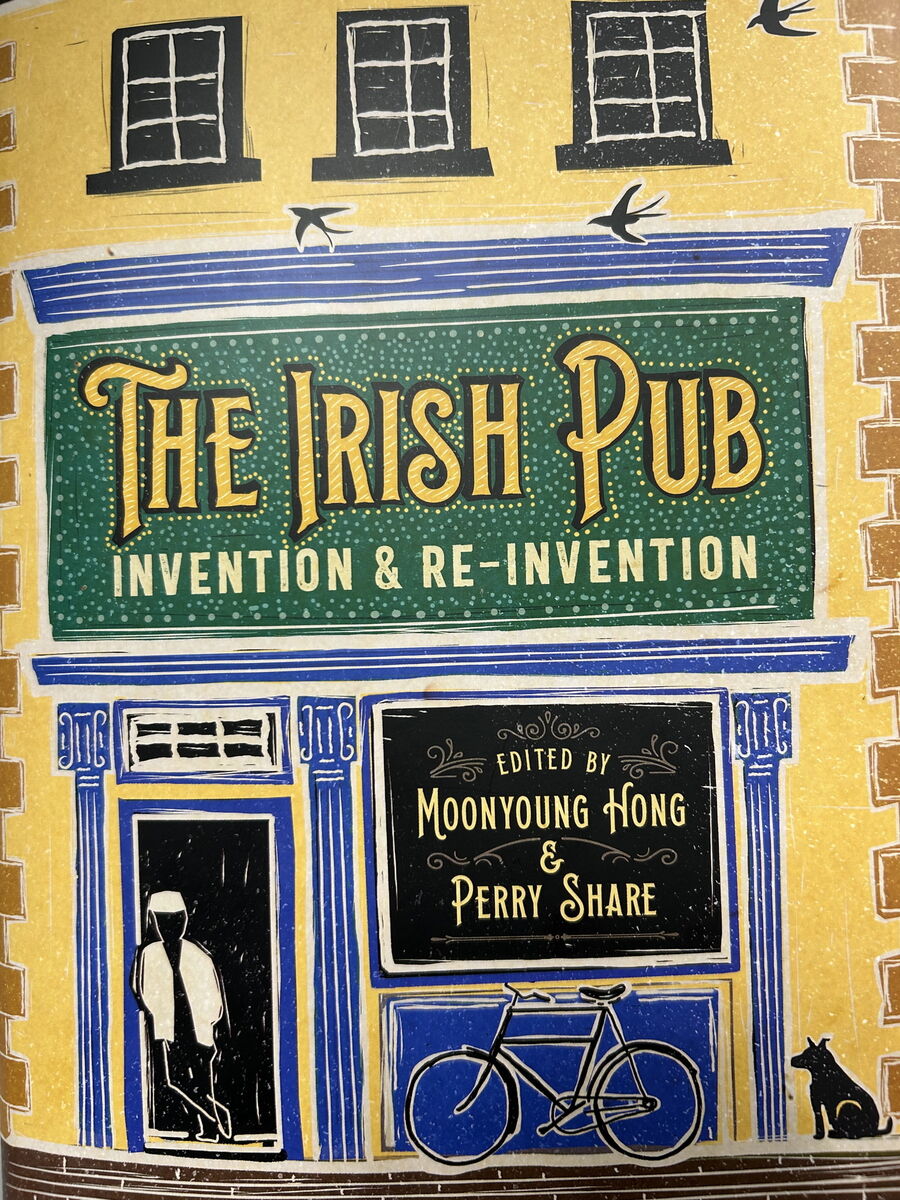
I rarely think of alcohol during my annual Dry January yet this time around have become obsessed with Irish pubs. Well, that’s thanks to the publication of two excellent new tomes: The Irish Pub: Invention and Re-Invention (Cork University Press), edited by Moonyoung Hong and Perry Share; and The Dublin Pub: A Social and Cultural History (New Island), by Donal Fallon, of the excellent Three Castles Burning podcast.
The Irish Pub (TIP) is an academic study with contributions covering history, design, literary studies and social sciences and is rarely less than fascinating. If you’re the prosaic type, believing a pub is just a pub, then a breakdown of the types to be found amongst approximately 7,500 on this island, North and South, might trigger mental recalibration: “… tourist pubs, food pubs, singing pubs, literary pubs, craft beer pubs, old man pubs, classic Victorian pubs, suburban beer barns, grocery shop pub, early houses, late bars, LGBTQIA+ pubs, sports bars, cocktail bars, hotel bars, racecourse bars, airport bars, listening bars, whiskey bars, even the odd (in both senses of the word) alcohol-free pub ….” The fundamental question addressed is, “what makes an ordinary building that serves alcohol the Irish pub as we know, consume and experience it today?” And TIP’s commendable approach to answering that is infinitely more nuanced and subtle than the often reductive binary (‘good’ or ‘bad’) texture of public discourse, usually in relation to law, politics and health.
One of the most compelling chapters is on the evolution of the modern cultural phenomenon of the ‘Irish pub’ in foreign climes as a calculated commercial enterprise, as opposed to those overseas pubs of yore that became ‘Irish pubs’ as hubs for Irish emigrants.
The Guinness Irish Pub Concept became a thriving business that kicked off in the early 90s, designing and building interiors for five different pub styles: ‘Victorian Dublin’, ‘Traditional Shop’ and ‘Country Cottage’, based on pre-existing models; “Brewery’ and ‘Gaelic’ were artificial constructions invented for that market and based on Guinness brewery history and Celtic Folklore.
By 1998, 1,800 had been completed and were opening at the rate of one a day and greatly enhanced overseas sales of Guinness. To this day, many who worked in that sector still argue about the ‘authenticity’ of those pubs. I have always avoided them like the plague when travelling yet have a friend for whom they remain a homely touchstone when abroad.
There is no denying their impact. While one source speaks of the “general air of pseudo-hiberno bonhomie”, they are often seen by foreigners as an iconic representation of Ireland, a first engagement with Irish culture creating further expectations and perceptions of the country when visiting as tourists.
Fallon is also a historian and erstwhile academic but, crucially, he is imbued with the narrative grasp of a gifted storyteller. If The Irish Pub maintains a certain academic detachment, The Dublin Pub (TDP) is at times akin to sitting at the bar and hearing it all first-hand from a highly informed fellow imbiber.
Old Dublin pubs are one of the best things about our capital city which these days can’t seem to decide if it wants to be a conference centre or a new hotel just as long as it is made of shiny glass and metal; TDP should serve as an invaluable future bulwark in preserving those pubs from the worst impacts of ‘progress’, even as it lists a litany of iconic venues, already fallen. TDP’s 31 concise chapters range from Drinking With Wolfe Tone — an absolute delight! — all the way to the present day.
It covers the Dublin pub’s relationship with myriad subjects including literature, theatre, music and food, and features a host of wonderful characters and anecdotes. I’ll plump for just one, the tale of actor Alan Devlin who, during a performance of HMS Pinafore at the Gaiety, stormed down off stage and through the audience to the pub across the road to order a pint while still wearing his radio mic and muttering ‘fuck this for a game of soldiers’. I’ll share a few more should I encounter you at the bar when I get back to the pub in February.
Well, how’s that hairshirt hanging? If you’ve already fallen off the dry January wagon or never clambered aboard in the first place, then perhaps a Whiskey Experience Weekend (Jan 23-24) at Knockranny House Hotel & Spa in Westport for a whiskey weekend is just the tonic required.
Dingle Distillery and Donegal’s Sliabh Liag Distillery are hosting exclusive tastings on consecutive nights, while executive chef Seamus Commons has created a special menu, to be enjoyed on an individual booking basis, allowing guests to enjoy the evening at their own pace in one of Ireland’s most elegant dining rooms. Package includes two nights B&B, one dinner and guided tastings. Visit here.
I must admit I do love my January excursions, especially on fine, fresh cold days and a trip to the new Réalt na Mara Shellfish Tour & Tasting Experience is right up my street. In Cromane — of the superb oysters — and on the Ring of Kerry and Wild Atlantic way, it is led by the fourth generation shellfish farmers and wildlife biologist Sharon Sugrue.
The tour includes oyster shucking and tasting, with gourmet condiments, steamed wild Cromane mussels and a scenic tour of the surrounding natural world. Minimum four people per tour, €60pp, tour duration 1 hour, 30 mins. Visit here.
Well, if you’re doing the dry January thing then coffee becomes an even greater pleasure than ever and it is always a pleasure to discover a fine new Irish roaster.
Paola Bon and her husband Andrew Willis, who lived in Colombia for four years, returned to Andrew’s family farm in Co Sligo which they not only set about turning into a multi-faceted organic operation, but also set up a roastery.
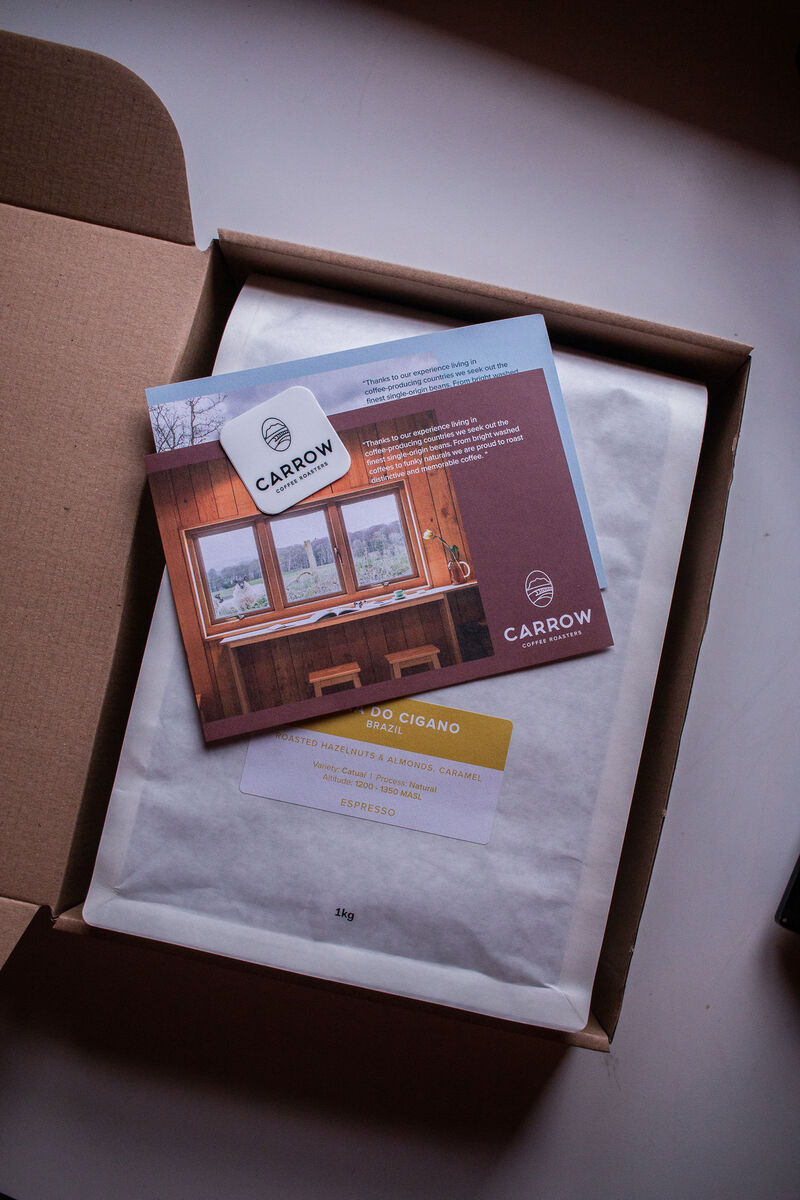
The coffees are extraordinarily good, sourced impeccably, often from micro-lots and direct contacts from their time in South America, Andrew’s penchant for a lighter roast, rendering complex flavours more immediately accessible, is right up my street.
Their rich and potent Nollaig (El Salvador, €14/250gm) Christmas coffee was never far from my espresso machine over the last few weeks, fruity dark chocolate and caramel notes to the fore.
Serra Do Cigano (Brazil, €11/250g) is another natural fit for the espresso machine but I have also enjoyed it as a filter coffee or even in a cafetiere, hazelnuts and almonds to the fore and floral quality to the sweet caramel that eludes punchier espresso servings. Visit here.