That’s gas! — Biomethane production in modern Irish agriculture
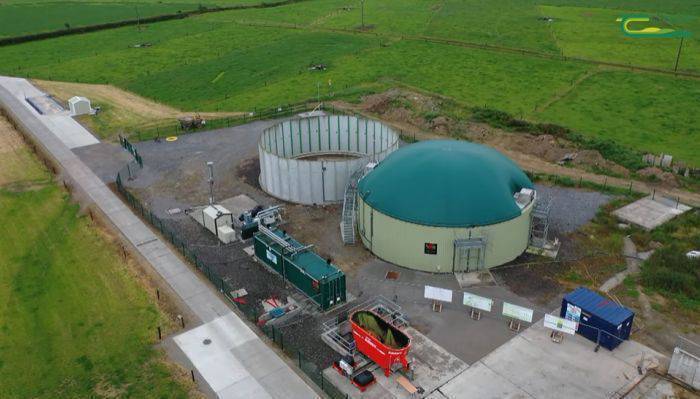
A biomethane plant at Teagasc Grange in Co Meath.
Ireland lags behind the rest of Europe in biomethane production and infrastructure, despite being well-suited to the technology through its strong agricultural sector and Government pledges to deliver capacity by 2030.
Gas Networks Ireland chief executive David Kelly said Ireland was about 30 years behind Europe.
“Other countries across Europe have been at this for 25 or 30 years. But we have huge opportunities now, and it is on our agenda," Mr Kelly said.
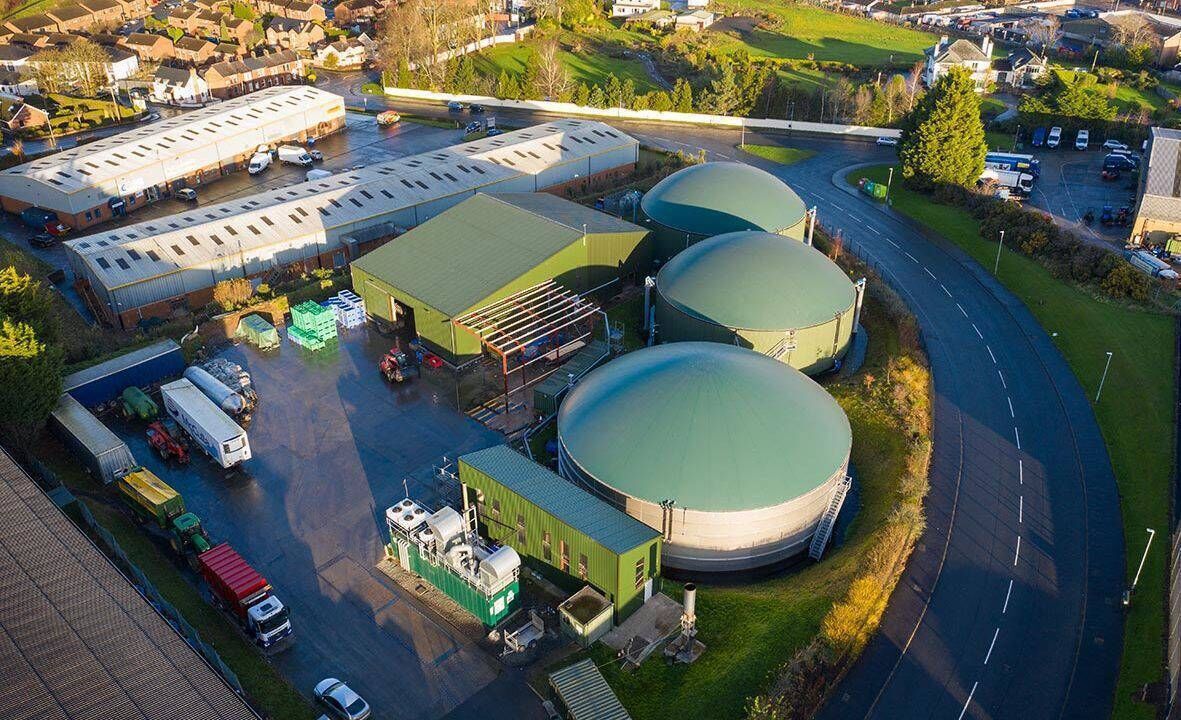
Anaerobic Digestion (AD) of animal manure, grass silage, and other animal feedstocks can be utilised to produce biogas by microorganisms that break down the organic material.
Raw biogas can then be upgraded to biomethane, which is fully compatible with the national gas network and existing appliances, technologies and vehicles, but would need specialised plants to do so.
Biomethane has the capability to seamlessly replace fossil gas and reduce emissions in current heating, transport and power systems.
An on-farm AD plant would produce biogas and consist of a small-scale plant that would generate heat and electricity. This plant will need to be sustained by the farmer year-round, have a destination for the heat and electricity produced and also be able to feed into the national grid, requiring key infrastructure, planning and financial investment.
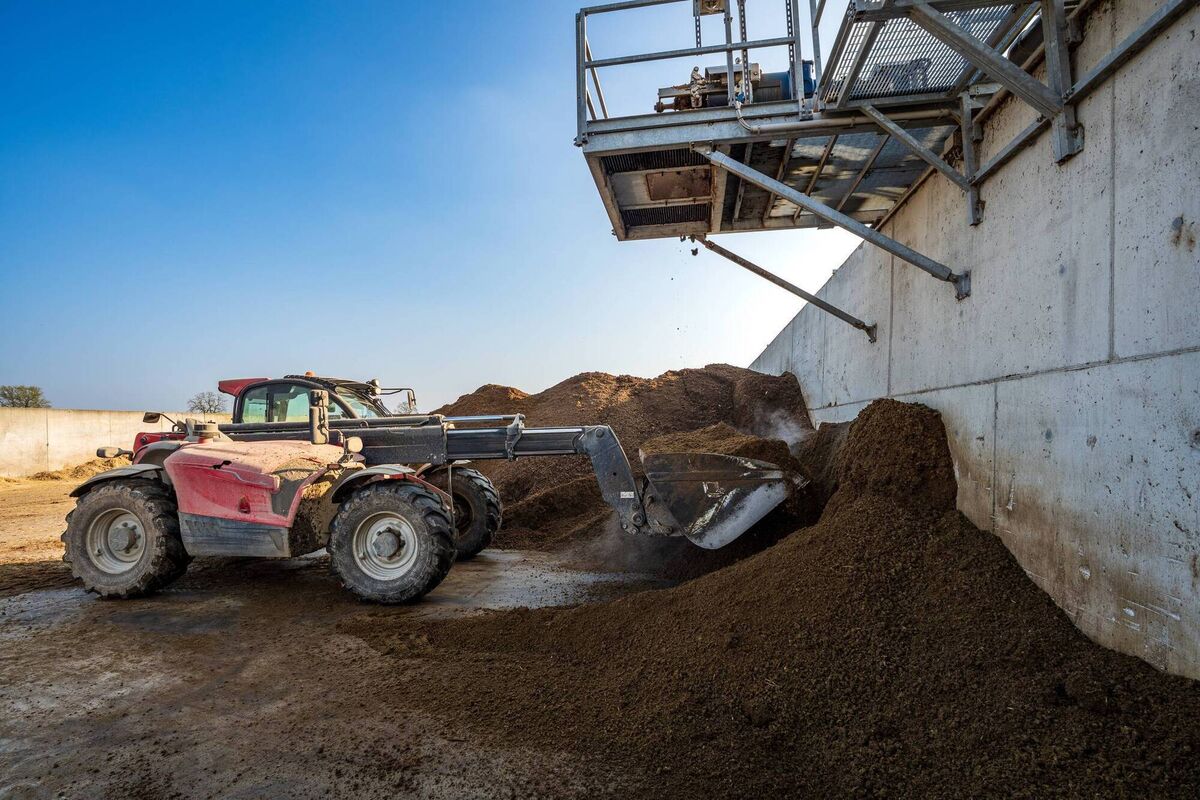
The production of biomethane also generates digestate as a by-product. Digestate is the remaining organic material after biogas is extracted from feedstock.
It is a nutrient-rich, valuable, organic fertiliser that retains nearly all the nutrients, such as nitrogen, phosphorus, and potassium, from the original feedstock and provides an alternative to chemical inputs, helping reduce agriculture’s reliance on synthetic fertilisers.
Read More
The use of digestate would promote nutrient cycling, and there are methods to separate the liquid, nitrogen-rich, and solid forms, phosphorus-rich, of the digestate for targeted applications.
“You can target nutrients where it's actually going to be needed most afterwards. But it does require extra processing steps,” said energy and rural development specialist at Teagasc Barry Caslin.
The Irish Government has committed to producing 5.7 TWh (terawatt-hour) of Irish-derived biomethane by 2030. Ireland is also legally bound to obtain ‘net-zero emissions’ status no later than 2050.
The National Biomethane Strategy, published in 2024, stated “Ireland is unlikely to meet its legally binding climate targets,” but development of biomethane infrastructure and production has been promoted as a solution to reduce agricultural emissions and meet sectoral targets.
Despite its clear potential, development continues to be slowed by a combination of financial, regulatory and practical barriers.
A lack of Government financial support, information and awareness of the technology, and clear policy direction for on-farm AD have all been issues raised surrounding the adoption of the technology.
Research led by Mr Caslin suggests linking future supports to carbon savings rather than energy output could make small-scale AD more viable. However, many farmers continue to push back on farm-scale AD plants, saying it is not financially feasible without incentives such as capital grants, feed-in tariffs or the Support Scheme for Renewable Heat.
A study conducted by the Institute of Technology Sligo, investigating the potential adoption of anaerobic digestion for energy production in Irish farms, surveyed 91 cattle farmers’ understanding and willingness to adopt AD technology, which revealed 41% of respondents were willing to consider implementing it on their farms within the next five years.
Of ‘likely’ or ‘possible’ adopters of the technology, more than half (58%) said they would be interested in participating in a ‘co-op’ scheme of two to five farmers feeding a centralised plant between them, but a self-owned business model was preferred.
The study estimated if all ‘likely adopters’, who at the time had a combined herd of 4,379 cattle potentially producing 37,122t per year of waste as feedstock, implemented AD technology, a CO2 reduction of 800.65t CO2 equivalent per year and electricity production of 2182MWh (megawatt-hour) per year was “potentially achievable”.
The research points to the lack of information on the technology and potentially high investment costs as the two biggest barriers, with some farmers highlighting the low electricity feed-in tariff and high costs of gaining a grid connection.
Another barrier identified in the study was that rental agreements would prohibit the establishment of AD infrastructure and technology on some farms.
Farm-scale AD plants are designed to run continuously and must have a reliable and consistent supply of feedstock. Year-round housing farm practices would be ideally suited to feeding into an AD plant to ensure survival and constant feeding of the microorganisms.
“It's [AD plant] like a big metal cow, and you're trying to keep that metal cow fed all year round. If you don't keep it fed, the problem is that the bacteria will break down, so your biogas plant could literally stop functioning, within a couple of days if you don't keep it fed,” Mr Caslin explained.
On a farming level, AD plants should be considered on a ‘case-by-case basis’ as the heat and electricity produced by the plant must have suitable infrastructure to produce and connect to the grid, as well as infrastructure that would be able to utilise the heat and electricity produced.
Although a digester could benefit a local area and attract business establishments or development, the grid capacity and stability for the area may not be suitable to support it.
“Local grids were not designed to handle decentralised and variable renewable inputs,” explained Mr Caslin, meaning prospective AD developments could be curtailed, limiting both output and profitability.
As alternatives to on-farm systems are explored, another option for farmers examined in the FLEET (Farm Level Economic, Environmental and Transport Modelling of Alternative Feedstocks for Regional Anaerobic Digestion) project is the supply of feedstock, such as grass silage or slurry, to regional plants.
Principal research officer in the Teagasc Agricultural Economics and Farm Surveys Department Fiona Thorne said the project, published in December 2025, examined the economic, environmental and social sustainability of AD, as well as farmers’ willingness to engage through the Teagasc National Farm Survey.
When projected to a national level, the study found that by 2030, agricultural sector income could increase by 1.2–1.3% (€49–53m), alongside a 2.3% reduction in greenhouse gas emissions.
The project reported a key interest in digestate to supplement or replace synthetic fertilisers from the farmers surveyed. However, farmers within derogation would not be able to utilise the by-product.
Under the current policy and legislation, a farmer under derogation can sell their slurry to an AD plant, but would be restricted in receiving digestate from a plant due to its classification as an organic fertiliser.
“As it stands at the moment, those derogation farmers can’t re-import that digestate back onto the farm,” Ms Thorne explained.
Also highlighted in the FLEET project was the barrier of public perception and awareness of the technology, which led to farmers not being interested and opposition to plants through objections to planning permission.
Ms Thorne suggested a co-op style structure, where farmers could “buy in”, which could help change sentiment towards AD development.
And we've had a good history in this country with success in cooperative structures. And so something like that, I think, could work well in the AD sector,” she said.
There are 31 biogas plants in Ireland, and only 10 of these plants utilise animal-derived feedstocks.
The EU has 21,100 anaerobic digestor plants, the European Biogas Association estimating 67% of biogas output comes from agricultural sources.
“It's different if you go to another country like Denmark or Germany, and you can go up the road and see a biogas plant in operation. I think that's where you see a lot of benefits for people who can travel to other countries, or if you have the technology there already, you can actually see how it works. So I think technical knowledge is a big challenge,” Mr Caslin explained.
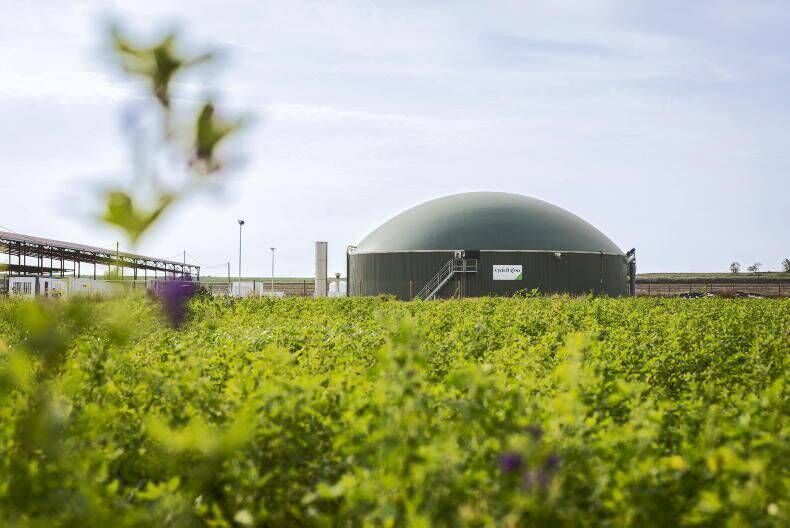
Irish agriculture is uniquely positioned to lessen increasing political pressures to reduce greenhouse gas emissions and improve the carbon footprint of the sector.
Ms Thorne said there was also a benefit in being late to the game compared to other EU countries, allowing us to see where there were pitfalls in establishment and production, we can learn from other countries' mistakes and avoid them.
The main barrier that is reflected by farmers is the need for incentives, stability and certainty, with Mr Caslin pointing out the uptake of solar panels from farmers is helped by the incentives and supports offered by TAMS and the solar capital investment scheme.
“It's done in Northern Ireland, England, Germany, Denmark, and Belgium, but they have capital grants, they feed in tariffs. There's always something that's making it happen in those countries. And unless you put those incentives or support in place, you never move on. You never get to that point where you're actually making progress,” Mr Caslin said.
Biomethane is widely viewed as a practical solution to Ireland’s emissions challenge, particularly in agriculture. But without urgent investment and clear direction, progress is likely to remain slow.