Taking Auld Lehane to infinity and beyond
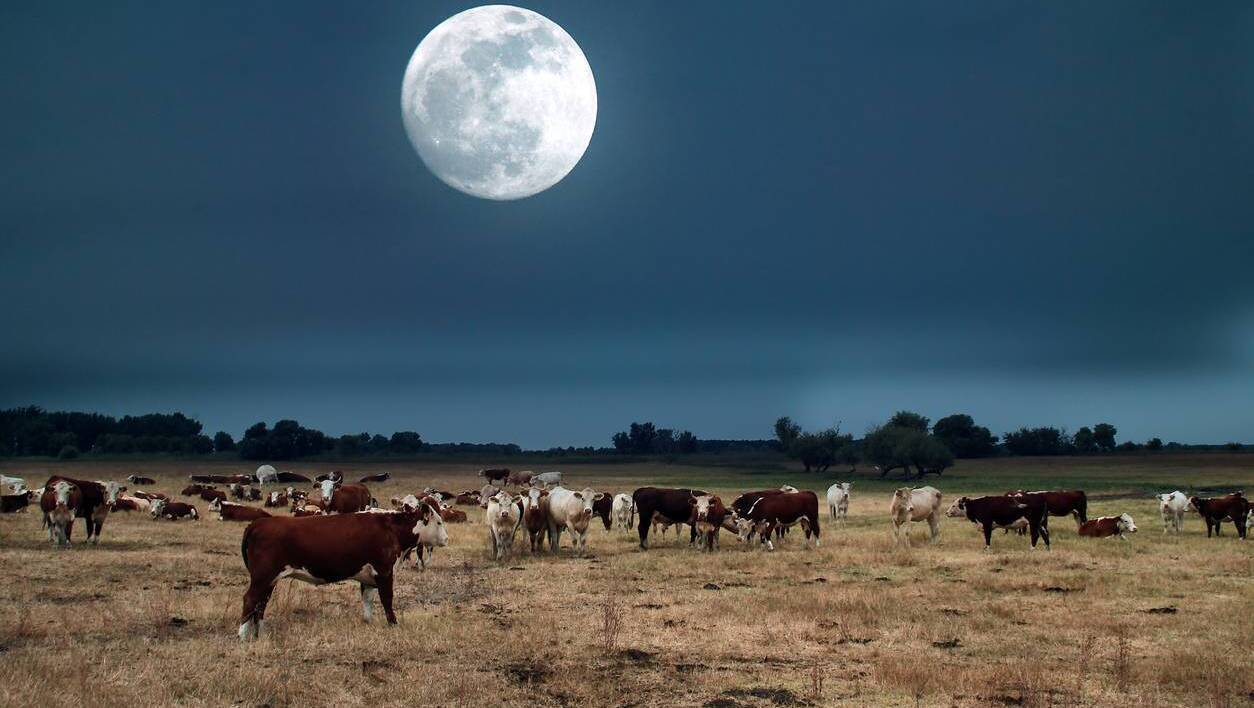
Nasa is planning to get hooves on the moon by the end of the decade.

Nasa has been in touch. No surprise there.
As I mentioned earlier in the year, because of computers and what have you, the reach of the is now not only global, but quite possibly galactic.
I wouldn't be one bit surprised if the head man of Nasa himself read the every Thursday morning. Indeed, what would surprise me more is if he didn't read it.
Anyhow, after their recent great success of flying around the moon, the focus now for Nasa is on the next mission and the one after that.
Without spilling the beans entirely, the plan, as far as I can see, is to get feet on the ground up there on the moon as fast as they can, and after that the plan is to get hooves up there. And that is where I come in.
After the mart in Macroom on Saturday, I was approached by a man in a large trench coat.
Naturally, I presumed he was from the Department of Agriculture and so the antenna went up straight away.
Well, much to my relief, he wasn't a department man at all, only a scout from Nasa.
"Mr Lehane," says he, being very formal indeed, "May I have a word with you?"
"You can certainly," says I, and to make a long story short, soon we were in Greg's chipper, talking not about cattle or coccidiosis in calves, only about the moon, the stars, and auld Lehane's place in all of this.
Now the plan, in so much as I can gather, is to have feet on the ground up there on the moon by 2028, and cattle up there by the end of the decade.
It's ambitious for sure.
But as President Kennedy once said, "We go to the moon, not because it's easy, but because it's hard." And taking cattle to the moon will certainly be hard.
"And how will you feed the cattle up on the moon?" I asked... for I'm always very grounded — even when talking about outer space.
"We intend," says he, "to take two round feeders up in 2029 and round bales of silage after that."
"Take round bales of hay," I advised. "Hay will last longer on the Lunar surface."
And with that, out came the pen, and he started scribbling away like the devil.
"And what breed of cattle would you suggest we take to the moon?" he then enquired.
"Well, it all depends on what your aim is," I declared. "Is it beef or dairy you are looking at?"
He didn't know.
"Well, 'tis very little ye do know, it seems to me," says I, as I dug into my tasty chips and eggs purchased by the space and aviation authority.
"Off the top of my head," I said. "I'd go for the Kerry cow or the Shorthorn bullock.
"Both," I said, "survive, and indeed thrive in environments far worse than the moon."
Again, out came the pen, and he began to write furiously.
And in fairness to Nasa, they really don't miss a trick.
Looking over the longer finger, their plans for the moon are pretty impressive.
Along with lunar labs and scientific hubs, they plan to construct a slatted house on the dark side of the moon and to spread slurry down around the Copernicus Crater by the spring of 2031.
And so, as I parted ways with my conspicuous man in the trench coat, I wished him well with his travels, and he did likewise, promising me they would be in contact again.
"Yerra," says I, "my door is always open to those who want to talk about anything from the plough to the stars."