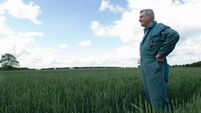
Agrivoltaics, where farming and clean energy meet
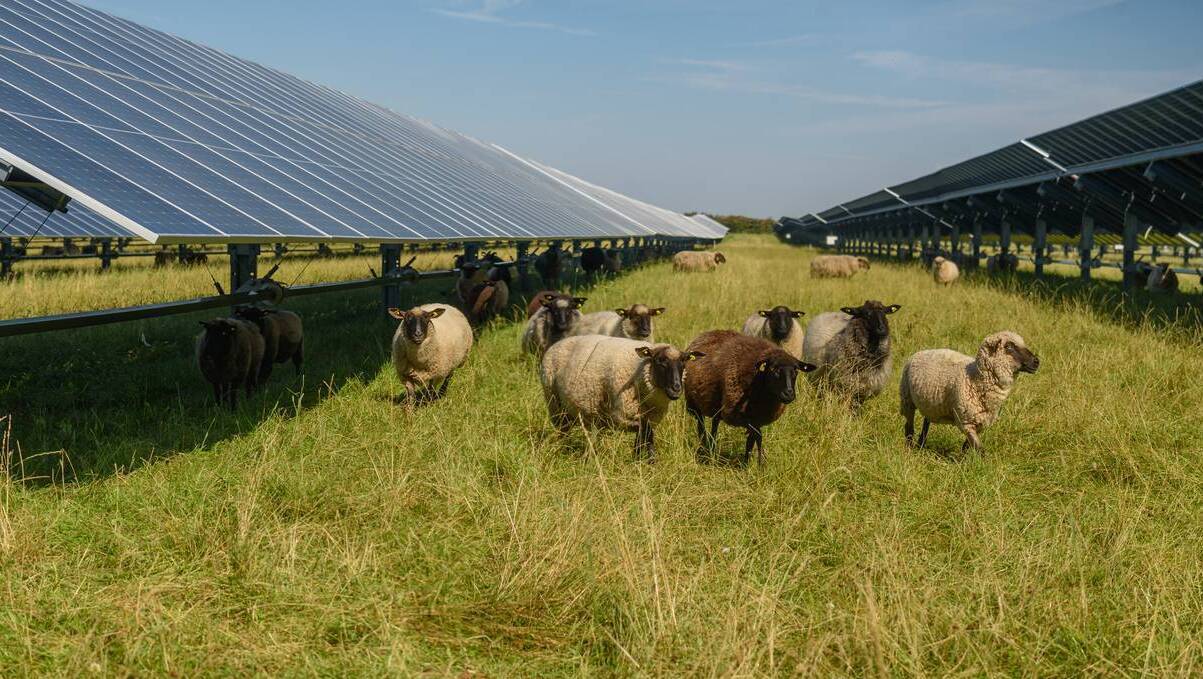
One good example of Agrivoltaics involves the shared use of land for solar parks and sheep grazing. Photo: iStock
As climate change accelerates and the world’s population continues to grow, novel approaches such as agrivoltaics (AV) are attracting interest as a way to support both food production and clean energy generation.
At its core, agrivoltaics involves placing solar panels above or between crops so that electricity can be generated at the same time as food is grown. By making dual use of land, advocates say it can make farming more resilient, help conserve water and offer farmers new streams of revenue.
There are many ways in which agrivoltaics can be implemented. Some of those include the siting of panels above crop rows, the creation beneath installations of habitats for pollinators, and the integration of solar modules into greenhouse structures.
As for what motivates farmers to consider agrivoltaics, a University of Göttingen study, published in 2024, sought to understand just that. Observing that more than two thirds of the German farmers surveyed appeared to be convinced of the fundamental benefits, co-author Charlotte Buehner noted that their confidence in the technology did not seem to be a barrier, with many seeing it as a way to future‑proof their operations.
Her fellow co‑author Johanna Wagner said that the farmers surveyed seemed to focus on the additional source of income from the electricity, even more than they did on the positive synergies that can arise between the agrivoltaic system and the crops.
Highlighting the reciprocal benefits of combining farming with solar, Oliver Hoernle, head of the agrivoltaics research group at Fraunhofer ISE, says: “Provided the PV system is properly planned, not only do the plants benefit from the agrivoltaics system, but the agrivoltaics system also benefits from the plants.”
In Ireland, Ronan Power, CEO of Solar Ireland, sees agrivoltaics as an opportunity to align climate action with the future of farming. He says it allows land to remain in agricultural use while generating clean power, supporting both food production and energy security. Also, that for farmers, agrivoltaics isn’t about choosing between agriculture and renewables, but about building a more resilient farm model with diversified income and greater protection against volatility.
“To unlock this at scale,” Power says, “Ireland now needs clear policy recognition of dual land use, alongside supports and planning frameworks that give farmers and developers the confidence to invest.”

If that framework is put in place, he believes agrivoltaics could become a cornerstone of a sustainable rural economy.
Emphasising that agrivoltaics strengthens rather than replaces agriculture, Power says: “There is often a perception that solar takes land out of use, but the reality is the opposite. With agrivoltaics, land remains productive, and solar infrastructure typically only uses a portion of the space, allowing farming activity to continue alongside energy generation. Even at full scale, solar would use only a very small proportion of Ireland’s land, but it can deliver a disproportionate benefit in terms of energy, income and climate impact.”
For agrivoltaics to scale here in Ireland, Power says policy clarity and support frameworks need to reflect how farms actually operate, and planning systems must fully recognise dual land use.
“Today, those systems are not yet aligned with the reality of integrating solar into working farmland,” he says. “But with the right framework in place, agrivoltaics can support farm viability, reduce emissions, and contribute to Ireland’s renewable energy targets at the same time.”
Solar Ireland says agrivoltaics creates a mutually beneficial relationship between solar panels and agriculture. The panels can provide partial shade, which moderates temperatures and reduces water loss, helping crops such as lettuce and spinach that tolerate shade, while also protecting them from extreme weather.
The space beneath panels can also be used for establishing habitats for insects and pollinators. According to the organisation, this approach is gaining traction as a practical way to optimise land use and address the intersecting challenges of food security and climate change.
A 2025 systematic review published in Renewable and Sustainable Energy Reviews found that dual-use agrivoltaic systems can lower soil and air temperatures by between 1 °C and 4 °C, reduce evapotranspiration, and improve water-use efficiency by 20–47 per cent. Also, that heavy shading may reduce yields for crops that require full sunlight. This review draws on dozens of empirical studies from diverse climates to highlight how AV shapes the microclimate around crops.
In addition, a 2025 review featured in Sustainable Production and Consumption reported that well-designed agrivoltaic systems can deliver multiple co-benefits, including higher profitability compared with standalone agriculture or solar farms, along with reduced irrigation demand. The authors emphasise that key design factors, such as panel height and inter-row spacing, have a strong influence on both crop performance and energy output.
Field-specific research also points to broader productivity gains in some configurations. A 2026 critical analysis published in Renewable and Sustainable Energy Reviews found that land-equivalent ratios often exceed 1.2. This indicates that combined energy and crop production per hectare can be greater than what could be achieved with separate land uses, particularly for shade-tolerant crops or pasture systems.
Field trials in Italy — including a four‑year experiment on potato agrivoltaics conducted from 2021–2024 in Northern Italy and published in the journal, Smart Agricultural Technology, in 2026 — have suggested that, with careful shading management during key growth stages, crops such as potatoes can be cultivated successfully within agrivoltaic systems. That said, in some setups, yields were modestly lower compared with those achieved in full-sun conditions.
Despite differing results across crops and climates, agrivoltaics continues to attract attention as a way to boost land-use efficiency, support food production, enhance water security, and expand renewable energy generation.
With that, the practice is often seen as a harmonious mix of energy and agriculture, with animals sometimes grazing beneath the panels. Yet this interpretation overlooks an important aspect: It is harrowing to consider that in many cases the animals concerned spend long periods moving among fenced arrays of metal frames.
So, while the technology is carefully designed and well understood, perhaps the same cannot be said for the life agrivoltaics creates for the gentle creatures placed within its structures.