Vertical farming lettuce releases higher emissions, study finds
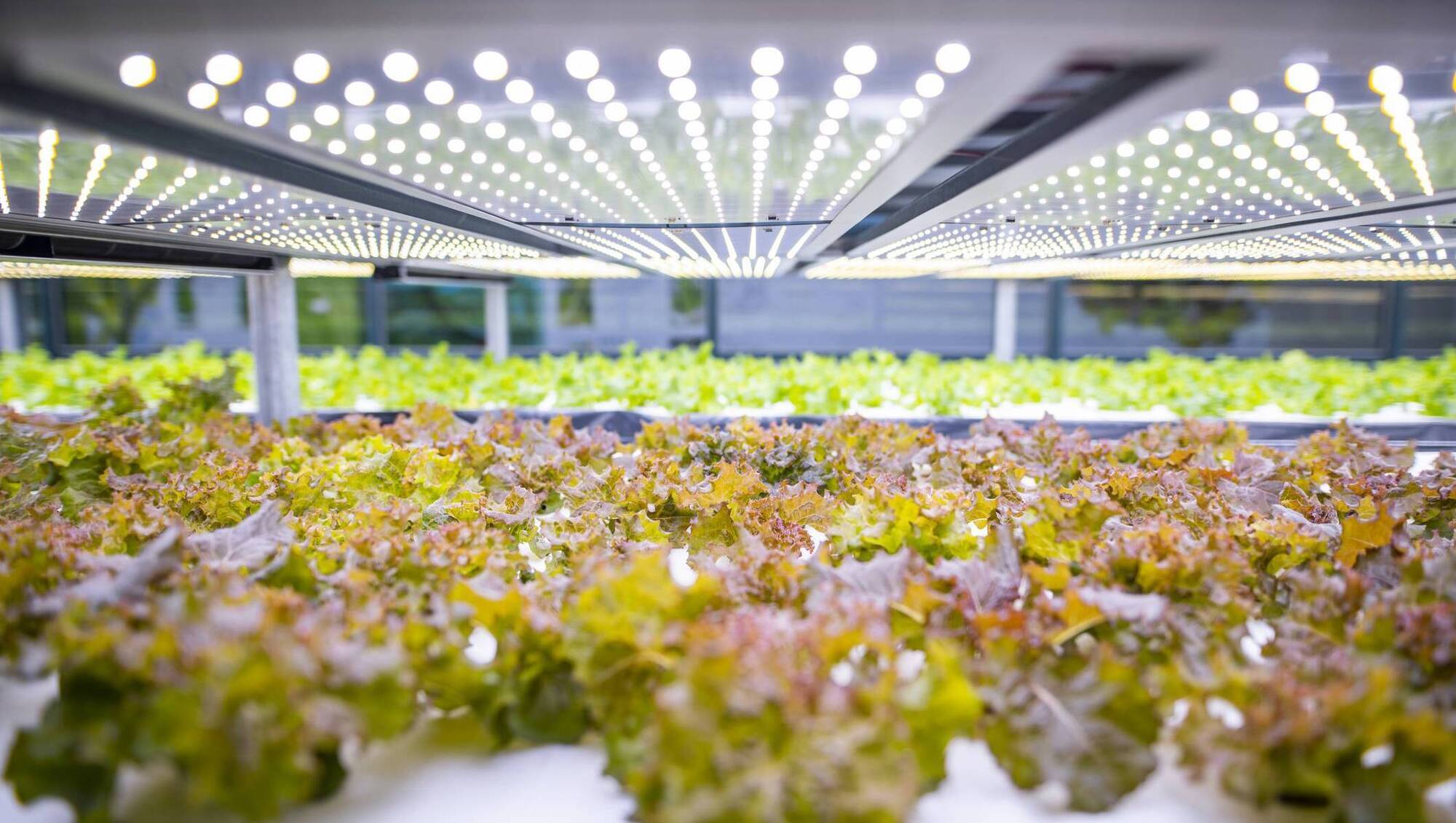
Energy use (electricity or diesel), the choice of substrate and soil emissions were the biggest climate impact 'hotspots' for lettuce production.
Lettuce means sustainability for many in Ireland, not least because Eamon Ryan recommended in a Dáil debate (on covid-19 pandemic food supply disruption) in 2020 that people grow lettuce on their south-facing windowsills.
Or why not go all the way with sustainability, and grow lettuce in vertical farms? This type of controlled environment agriculture, protected from weather and pests, has nutrient delivery systems to optimise use of resources such as lighting, heating, water, energy and space.
To maximise land use and yields per square metre, it could be the most sustainable way, particularly for countries which depend on imported food because they have limited land area and variable climates. Growing leafy greens and salad vegetables such as lettuce suits these vertically stacked systems.
However, many fans of vertical farming (VF) lettuce will be disappointed to discover that comprehensive research in the UK has shown higher environmental impacts per kg of VF lettuce compared to traditional UK field farming, or to growing lettuce in Spain and importing it.
In what they say is the first study that fully accounts for soil emissions from field farming, researchers at the University of Surrey’s Centre for Environment and Sustainability, and at the University of Aberdeen, used Life Cycle Assessment to compare the environmental impact of lettuce production in a commercial vertical farm in the UK with traditional field farming in the UK and Spain.
The vertical farm was found to have higher emissions in all impact categories, except for water use. Even when using renewable energy, vertical farming had greenhouse gas emissions of 0.93kg per kg of lettuce versus 0.58kg for UK-grown lettuce and 0.55kg for Spanish lettuce.
But the land-sparing potential of vertical farming, with about 30 times the field yield per square metre, could be sustainably advantageous if spared land is used to reap other environmental benefits.
With low-calorie benefits, but high nutritional value, and as a good source of several minerals and fibre, lettuce is imported for much of the year to the UK, comprising an estimated 80% of the supply.
The research team said:
They found that UK peat soil cultivation is the highest yielding for lettuce. But cultivation on peat soil incurs higher GHG emissions. However, the overall climate change impact per kg of lettuce is similar for ordinary soil (0.57-0.58kg of carbon dioxide equivalent).
VF system environmental impacts vary. For example, growing in jute-based substrates increases life cycle emissions. But all VF systems have considerable electricity demands, which exceed the diesel consumption in field farming.
Energy use (electricity or diesel), the choice of substrate and soil emissions were the biggest climate impact “hotspots” for lettuce production.
The researchers measured the full impacts of seedling development and planting, tillage and other soil manipulation, plant protection chemical applications and watering. They looked at a vertical farm in a major UK city which uses a hydroponic system to grow four tiers of crops totalling 150 square metres, including loose-leaf lettuce.
The field farms evaluated all grow iceberg lettuce, but the researchers said this is comparable due to the near-linear relationship between the size of lettuce, the length of time to harvest and the similar nutritional value. UK field lettuce seedlings are grown in peat plugs, which are transplanted into the field.
Information was also used for iceberg lettuce grown in Murcia, 2,600km from the UK. As expected, transport was the major climate impact “hotspot” for Spanish lettuce.
But soil emission results were negative for the Spanish farms because they use high quantities of manure or compost, which add more carbon and nitrogen to the soil than is released.