Darren Allen: Reduced cultivations and cover crops delivering gains in wheat establishment trials
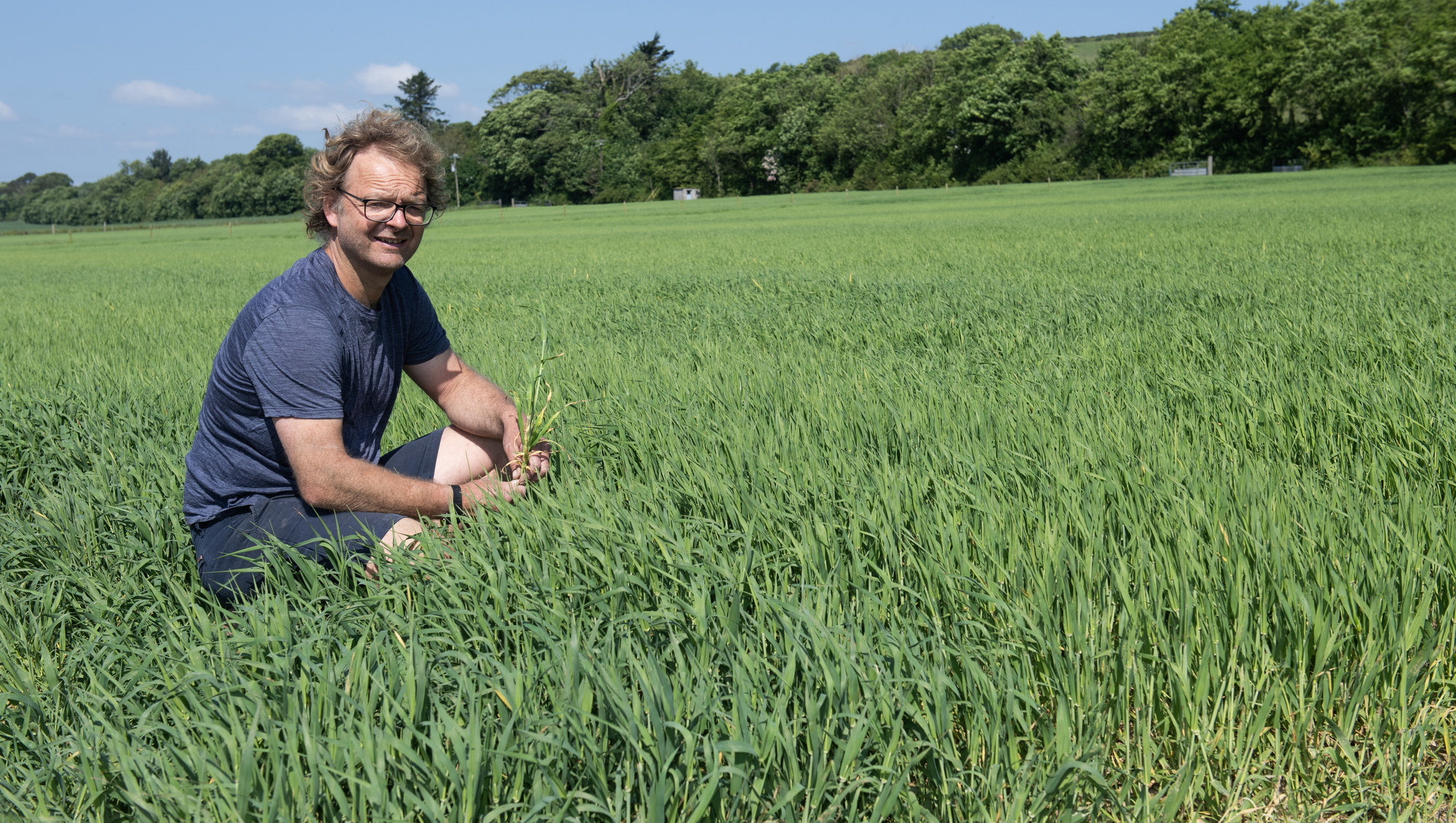
Darren Allen: Looking ahead, I will have more spring crops in 2026 than usual. Picture: Dan Linehan
This autumn, I continued trials on winter wheat establishment to improve net margin and farm sustainability. I used three methods across different fields: zero-tillage, minimum-tillage and conventional ploughing followed by a one-pass system.
The ploughed wheat was sown on my target date, October 15; the reduced tillage plots were drilled earlier, on September 26.
All three got off to a good start in favourable conditions and established a strong plant stand. A pre-emergence herbicide was applied, and weed control has been excellent — the crops are very clean, which I am pleased with.
Large cover crops are currently present in the fields thanks to favourable autumn and winter growth. Cold weather at the start of January knocked them back nicely, helping to prepare the ground for spring cropping.
I am now considering the best approach to terminating these cover crops and whether to use glyphosate early or late.
Burning off too early can cause the ground to slump, particularly in extremely wet weather, while leaving it too late increases the risk of a green bridge effect, raising the likelihood of carryover disease and aphids transmitting BYDV.
I favour diverse mixtures and brassica-friendly blends, as oilseed rape forms part of our rotation, and I want to minimise the risk of clubroot developing in our soils.
Last year’s mixes included vetch, phacelia, sunflowers, linseed, buckwheat, crimson clover, oats, peas and beans. Most cover crops were established using a cross-cutter with broadcast seed, with some fields direct-drilled.
Quantifying benefits, such as nitrogen carryover, remains challenging. I have not observed a clear increase in nitrogen availability to the following crop, but the improvements in soil structure and biological activity are clear.
This winter, there has been no water ponding so far, which is welcome given past yield losses from poor drainage. While I am unsure whether this improvement is due to cover crops, reduced cultivation, field drainage or a combination of all three, overall flood resilience has clearly improved.
Bird surveyors involved in the Arable Coast Environment (ACE) EIP have visited the farm and recorded good numbers of snipe and yellowhammer. This is encouraging and contributes to a positive environmental story for both the farm and the wider tillage sector.
Looking ahead, I will have more spring crops in 2026 than usual. With reduced demand for spring malting barley, I plan to expand the pea/bean combi crop and make full use of the Protein Aid Scheme. This will allow me to establish a first winter wheat next year and continue shifting establishment methods towards lower cultivations, helping to curb costs.
I will also continue efforts to reduce chemical nitrogen use by applying imported slurry early in the season, followed by foliar nitrogen later.
- Darren Allen is a Signpost tillage farmer based at Ballymaloe Farm, Ballymaloe, Shanagarry, Co Cork. His Signpost tillage adviser is John Mahon and Teagasc tillage adviser is Ciara O’Donovan.