Getting our most valuable sector through historic transition
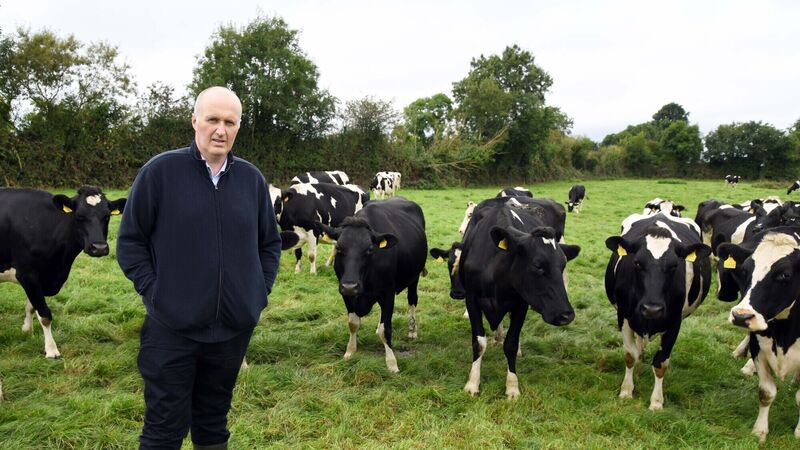
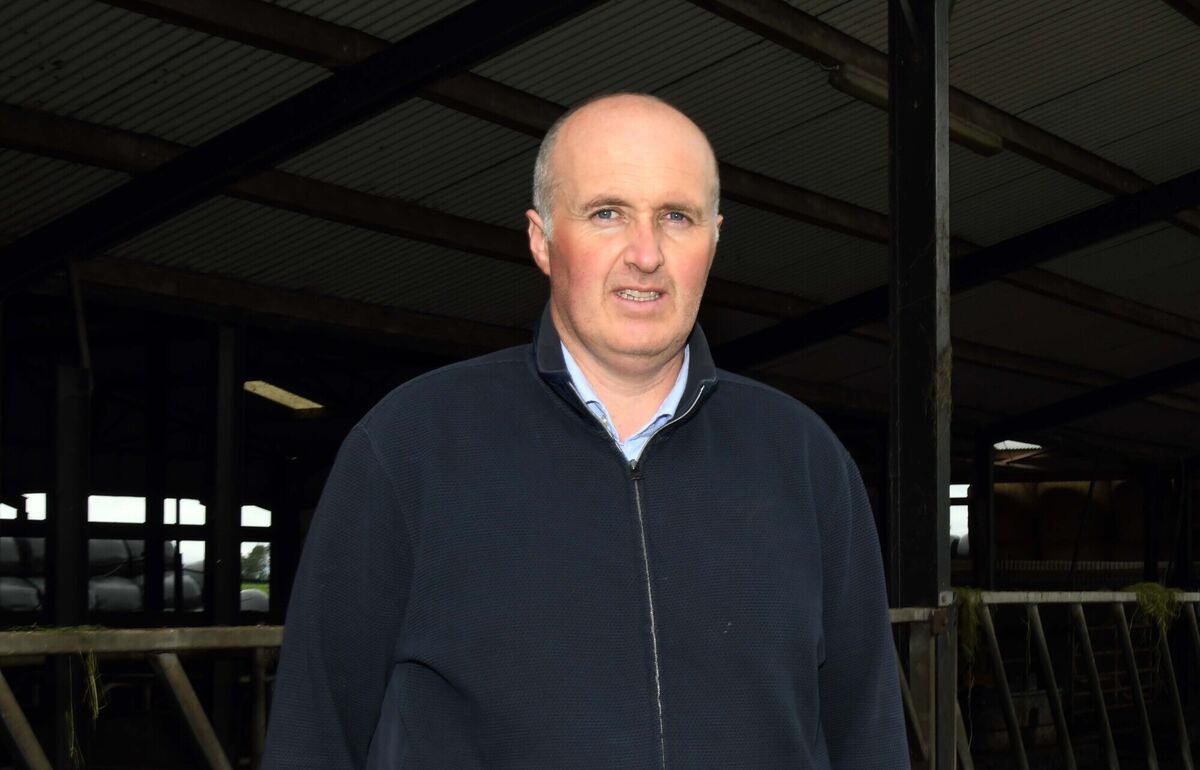
The Irish dairy family farm has evolved into a 'Best in Class' model for others to follow," says Pat McCormack, president, ICMSA, pictured on the farm in Co Tipperary. Pictures: Denis Minihane
, president of ICMSA, explains the central role that family farms will play in delivering Ireland's climate change ambitions.
The very first thing to say is that ICMSA does not accept the false ‘either/or’ choice that is the format in which certain elements present the challenge around making farming and food production compatible with climate change and environmental sustainability.
This cliché has the challenge boiled down to either Ireland reducing its overall farming and food sector — and particularly its multi-billion euro dairy sector — or Ireland abandoning any hope of reaching the targets that have now been enacted into law by the Oireachtas.
This binary is artificial and misleading; it does not represent the real choice before us and usually is articulated by groups who for a variety of reasons want to either deflect scrutiny away from other preferred sectors, or regard any commercial farming as an affront to their own unattainable idea of ‘the environment’.
ICMSA is saying that not alone can we retain our most valuable agri-sectors, but we can develop and improve them, while still moving steadily and decisively towards the targets set.
The most valuable agri-sector in Ireland is dairying. The family dairy farms that ICMSA has represented for in excess of 70 years are the base and primary engine for a multi-billion euro exporting capacity that is regarded globally as ‘best in class’.
It is already — even before we begin on the historic transition to lower emissions — regarded as one of the most sustainable milk production systems on the planet and certainly the most sustainable in Europe. It is grass-based, low emissions and is dependent on the technical skill and capacity of about 18,000 farmers — the majority of whom as ICMSA members.
This bears stressing, so I’m going to do just that. Practically all the global flagship ‘Irish’ food brands rated by international analysts arise directly from our family dairy farms. Our multi-billion Euro co-ops and processing sectors arise directly from our family dairy farms. Our Multi-billion Euro marketing and sales bodies — whether agencies such as Bord Bia or ‘Co-op of Co-ops’ like Ornua — have as their primary focus the sale of products that arise directly from our family dairy farms.
The economic, social and demographic stability of vast swathes of rural Ireland — specifically in the South but right throughout the country — is based directly on the family dairy farms in those areas. It all rests on them.
The question then becomes how we manage this absolutely indispensable sector through the current transition in a way that retains and grows its economic and social capacity while meeting its environmental targets. We would submit that answering that question is not just the business or duty of ICMSA: it is — or it should be — the business of anyone interested in the overall indigenous economic stability of Ireland. We’ll make it simple: if there’s one farming sector that Ireland absolutely has to keep as a matter of national priority then it’s the dairy sector.
That’s not ICMSA’s subjective opinion; it’s what every scrap of data and every examination of the situation confirms. It’s what every economist is saying. It’s what the maths says.
So we have to assume that we will keep the sector that earns Ireland most; the sector in which we are already environmentally best positioned; the sector with greatest multiplier effect into the wider economy and the sector with by far the highest levels of investment and technical qualifications.
How do we take all those indisputable points and make the sector more sustainable and even more climate-compatible towards the lower emissions goal?
This is where we come to the bizarre position adopted by the Government which, for instance, is no longer allowing grants for capital dairy investments. It’s as if the Government is nervous about being seen to take a decision based on the data and the science. It’s as if the Government is afraid of actually having to tell certain parties: “The national economic and environmental interest has been weighed up and on that basis, our dairy sector is going to be managed and supported through the process of meeting the emissions legislation”.
We would have thought that that’s pretty well what Government is there for. If it’s not there to decide on the national interest, then what is it there for?
The Government must unapologetically announce that Irish dairying is going to be transitioned and supported through the emissions-lowering process.
That will absolutely mean a comprehensive system of grant-aiding that will enable farmers to invest in the plant and equipment necessary to meet those twin objectives of lowering emissions while preserving the economic and social contributions of our most valuable farming sector.
Farmers have been repeatedly told that the challenge to them arises from irrefutable data and science. Well ICMSA is turning that question back onto the Irish Government. When are they going to make a decision to actively support our most valuable and environmentally compatible farm sector through this historic challenge and into the more sustainable future we all want, a sector that is one of the most sustainable globally.