Tyrant or tough taskmaster: Where's the line for coaches and can results justify means?
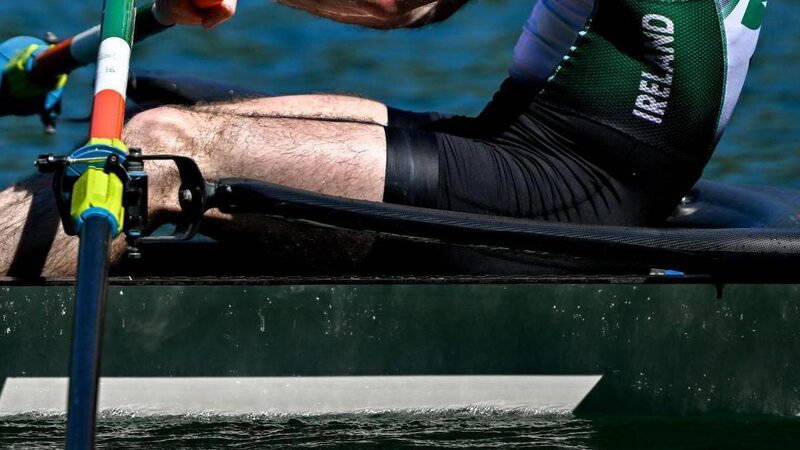
Maurogiovanni remained in his role long after multiple Irish rowers had raised concerns about his approach. And it’s not all that difficult to figure out why. Pic: Benedict Tufnell/Sportsfile

THERE’S a scene in Whiplash, a movie that’s got nothing to do with sport, which captures something about the complexity of coaching.
The film’s lead character, Andrew Neiman, is an aspiring drummer at the top jazz conservatory in New York, Shaffer, where he’s taught by a mentor who’s equal parts perfectionist and tyrant, Terence Fletcher.
Eventually, Fletcher goes too far and gets dismissed from his role, with Neiman instrumental in his downfall. Months later, the two run into each other at a bar.
“I don’t think people understood what it was I was doing at Shaffer,” says Fletcher. “I was there to push people beyond what’s expected of them. I believe that is an absolute necessity, otherwise we’re depriving the world of the next Louis Armstrong.”
“But is there a line?” asks Neiman. “Maybe you go too far and you discourage the next Charlie Parker from ever becoming Charlie Parker?”
“No,” says Fletcher. “Because the next Charlie Parker would never be discouraged.”
Reading Paul Kimmage’s in-depth feature on Irish rowing in last weekend’s Sunday Independent, the same question came to mind: Is there a line? And where exactly should it be?
In sport, the answer is likely different whether it’s lower-tier amateur stuff or cutthroat professional sport. The higher the level, the better the standards that need to be maintained.
There’s an athletics coach at a leading British university who told me that with incoming first years, they always ask the same question: How good do you want to be?
If it’s just to be a scoring member on the university team, the approach will look different to those who say they want an Olympic medal. The latter group will be pushed harder, with tougher decisions taken on how much precedence sport takes in their lives.
And this is where it gets tricky, because the line separating a hard taskmaster from a bully can be very fine. One person’s tough love can be another’s verbal abuse, and two people might look at the same situation and see two very different things.
Would some of Pep Guardiola’s players describe him as a tyrant for his hot-headed perfectionism? Surely. Would many in the same teams label him a genius whose high standards led to their best achievements? Undoubtedly.
Two things can be true: You don’t need to be a dictator to get world-class results, but many of the world’s top coaches do also happen to be dictators. But does the success of such programmes happen because of or in spite of that? And if it’s a contributing factor to success, what personal cost is worth paying for an Olympic medal?
Among the many troubling aspects outlined in Kimmage’s piece, the tales of rowers being pushed through illness or injury were most worrying.
As Ronan Byrne stated: “I actually ended up with pneumonia that Christmas because of all the stress. Then, as I was finishing the antibiotics, there was a two-week camp in Italy and I was coughing up blood. And they were still pushing me. They were like: ‘Take it down to three-quarters,’ so instead of doing 20km, do 15, and by the end all I was able for was a light spin on the bike.”
Monika Dukarska recalled her run-ins with high-performance director Antonio Maurogiovanni during a training camp in 2019, as she struggled with a back injury. “I started crying and he completely lost his shit,” she said. “He was banging the boat and shouting at me: ‘Stop fucking crying. If you can’t do it just go in.’”
At a team meeting later that day, Dukarska said the rowers were “borderline crying” as Maurogiovanni “made it so nerve-racking, so intense”.
“It was the same with the support staff,” she added. “Sharon Madigan [nutritionist] didn’t want to work with him anymore; and he had all sorts of issues with Sinead Murphy [physiotherapist] and how she was managing us. Sinead was like: ‘Well, the load needs to be adjusted and the volume needs to be decreased so the athlete can recover and the injury heals.’ But his argument was always, you don’t adjust the programme for a niggle, you keep going until you break, or get sick, and then you recover.”
If that’s accurate, then the high-performance system led by Maurogiovanni had elements of the Soviet approach in Olympic sport many decades ago which, in simplified terms, could be described as throwing a bunch of eggs against the wall and keeping the ones that don’t crack.
IT’S clear now that many rowers did crack — physically, mentally, or emotionally — in a system that was widely lauded as among Ireland’s best.
But let’s not forget: Rowers are tough, tough people. They wouldn’t be in the sport in the first place without having a huge pain tolerance, and those who reach the national team have already survived a gruesome workload, developing the ability to push their bodies unfathomably hard. When many of those types are raising concerns, there’s likely a very good reason.
Back in January, Sanita Puspure told Sinéad Kissane in the Sunday Independent that it was a “toxic environment”, detailing how her career faltered due to being overtrained, culminating in her failure to make the A-final at the Tokyo Olympics. I can still recall waiting in the mixed zone in Tokyo only to be told that Puspure wouldn’t be doing interviews, and that she was “devastated”.
Under Maurogiovanni, that wasn’t unusual among Irish rowers, who were instructed not to do interviews until after finals, as if giving a couple of minutes to RTÉ and/or the print media after a semi-final would somehow sabotage their performance.
That is clearly nonsense, disproven by the many megastars of Olympic sport like Novak Djokovic or Simone Biles or Usain Bolt who’d all be happy to have a box-ticking chat after preliminary rounds. But it was nonetheless accepted as the norm for at Rowing Ireland — the sport scoring a huge own goal by stopping its star names from communicating with viewers at home during major events.
The issues outlined in the piece around athlete welfare are, of course, far more troubling, but they’re not unique to rowing, and in truth they’re indicative of far too many high-performance systems around the world.
Research carried out by World Athletics at the 2018 World U20 Championships found 23% of male athletes and 21% of female athletes had experienced verbal abuse in athletics, with 12% of males and 9% of females experiencing physical abuse; 12% of males and 7% of females reported sexual abuses.
In the most egregious cases of coach misconduct, everyone can agree that such people have no place in sport. But beneath that, there’s a wide spectrum of behaviours and it’s often hard to know where the line is and whether the end can truly justify the means.
Elite sport is a tough, ruthless, results-based business, and athletes don’t enter it expecting it to be all sunshine and rainbows. But is a medal ever worth their happiness? Or their health?
For Rowing Ireland and Sport Ireland, those are questions that need to be re-considered on the countdown to the Los Angeles Olympics, where Ireland is targeting a record haul of eight to 10 medals.
Many will now be wondering: At what cost? Because Maurogiovanni remained in his role long after multiple Irish rowers had raised concerns about his approach. And it’s not all that difficult to figure out why.