John Fogarty: Ten pressing matters GAA faces this week
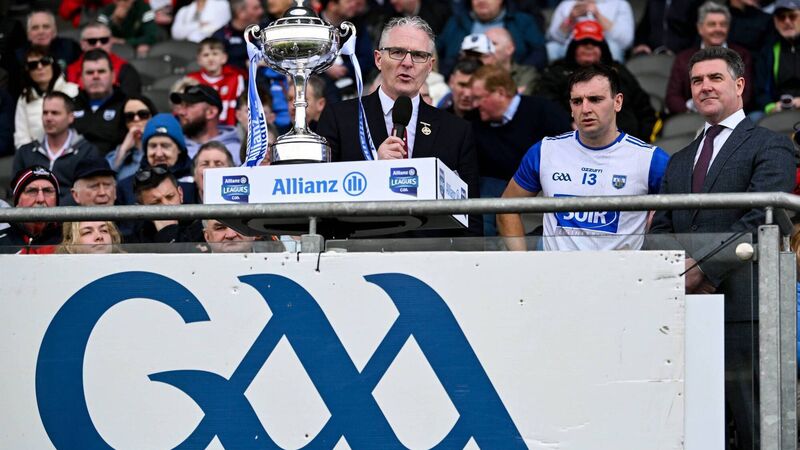
The GAA's ethics and integrity committee are expected to present their findings about the association's relationship with Allianz this weekend. Pic: Brendan Moran/Sportsfile
Between motions, master fixtures and conventions, the end of November is a hectic time of the year for GAA officialdom. But this week takes the Digestive. Here are just 10 pressing matters that will be decided or discussed in the coming days:
Management Committee and Central Council are this weekend expected to be presented with the findings of the ethics and integrity committee’s review of the GAA’s relationship with the global insurance firm, arising from its ties to Israel and the war in Gaza. One leading GAA official has claimed the organisation can’t afford to lose Allianz, its largest underwriter not to mention sponsor, but can they afford to keep them? Without some form of concession, there may be trouble ahead.
Kerry’s announcement on Friday that they again spent over €2 million on their county teams comes as Central Council could sign off on the proposals by the amateur status review committee ahead of Congress in February. There doesn’t appear to be great support for some of what has been mooted by the body – contracted managers or providing them with €20,000 per annum stipends – but any moves to revise and/or reinforce the much-floated training ban should be applauded.
Going back to 2023, this is a subject that has been tossed around Central Council. A sub-committee was formed to enhance the day, but the gap left by the All-Ireland minor finals has never been filled. With more counties opting for U18, how long before it is returned as the minor grade at inter-county level and All-Ireland final days become double-headers?
As reported by this newspaper last week, hurling counties are keen on the quarter-finals returning to Sunday for the first time since 2019. That would likely mean the Joe McDonagh Cup semi-finals are flipped to Saturday. It’s a subject that needs to be nailed down before finalising the 2026 master fixtures calendar.
As well as recommending a 30-metre free advancement for dissent, the Hurling Development Committee are this Saturday proposing the disbandment of the championship games pitting the third-placed teams in Leinster and Munster against the Joe McDonagh Cup finalists. What was supposed to be a sop to the second tier turned out to be a slaughterhouse coming as the matches did a week after the McDonagh Cup final. The problem is the HDC should have proposed this for Special Congress and if passed there will be just five hurling championship matches post-provincial finals.
With over €20m having or needing to be spent before construction work begins and monthly bills estimated to be running just shy of €180,000, the Belfast venue saga must come to an end. Other parties have been guiltier, but the GAA have been shuffling their feet about the subject in the past couple of months. A definitive revised and yes scaled-down plan is required and word of such may be in the offing.
It’s over 12 months now since the latest round of discussions about funding commenced. These talks have a chequered past, and these have hit another impasse. We might get a progress report of some sort this weekend or a deal may finally have been struck, but oversight had been a red-line issue for the GAA.
All is quiet on the western front, which is slightly unusual as declarations are usually made now. In September 2019, Armagh first nominated Jarlath Burns for the presidency. The next time around he and Pat Teehan were proposed by their counties on November 1. So far, nobody has confirmed they seek to succeed Burns in 2027 but it is anticipated Leinster chairman Derek Kent (Wexford) and previous Munster chair Ger Ryan (Tipperary) will put their names forward for the February election.
Having been a yawnathon in the past, Thursday’s draw is the most anticipated in 15 years, largely because of Dublin losing their hold of Leinster. After the seeding kerfuffle in Munster, will Clare and Kerry be drawn against each other in a semi-final? Do Armagh and Tyrone, two of the five teams who can be drawn in the preliminary round, avoid each other at that early stage? Will Galway and Mayo meet in the last four of Connacht, the same as they did in 2016, the last time Mayo travelled to London?
At this stage, the 26 of the 32 county boards in this jurisdiction have made their voluntary tax liability declarations to Revenue. The deal done between Croke Park and the commissioners involved county boards calculating their 2024 liability and extrapolating it for the three previous years, i.e. paying four times last year’s figure. Mayo along with Galway and Wexford made the headlines last year when they were subjected to audits, but it is believed another couple of Leinster counties as well as at least one in Munster have hefty six-figure bills to pay.
john.fogarty@examiner.ie
“A proposal to allow media attendance at County Committee meetings was not accepted. The Cathaoirleach and Rúnaí outlined the rationale behind current policy, as approved by management, and the alignment with Central Council meeting policy.”
Any chance of the shutters being lifted for the media at Cork’s monthly county board meetings were swiftly ruled out by chairman Pat Horgan and chief executive Kevin O’Donovan last week.
For the record, what they are referring to is the findings of a Central Council review body in 2023, which were later adopted by the body. Part of it read: “It is very important that proposals for Central Council’s consideration, and indeed the meeting’s deliberations and outcomes are kept confidential until such time as they can be communicated in a cohesive and constructive manner to our units and members firstly and the wider media thereafter.” It continued: “The recent introduction of a post-meeting briefing note for distribution to clubs and to the media has been a well-received initiative. The group considered the merits of expanding this to be more comprehensive, or of staging a media event or press conference after each meeting, however it was felt that these were not necessary.”
Much like the Central Council’s bulletins, Cork’s notes can often be skinny in detail and occasionally neglecting the major talking points. That information deficit hardly helped the Cork executive when they kept schtum about the rumours of a dressing room row in the All-Ireland SHC final or when it was they, not the players, who in tandem with the senior hurling management agreed not to stage a homecoming in the event of a defeat. On both occasions, they left their hurlers hanging out to dry.
O’Donovan, who completes seven years as chief executive next month, is one of the most articulate officials in the GAA. His annual report has rarely failed to be thought-provoking. He and Cork GAA should be playing to their strengths rather than believing silence is golden.
Great credit is due to Noel Dundon for turning around quick smart a comprehensive review of Tipperary’s All-Ireland senior hurling success in his new book, “From The Ashes – Tipperary’s stunning rise from outsiders to All-Ireland champions.” Chronicling an extraordinary season for Tipperary, it’s interesting to consider just how much manager Liam Cahill spoke of and addressed supporters during the year. He did something similar during his time in Waterford, but about his own it resonated more.
Going back to his extensive interview with Shane Brophy in in March, he had mentioned the need to repair the bond between the group and supporters. “The disconnect likely stems from a lack of communication about what’s happening behind the scenes,” he said (a similar topic is raised elsewhere in this column).
After drawing with Limerick, he rejected the idea that Tipperary were back but two games later and after defeating Clare in Ennis in May he was saying the fans were: “Our supporters are back again and they love what they see and we’ll keeping fuelling that as long as we can, and please God success will follow in time.”
Seeing Tipperary refuse to lay down tools after Darragh McCarthy’s sending off last May was a compelling advertisement for the group but Cahill’s constant dialogue with fans was vital too. The strength of his call was in repetition. When David Clifford summoned Kerry people to Croke Park last June, it was his identity that convinced. This was indeed a year for the 16th man.