Hot sauce brothers have perfect menu for business success

A bit like making hot sauce, it's all about finding the right ingredients to create the best environment for job creation.
Paul Sutton, a Senior Executive Officer in Cork County Council's Economic Development, Enterprise and Tourism Directorate, is one member of a team tasked with delivering that right mix of ingredients to foster economic activity and drive enterprise county-wide.
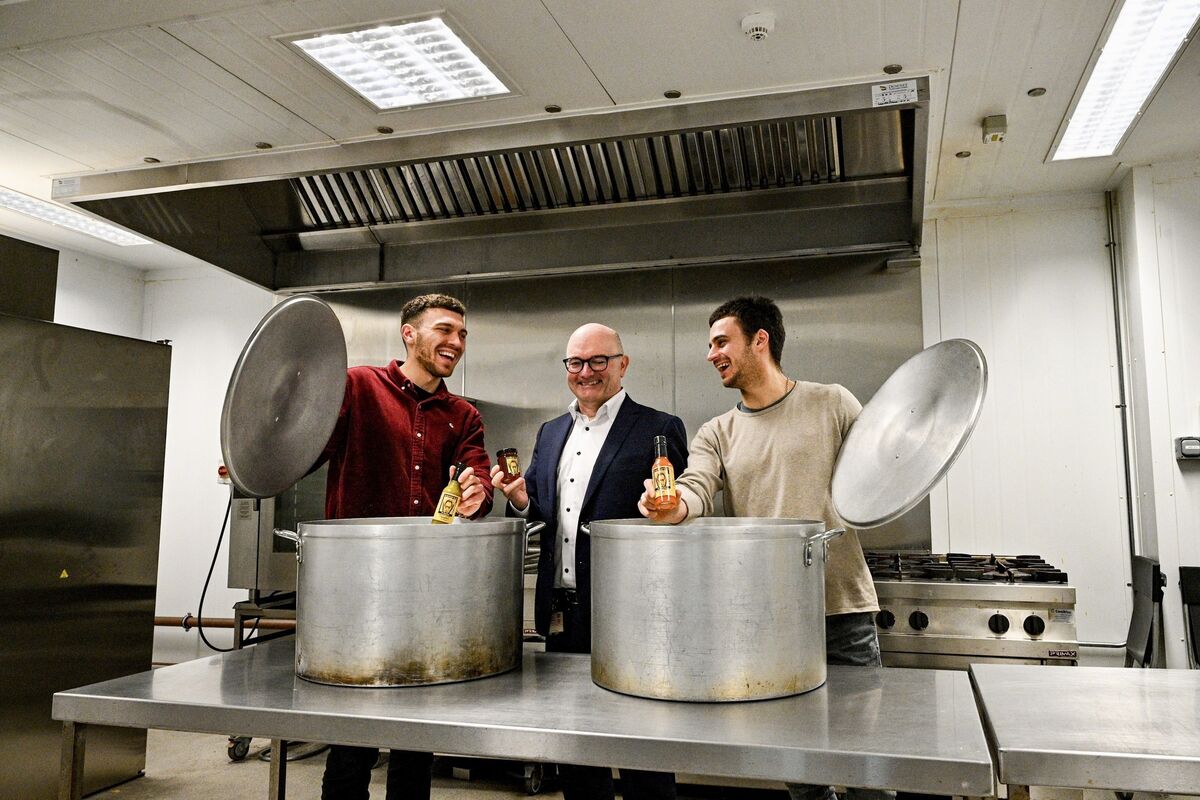
And whether it's helping the brothers behind the hot sauce company Tongue Tied, who are using the council’s incubator kitchens facility to scale-up production, or providing large industrial units in business parks to facilitate the expansion of large engineering and construction companies, the aim is the same.
“What people in enterprise need is space, and to either succeed or fail fast,” Mr Sutton says.
“We in the council are in the lucky position of not needing to see a return on our investment tomorrow. We can afford to take a longer-term view, that is not necessarily dependent on the boom and bust cycle.”
Local authorities have always played a key role in economic development, traditionally in the form of delivering infrastructure like roads, bridges, water, industrial estates and business parks, or through the planning system by identifying strategic industrial or enterprise zones.
They have also played a key role in the delivery of EU Leader funding — the massive rural development programme which supports private enterprises and community groups in rural areas.
Cork County Council has distributed some €14m of Leader funding during the current funding programme, with a new round of funding set to run from next year.
But the Local Government Act of 2014 gave local authorities a legislative mandate to take an even more direct role in fostering economic activity, at driving regional enterprise and supporting tourism development.
A specific directorate — the Economic Development, Enterprise and Tourism Directorate — was established in Cork County Council in 2016, with Mr Sutton and its other various team members based together in the former refurbished motor tax office located just behind County Hall on the Carrigrohane Road to work with various partners on the implementation of national economic, enterprise and tourism policy at a regional and local level.
And in the decade since the enactment of the act, Cork County Council has ramped up its economic and enterprise function to support a raft of diverse projects, from greenways and blueways and the restoration of historic stately homes and grounds, to helping create and now run a national tourism gem on Spike Island in Cork Harbour, to developing digital hubs with hot-desks and office space in some of county’s largest towns, and using its incubator kitchen units to support tasty start-up food businesses.
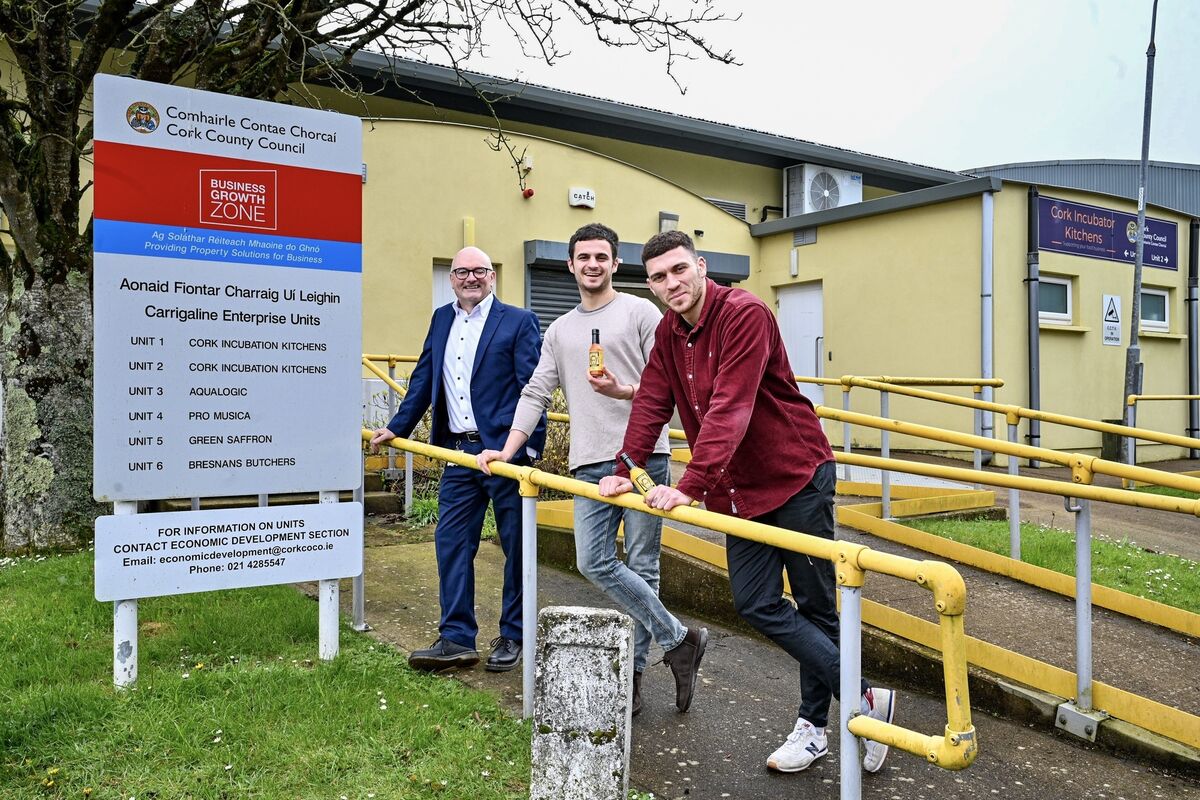
Launched in 2016, the Cork Incubator Kitchens facility in Carrigaline gives food entrepreneurs access to professional kitchens equipped with refrigeration, blast chillers, fogging machines, tilting bratt pan, vacuum packers, sealing machines and Zanolli deck ovens — everything they might need to develop and expand their food business.
The kitchens can be rented for as little as €15 an hour, including electricity.
The facility is a real practical example of how the local authority in a county renowned for its food identified a need and took a risk.
It has over the last few years supported the development of several food-related businesses, including Athula Kuruppuachchige’s Athula Fusion Foods, with the hot sauce company, Tongue Tied, whose products are familiar to visitors of Cork’s Marina Market, among its newer clients.
Mr Sutton said: “These incubator kitchens allow food producers who might be making their product at home or in a shed, and who are having success at local markets and in some local shops, get into a fully kitted out food kitchen, produce their food at scale in say one day, and then spend the rest of the week focusing on the other side of their business — like selling, branding or marketing.
“It’s a big leap going from producing in your own kitchen or shed to signing a lease to rent your own 1,000sq ft unit in the private market. That’s a very big commitment with a greater degree of certainty.
“These incubator units are like a bridge from the kitchen to the big unit. For example, Fusion Foods went from hiring a kitchen from us for a few hours a week, to renting a food unit from us full-time.”
Sharon Corcoran, the Director of Services of the Council’s Economic Development, Enterprise and Tourism Directorate, said their work is always guided by the various national and regional economic and enterprise plans, including the south-west regional economic development plan which governs the Cork area, and the council’s own local economic and community plan which provides even more focus.
As part of its efforts to drive economic development, the council has set aside some 1% of its commercial rates income every year for the last decade in a ringfenced Economic Development Fund.
It has been used to support strategic projects like the Ignite programme at UCC, the international award-winning business incubation programme supporting recent graduate entrepreneurs turn good ideas into great businesses.
Founded in 2011, IGNITE is a joint initiative by the City and County Council, the country’s LEOs, and UCC to encourage entrepreneurship and enterprise creation.
It has worked with almost 120 start-ups and over 140 founders who have launched companies such as UrAbility, AnaBio, ApisProtect, Eurocomply, LegitFit, OnTheQt, PunditArena, Supply.ie and TrustAp and Vconnecta.
The Economic Development Fund has allowed the council contribute a substantial six figure sum annually to the tourism promotion body, Visit Cork, and to distribute up to €400,000 across the county annually to support summer festivals, which in turn help attract people to county towns and villages, increase bed nights and bring in tourism spend.
A new Local Economic and Community plan, drafted following extensive consultation with a broad range of stakeholders, including the IDA, Ibec, various chambers of commerce, Cork county’s local enterprise offices (LEOs), and the region’s third-level institutions, will be published this week to guide the council’s economic and enterprise strategy at a grassroots level for the next six years.
“There was very broad consultation on this plan, which has taken the data from the 2022 Census,” Ms Corcoran said.
“Cork’s population has grown 10% since the last Census. We have crunched the numbers and produced a range of high-level goals to try to address the various issues.
“And local authorities have to report back to government annually on the progress of their plans so it’s very much about implementation.
“With many new Irish making their home here, we hope to reach out to them too, to help them integrate, to encourage them to get involved in enterprise, in tourism, in arts and crafts or whatever — and to encourage more people to consider starting up a new company.” More outreach by third level institutions to the more remote regions of the county and further development of the county’s tourism product will be among the key areas over the next six years.
Tourism, which is already critically important to West Cork, is set to play an even greater role in North Cork, where there has been substantial investment in historic properties like Doneraile House and Park and Anne Grove gardens near Castletownroche.
Over the next 12 months, the council also plans to expand its network of E-Centre hubs — it has centres in Fermoy, in Macroom, Youghal and Bantry — which each provide office and hotdesking facilities for local companies or individuals.
The E-Fermoy facility, for example, has nine offices which have capacity for between two to five people, and 11 hotdesks, with five or six long-term users, and others in for a day or two a week.
Two more are planned — one over the library in Newmarket and another in unused space under the library in Cobh.
As well as bringing some unused spaces back into use, they also bring more people into the town centres, driving footfall and hopefully increasing spend in the towns.
The council has also helped communities, like a group in Kiskeam, to develop their own e-centre hub facilities.
They have all proven very popular since Covid-19, with more people working remotely, but perhaps not always from home.
Another key area for the council over the coming years will be selling serviced sites in its industrial or business parks to business wishing to scale-up or expand.
For example, at the Ballysallagh Industrial Estate in Charleville, the County Council has recently facilitated the expansion of BCD Engineering, and the expansion of Galway-based construction firm Ward and Burke’s Munster headquarters, through the provision of new units.
Given the size of the county, the council is acutely aware of the need to ensure a geographic spread of industrial zones and units, with units in Schull and Skibbereen too.
And in the creative arts space, the county is currently assessing applications for its latest Creative Startup Scheme designed to supports artists, designers and craftspeople to establish retail spaces, which in turn reinforce the council’s work in revitalising commercial centres in towns and villages.
Over the past four years, the scheme has supported the establishment of several creative retail spaces including Blackwater Vally Makers in Fermoy, Owenabue Artist Collective in Carrigaline, Le Cheile Arts in Dunmanway and Orla O’Visual in Mallow.
The council says creative businesses have the potential to breathe new life into county towns and villages, to establish them as destinations, and set them apart with individuality, and this scheme makes it financially viable for aspiring creative entrepreneurs to start up.
The maximum amount that may be awarded for any one project will be €3,000.