'Cork was a vibrant student city': Exhibition reunites Crawford artists after 25 years
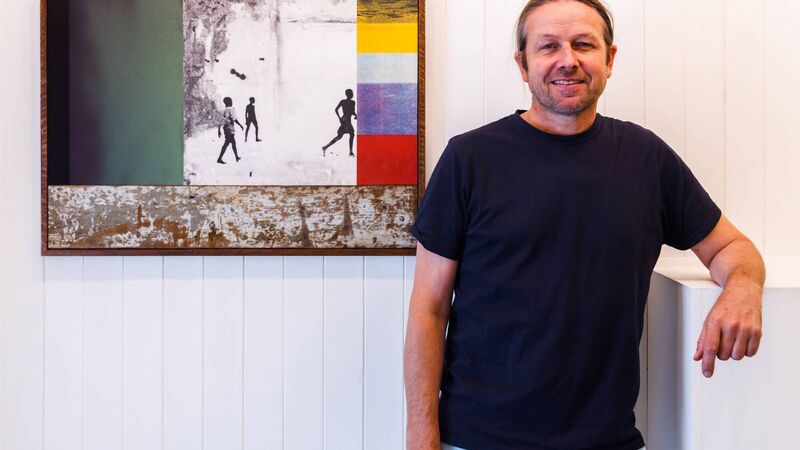
Johnny Bugler, artist, with one of his pieces.
Geraldine Kieran and Johnny Bugler are happy to admit their careers as artists have had their ups and downs. However, neither regrets pursuing their calling. The two are among the 14 artists featured in Crawford College of Art and Design | 2001°, an exhibition at MTU Gallery on Grand Parade, marking the 25th anniversary of their degree show at Crawford College of Art.
In some ways, the exhibition is a poignant occasion; two of the artists featured, Carol James and Eamon Gray, have passed away in recent years. But it also a celebration, of their achievements and those of their classmates.
Kieran remembers she and James were among the small coterie of mature students who enrolled in 1997. “I think there were three of us,” she recalls. “But age was never really an issue. We were all working creatively, in the same space, and it’s amazing how you just get on with people in that kind of environment.”
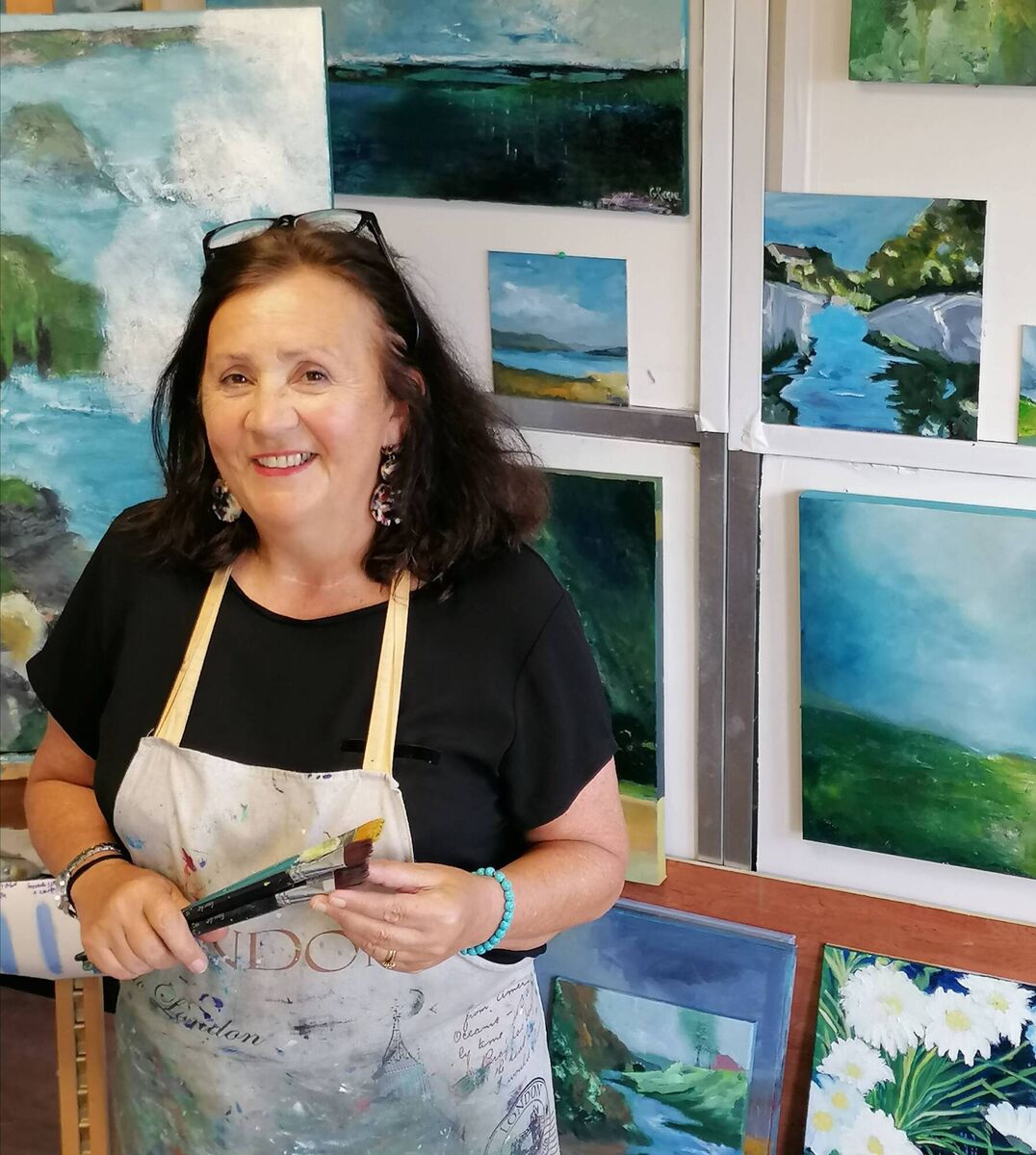
Art college had not seemed like a realistic option when Kieran left school. “I grew up a farmer’s daughter in Kildare, and there was that sense of, what would you get out of it?” she says. “But I was always taking art classes, no matter what job I was in. I was in the airline business for a long time, and my husband was an engineer. Then there was that big recession in the 1980s, and there was no work for engineers. So my husband said, c’mon, let’s buy a business.”
They landed in Kinsale and took over the Folk House bar and nightclub, which they developed as a hotel as they reared their two young daughters. Kieran somehow found time to study art as well. “When I think about it now, it seems crazy,” she says. “But I felt I had the freedom to do it then.”
With so much on her plate, there was never time to attend student parties or indulge in the socialising associated with art college. But she does remember the “brilliant canteen” run by a woman named Caroline. “There was always great food, and we always had a lot of chat, because that was where everyone from the different departments would meet up.”
Kieran’s time in college did not start off smoothly. “I remember getting a really bad mark on the first Christmas exam and being brought in to meet the head of fine art. He gave me the best advice ever. He said, 'you are not here to paint pretty pictures to hang over sofas'. He wanted me to think about what I was actually trying to do, and why.”
After that, she began to experiment more freely. Although Kieran began as a landscape painter, her work became increasingly abstract and expressionistic, and found greater favour with her tutors; at the 2001 Degree Show, she won the Registrar’s Prize, which led to a successful solo exhibition at CIT less than a year later.
In 2005, after 18 years in business, Kieran and her husband sold the Folk House. She returned to college to complete the HDip, qualifying as a secondary school art teacher. “But then the banking crisis hit, and there were no jobs for teachers. Not here, anyway. But the Ministry of Education in Singapore were hiring, so my husband said, the kids are grown up, they’re educated, let’s go.”
They stayed in Singapore for four and a half years, a time she remembers as being “hard work, but a great experience.”
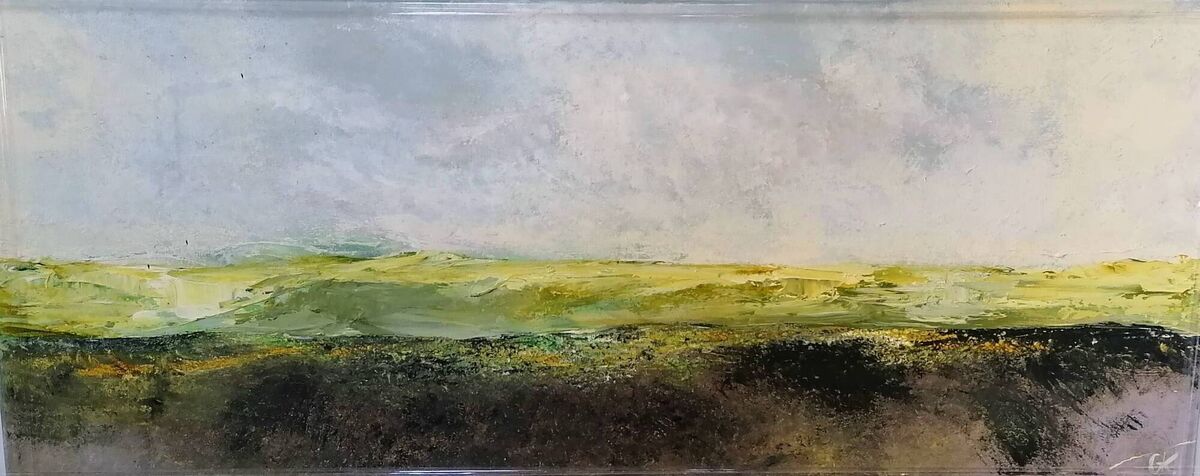
On their return to Ireland, Kieran resumed painting in earnest and found a significant supporter in Dr Stanley Quek, a Trinity College Dublin graduate with a global property portfolio that includes the Castlemartyr Resort and Sheen Falls Lodge. Quek began commissioning her to supply original artwork for his hotels, an arrangement that continues to this day.
“Everywhere he needs art, I provide it,” she says. “I’ve been terribly lucky.”
She now works from a studio at her home in Kinsale. “It’s really a big shed,” she says. “But it has heat and water. It could do with more light, but you can’t have everything.”
Both of her daughters have followed creative paths. One produces material for Netflix; the other toured internationally with the Welsh Circus before retraining in sustainability. Kieran admits she sometimes considers returning to college herself. “I’d love to do a master’s, as I have so much more time now,” she says. “I’m tempted, but not quite tempted enough yet.”
Bugler was in his early 20s when he enrolled at the Crawford, after a few false starts elsewhere. “I went to UCC for a year doing maths, and I tried my hand at mechanical engineering at RTC, as it was then,” he says.
“But they just didn't click with me, so I took a couple of years out. I was big into surfing and I went travelling a bit, and that took me away to some nice places. When I finally got the confidence to think that I could study art, I did a PLC course at Tramore Road for a year, and then I kept going.”
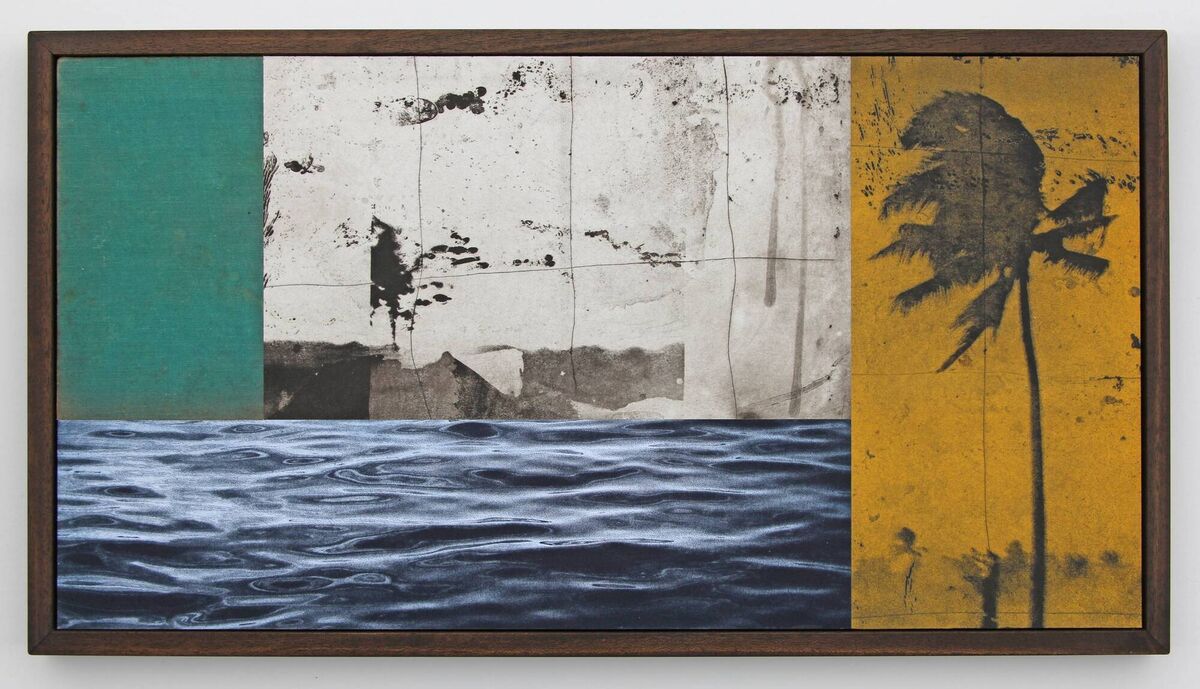
At Crawford, he specialised in printmaking. He loved having the time, space and opportunity to learn a wide range of techniques. “You never really get that kind of freedom again, to experiment without being hung up on the financial side of things. Everyone around you was an artist. There was nobody questioning what you were doing.
“There was a good camaraderie as well. I think the evidence of that is that we've all come back together for this show. We were all from quite disparate places. I’m from Blackrock, but there were a lot of people from outside of Cork, and many of them migrated back to their home counties or beyond, so it’s lovely to catch up with them again.”
The Crawford was always famous for its party scene. “But I was living at home, so I wasn’t that involved,” he says. He does recall student demonstrations at the college that evolved into overnight lock-ins, and the close connection between the art and music scenes at the time.
“Cork was always a vibrant student city,” he says. “You could find something going on any night of the week.”
After graduating, Bugler spent several years travelling once more, surfing in remote parts of Indonesia and across Asia. The coast and the sea continue to influence his work. “Those places seem so idyllic,” he says. “But also there’s the flip side, where there's often an undercurrent of unease that maybe has to do with over-commercialisation and exploitation.”
Bugler later completed a master’s in printmaking at Camberwell College of Arts in London. On returning to Cork, he worked as studio manager at Cork Printmakers while maintaining a studio at Backwater Artists. “I was lucky,” he says. “It allowed me to be totally immersed in art.”
He has always exhibited regularly, in solo and group exhibitions, at venues such as the Lavit Gallery in Cork, the Blue House Gallery in Schull, and Uillinn: the West Cork Arts Centre.
More recently, with a young family, Bugler retrained as a primary school teacher. “I’ve been teaching full-time for the past three years at an inner city school here in Cork. It’s got a huge immigrant population. About 95%, I think. It's fascinating to see how Cork is changing, and to work with people from all these different cultures.”
He has a studio at home, “but I'm very much still involved with Cork Printmakers. I was the chair of their board for a while, and I go in there quite a bit. It’s a nice shared space. You might be working on a table where there’s other artists on either side of you. You chat away about putting shows together, stuff like that. Wherever I am, whatever I'm doing, I'll always be drawn to making art.”
A back injury in Mexico put paid to his surfing. “But I still go to the beach every summer,” he says. “I might go paddle boarding or something. I’m still in touch with the ocean.”
Bugler has kept in touch with some of his classmates over the years, particularly his fellow printmakers. “And there’s some others whose work I’d see on Instagram. But it’s great that this exhibition has given us the chance to meet up again. And it’s interesting to see how my work sits amongst theirs.”
- Crawford College of Art and Design | 2001° runs at MTU Gallery, 46 Grand Parade, until February 20