Abigail Disney on her love of Cork, and speaking out against the company that bears her name
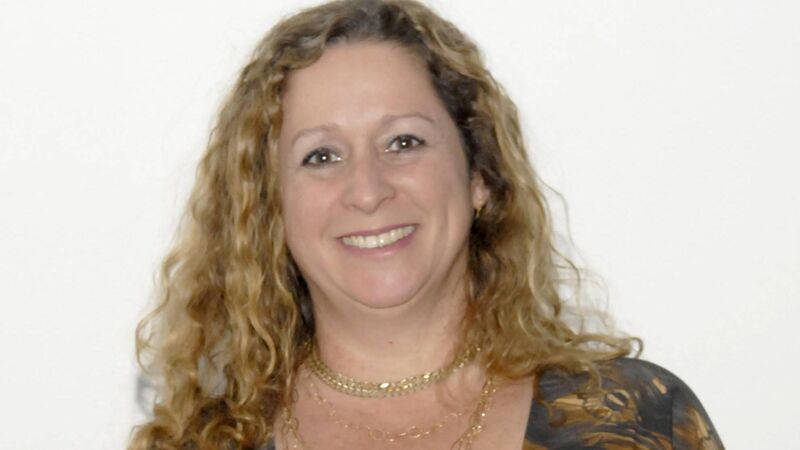
Abigail Disney will be the keynote interviewee at Doc Day at this year’s Cork International Film Festival,
When Abigail Disney’s mother bought a home in west Cork many years ago, it instilled in her a love of the Irish that lasts to this day. She had grown up listening to her mother, Patricia Dailey, regaling dad Roy and the kids with stories of her colourful, fast-talking grandparents. The young Disney was intrigued enough to come here the first opportunity she got, to work as an au pair.
And when her family bought Coolmain Castle near Kilbrittain, it marked the beginning of annual family holidays that she continues with her own family to this day, four decades later.
“My mom had always talked about her grandfather and his family and how being Irish figured into their personalities. It was a point of pride for her. That was the piece of my ancestry that I was connected with. And so that's why I went there straight out of college for my first job.”
She remains friends with the family she au paired with to this day, and smiles when noting her uncle, Peter H Dailey, was America’s ambassador to Ireland at that time. “I found myself in an interesting situation, because it's not every day that as an au pair, you get into a car and drive over to the embassy, have dinner with the Supreme Court. It was quite surreal.
Disney is a descendent of entertainment royalty. Her grand-uncle is the legendary Walt Disney, who co-founded the company with her grandfather Roy O Disney. Her father, also Roy, was a longtime senior executive at the company and the last member of the family to be actively involved.
But she has forged her own career path as a documentary producer and philanthropist, working on such award-winning films as Pray the Devil Back to Hell, about the role women played in bringing peace to war-torn Liberia, and The Armor of Light, which she co-directed and will screen as part of this year’s Cork International Film Festival. She will be the keynote interviewee at this year’s Doc Day as part of the festival.
Her company Fork Films co-produced Irish documentary The 8th, which tells of the lead-up to Ireland’s abortion referendum and also shows at CIFF. She is proud to be involved in the film, and watched events unfolding in Ireland at the time.
“Especially from over here, we need one good story about that. And the joy, the sheer enthusiasm and the way people bonded around that was so powerful to watch, because the atmosphere has been so terribly poisoned here on the subject.”
Disney is a fascinating character, a woman born into enormous wealth that has shared a great deal of it through her film, activism and advocacy work.
She has frequently questioned how wealth is distributed in her home country - and has even called out the company her grandfather co-founded. When did she first realise her background was different to that of many of her peers?
“You don't know it as a child, you really don't know,” she tells me. “You're just having the childhood that you're having, you don't have a lot of frame of reference. So it's the kind of thing that sinks in quite slowly. And there are little moments. You see a contrast or you realise that all your friends are talking about their student loans, and you don't have to worry about that.
“Once it's dripped in, you're confronted with this question of: ‘This doesn't feel very fair to me. Do I care about fairness? And if I do, then what do I do about it?’ There follows this process that is almost a lifetime, I'm still in the process. You know, I don't think we ever get to the right absolute place, but I've been working and working to try to figure out what's been asked of me by my legacy.
"But yeah, it's weird. I tell people I have a house in Ireland because I just don't want to get into the castle thing!” she laughs.
“But my mother bought this beautiful place and it really is beautiful and people who come there feel like they can collect themselves. I invite friends who need r&r who really need to gather themselves. We have occasionally retreats there.”
She has also offered use of the home for a group holiday as a prize for charitable organisations. Disney is involved in The Patriotic Millionaires, a group of so-called “traitors to our class” who campaign for more equal distribution of wealth in America.
“We're not paying our fair share in this country at all. This (the American system) is part of an active plan and initiative by wealthy people to benefit wealthy people and to protect their wealth. We used to have a tax structure that was much more like yours. At the time, we built boats and highways and the military and we had good schools and all these things were happening. Everybody had their healthcare. Those other things have been stripped from people one by one by one.”
Last year, she even took her family’s company to task when she learned that some of its lowest-paid employees in the US were dependent on food stamps. “I am really glad I made the decision to speak up. It doesn't make for easy times. I remember my grandfather. He was nobody's softie. He hated unions. He fought with them all the time. He was not exactly handing out lollipops to all the workers, but he would never have disrespected them in this way.”
She didn’t initially consider a career as a film producer, opting to study English literature in college. It was only on a trip to Liberia that she heard how a mass movement of women helped the country achieve peace. Her first documentary, Pray the Devil Back to Hell, was born.
“I had never heard this story before. It was amazing. That's really how I made my first film was as an activist as an advocate. And I saw the way the film landed, and the change it made in people's hearts so quickly, and how it really opened people's eyes.”
She’s given away an estimated $70 million of her personal wealth over the years. What does that mean to her? “It's a long evolution that you go through if you're really thinking about it. somebody told me a story early on, it's supposedly a Chinese parable that a woman is walking along beside a river and she sees babies drowning, and so she jumps into the river and starts pulling babies out.
"But she can't keep up with them. So she starts teaching them to swim. And then at some point, she runs up the river to see who's throwing babies in the river. And those are the three kinds of philanthropy. The first one you can call charity, if you want. One of them is social and entrepreneurialism. And then the third one is advocacy.
“Eventually, I made my way to advocacy. Because if you have enough of a pulpit that you can speak from, and people are willing to hear you, I think you owe it to the world to use what you've been given to fight for other people.”
- Abigail Disney will be the keynote interviewee at Doc Day at this year’s Cork International Film Festival, which takes place virtually from November 8th-15th. www.corkfilmfest.org
- The Irish Examiner is media partner of the Cork International Film Festival