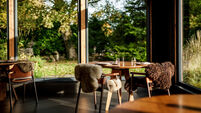
Inside the final chapter of Cork’s Quay Co-Op restaurant and the movement it created
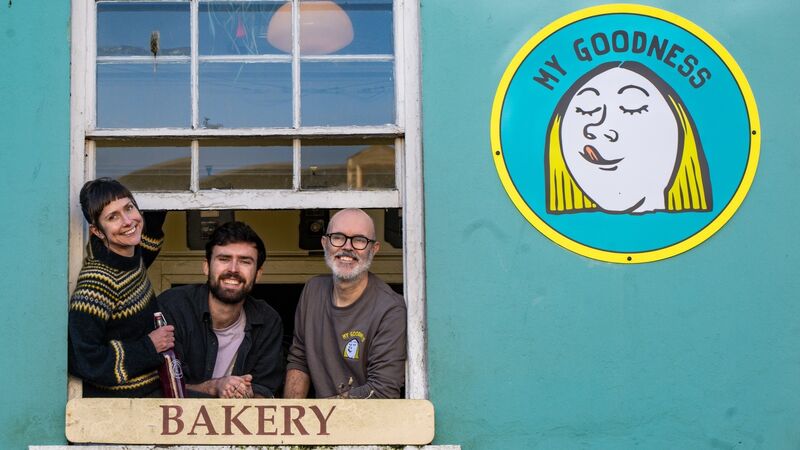
Donal O’Gara and Virginia O’Gara of My Goodness are joined by chef Dan as they look out from the first-floor window of the Quay Co-Op restaurant in Cork city, ahead of taking on permanent stewardship of the restaurant space. Picture Chani Anderson
But such is the heartfelt attachment in Cork and further afield, fine detail was apparently obscured by emotional response, and the Co-Op was overwhelmed by calls and messages from distraught patrons and supporters. John is worried lest there be a repeat performance.
So, once more with feeling, to be absolutely clear: the Quay Co-Op will remain as a members’ co-operative, still running its retail operation, vegetarian food production unit, bakery, and bookshop. Nationally renowned, Cork-based vegan enterprise My Goodness Food is taking over the restaurant and also ensuring its future as an alternative campaigning space.
The Quay Co-Op restaurant, however, is no more. That in itself is a very big deal, for it was the beating heart, the common denominator, and the home-from-home that drew all the disparate social justice and activist movements together.
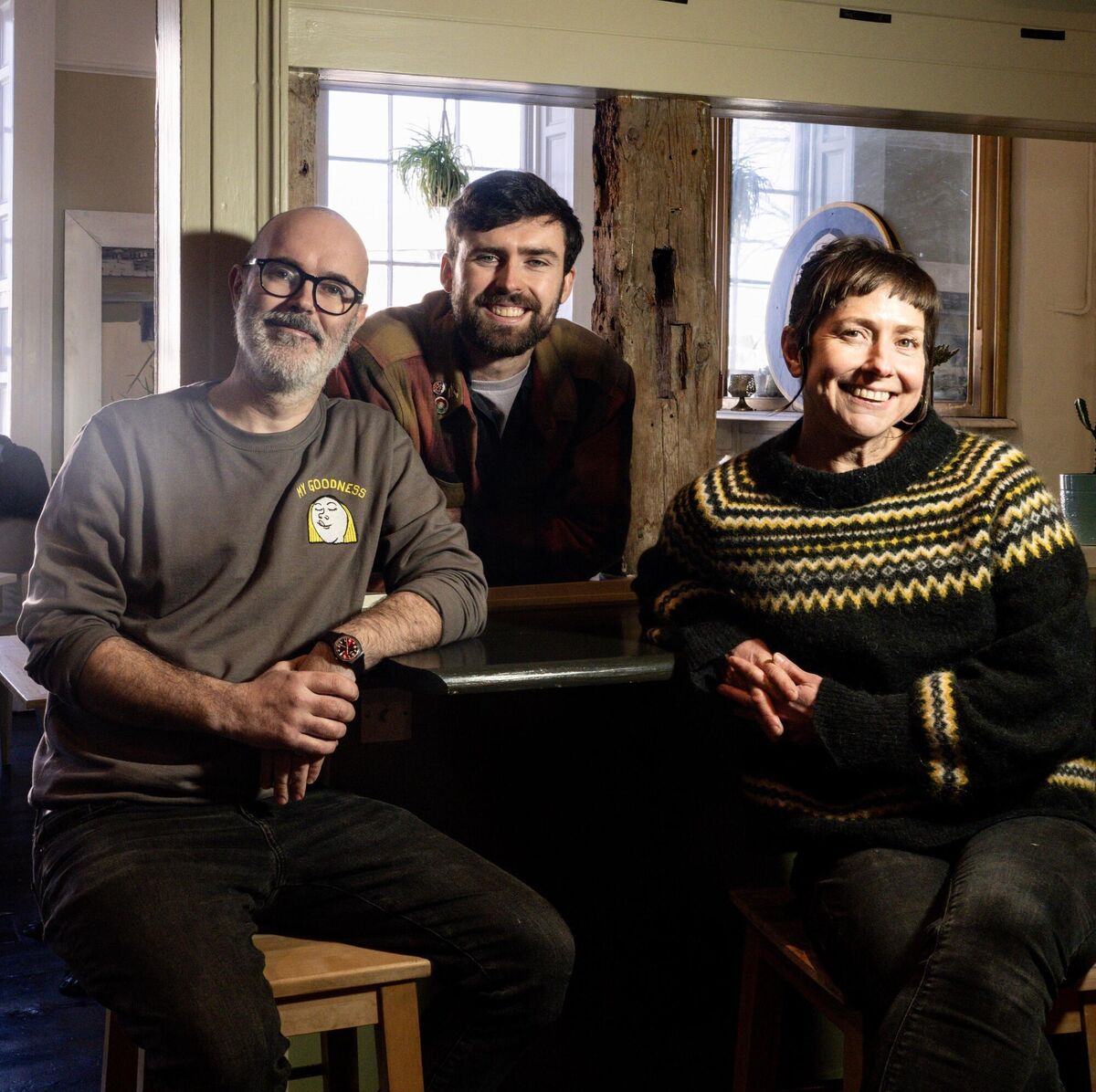
Even if you weren’t directly involved in any of the campaigns or not of an especially activist bent at all, it was where generations of Corkonians knew they could eat wholesome, tasty vegetarian food at highly affordable prices in one of the most beautiful dining rooms in the country, with an especially gorgeous aspect, out through tall sash windows over the south channel of the River Lee and beyond to the heart of Cork City.
The Co-Op may have started out as a rank outsider, firmly beyond the pale in deeply conservative 1980s Ireland, but it is now viewed as a treasured local institution and, until it closed, was one of the oldest restaurants in the country.
Co-Op member Arthur Leahy and ‘spiritual leader’, said last December, not long after his 80th birthday: “The age of the Co-Op members was the big thing… to run a good restaurant, you need somebody who is committed to food, and we no longer have that kind of energy or commitment or those skills from the membership.”
The Quay Co-Op opened in a former pawnbroker’s on May 1, 1982, a collective of feminist, lesbian and gay, environmental, and other alternative groups and individuals, with 120 founding members doing up the building themselves. It would go on to serve as a base for many social justice movements, including gay rights, the 1983 anti-abortion amendment, the criminal justice bill, and the first divorce referendum.
To financially support the collective project, a food co-op, shop, and restaurant were added on but soon developed a life of their own, especially the
restaurant, introducing generations of Corkonians to vegetarian food, then a scoffed-at novelty.
“I had experience of working in England in similar organisations,” says Arthur, “focused on developing a kind of counterculture and at the heart of most of them was the bookshop-cum-restaurant. The other aspects of the co-op were just joined on to that. But the funding generally came from the restaurant and the bookshop.”
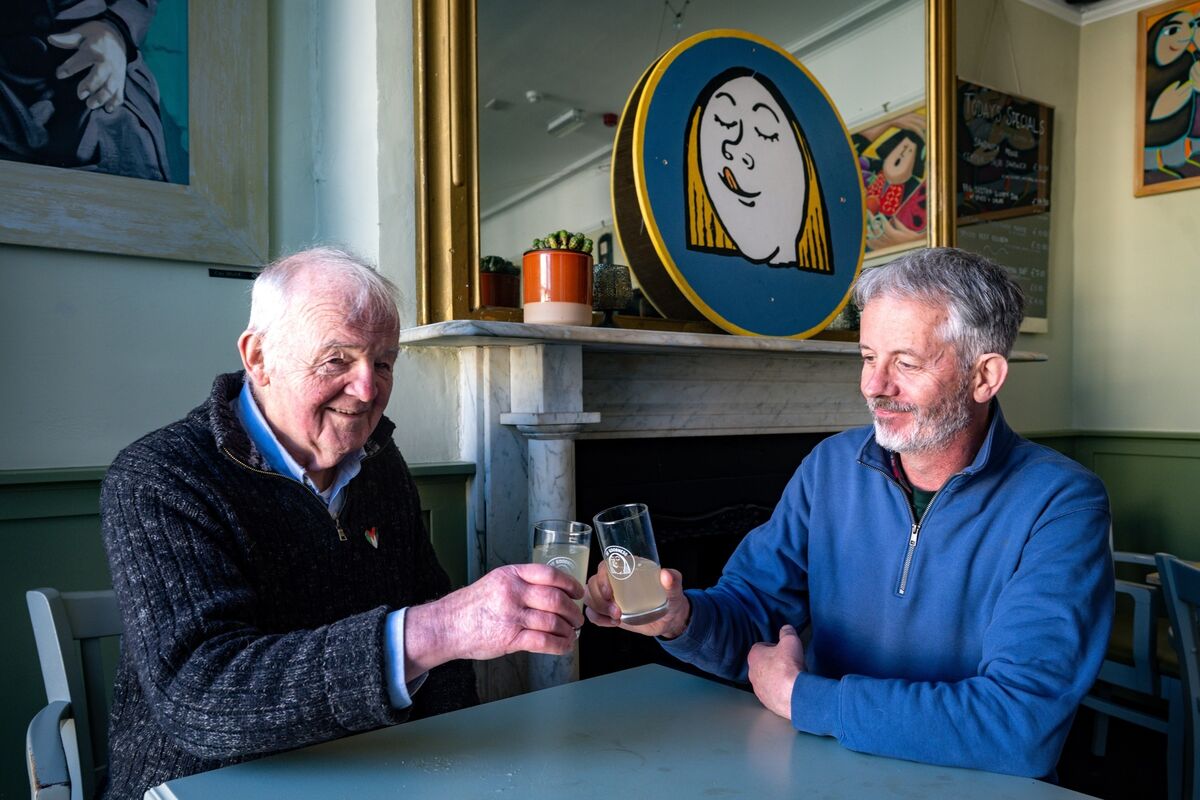
The restaurant began as an endearingly shambolic affair — prep, cooking, and serving all taking place from a tiny little public-facing space behind a counter, with precious little kitchen kit other than a domestic cooker, fridge, and sink. The first cook was a woman named Cecilia Lyons.
“We were painting the windows one day,” says Arthur, “and she said, ‘Well, of course it’s going to be vegetarian,’ which came as a bit of a surprise to a lot of us but she was very determined. It was acceptable amongst the core members but it wouldn’t have even been part of the counterculture here at the time — most of us weren’t vegetarian. There was a wood-burning stove in the front room which nearly gassed people; you’d come in at lunchtime and couldn’t see anyone in the smoke.”
Cotter’s arrival in 1988 led to an upgrading of the premises, creating a separate kitchen and a long buffet-style serving counter.
“The whole food culture of the town was changing,” says John, “and the tax office was next door then and a good bunch of them always came into us. Some days the lunch queue would stretch all the way down the stairs and there’d be four or five behind the counter. And it was really cheap.”
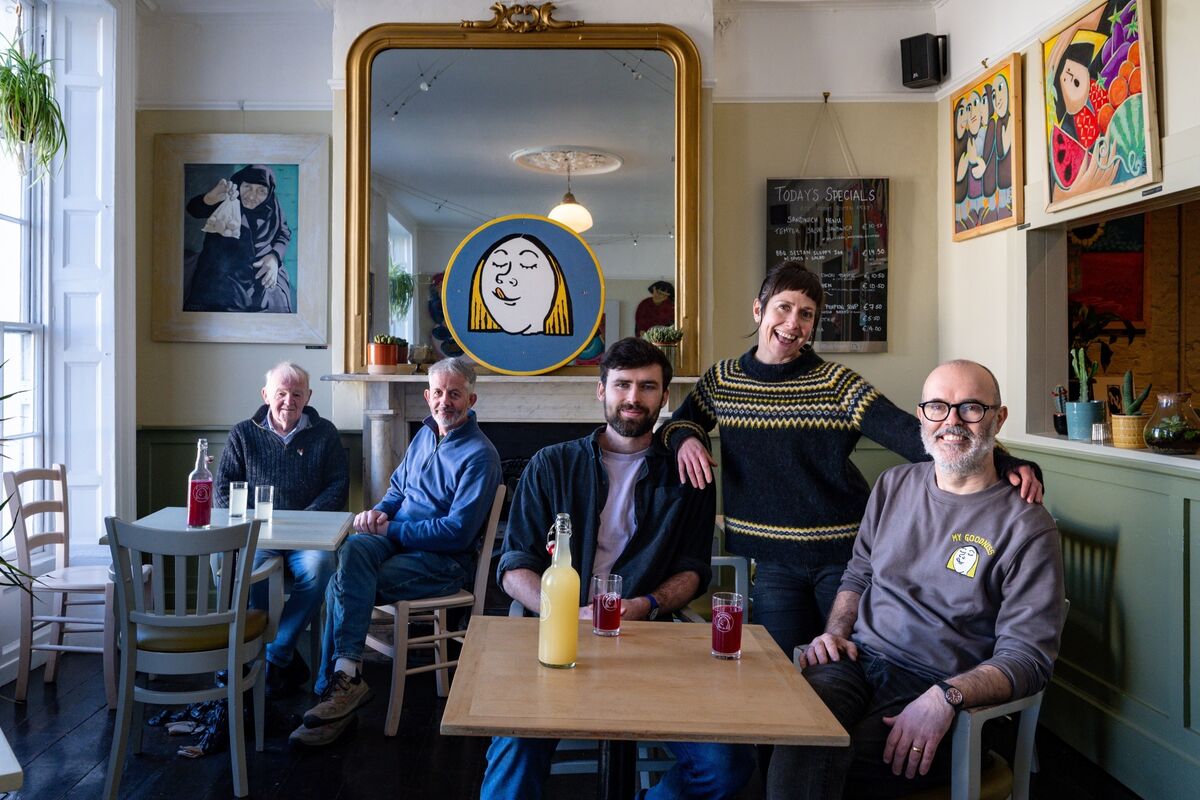
Cotter added an a la carte evening service, a more finessed take on the daytime fare, a stepping stone towards his now world-acclaimed Paradiso cuisine. When he eventually left to open Paradiso, O’Connell took over the evening restaurant as he too set about readying to open The Ivory Tower. (The two restaurants opened within months of each other in 1993, both revolutionising the Irish hospitality landscape for generations to come.)
The late Annemarie Friend, who died of cancer in 2014, and John managed the restaurant.
“It was into the bookshop that I first came, in to get my first copy of Gay Times,” says John.
Of all the various roles the Quay Co-Op has played in pursuit of social and political justice through the decades, serving as a sanctuary for gay men and lesbians maybe the most important of all, especially back in the 80s when homosexuality was not only criminalised but entirely underground.
“I came here to find myself,” says John, “I was an unemployed carpenter. I was 21, I was gay, and I didn’t know. I grew up around the corner and went to school next door and started a carpentry apprenticeship when I was 16, and the last year-and-a-half were spent working, building the Boole Library, in UCC. When that was finished, we were all laid off... 1985, Ford’s, Dunlop’s, they were all gone, there was no work. I was on the dole for two years and then, after coming into the Co-Op, straight away I got a couple of hours’ work a week to keep me tipping over.
“But the main thing for me was just being part of this so amazing, so dynamic organisation. There was just so much happening in here you wouldn’t see anywhere else in the world, the meetings, so exciting, coming up the rickety old stairs, it was such a little isolated oasis of normality, in the mad world.
“Then the hours increased, I was in the restaurant and everything I learned about food, I learned there. I was working here about six weeks and realised I’d become vegetarian.”
More than 750 people have worked in the Quay Co-Op and, in the 80s, in particular, many were ‘volunteers’; at least that was the response if ever the inspectors from the dole office carried out a raid.
Arthur grins but makes no apologies.
“It’s a fact that needs to be recognised,” says Arthur, “that the whole economy ran on the black economy. Unless you worked for the government or in the bank, almost everybody was getting paid cash in hand. It was the same all over Europe. When I went to England, all the workers would have been on the ‘lump’ but it was especially the case in Ireland because people had so little — it was a very difficult time. Ireland really only survived in terms of its black economy.”
Covid spelled the beginning of the end for the restaurant. Eventually, the call was put out for fresh blood to take over but the restaurant had to remain vegetarian, a non-negotiable for the Co-Op members. Arthur rang Donal O’Gara of My Goodness Food, whose wife Virginia was back home in Texas with her dying father.
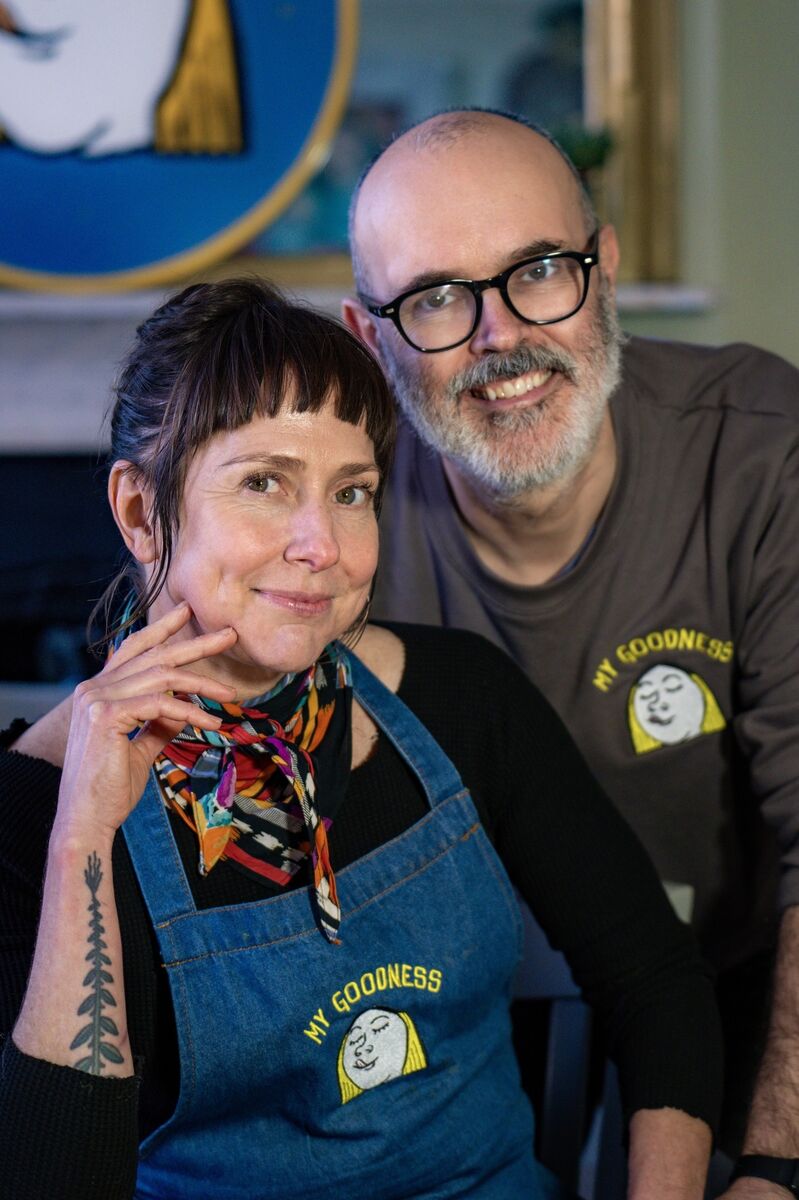
Virginia’s own personal history is a wild ride that would comfortably fill a book but her activism began in Dallas as a 12-year-old agitating for a vegetarian menu in the school canteen. She left home at 14 as a hard-core atheist, anarchist punk but her parents, including her Republican FBI agent father, who nonetheless despised Trump, recognised this truly free spirit was already capable of surviving on her own. Her activist-inspired roaming took her to all parts of the world, including living with Zapatista rebels in Chiapas, Mexico, but she eventually fetched up in Ireland to study permaculture at Kinsale Community College, subsequently meeting and marrying Donal, a graduate of the same course.
“My Goodness were the most suitable candidates,” says Arthur. “We wanted somebody that would fit in with the aspirations of the Co-Op as also represented by the shop and the bookshop, where I’ve ‘retired’ to. My Goodness have a very strong ethic around food — stronger even than the Co-Op had, their food is actually vegan — and they operate a very supportive culture for their own workers and the local farmers and producers they source from.”
“While I was back in Texas and things were obviously getting bad in America,” says Virginia, “I knew some people in Ireland were also beginning to buy into that bullshit fascism and I’d been thinking a lot about the elders and the older folk who’ve seen these cycles before and Arthur was one of the people I couldn’t stop thinking about.
“Then I found out that Arthur had been talking to Donal about the option of taking over the cafe, and I guess Donal didn’t really want to bother me with any of that while my dad was dying.
“But when I heard, I just went off on one. I was like, ‘Oh shit.’ I’d never wanted a cafe, it’s really hard to make money and the work would kill you, and we were in a pretty good place as a business, able to pay ourselves above the living wage. However, the Co-Op has always been more than just a cafe. It’s a gathering space for activists and artists and empaths and outsiders. And that’s where I feel at home. I love being a part of that. So the Co-Op has always been that for me.
“In food terms, we are a good fit for the Co-Op restaurant space but we are the ones who also understand that space is more than just a cafe — it’s always been that and always needs to remain as that to honour the legacy of what the Co-Op and all its community have created. I love that place and I know that it has to survive.”