Seven hacks from experts for the best summer barbecue ever — and recipes to try
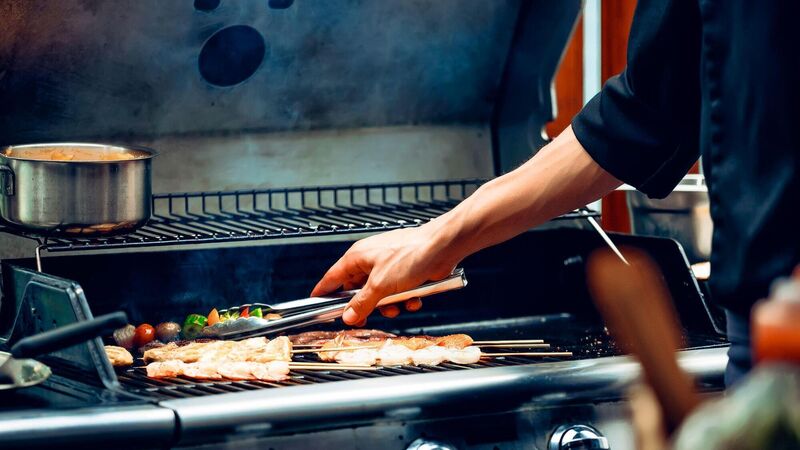
Chefs and BBQ pros have shared their top tips for grilling this summer (Alamy/PA)
The weather is tentatively starting to play ball, which means one thing: barbecue season is well and truly here.
Whether you’re a seasoned pro or just dipping your feet into the world of grilling, everyone needs a helping hand along the way.
Experts have given their top tips for taking your barbecue to the next level this summer…
If you’ve spent the last few summers slapping burgers and a few sausages onto the barbecue, it’s time for a change. While you can’t go wrong with a good burger, there are so many other options out there that can take your barbecuing to the next level.
“Don’t be afraid to try grilling new ingredients – most things that are cooked indoors can be cooked outdoors too,” says Helen Graves, author of (Hardie Grant).
“Try grilling new potatoes, for example (they become beautifully tender with a smoky crust) or try skewering smaller vegetables like peas to get some smoky, charred flavour into them.”
“When it comes to barbecue, cook with natural fire,” urges Nathaniel Smith, author of (Murdoch Books). “This might seem obvious, but you can’t beat cooking with coal or wood.” In the same vein, he adds: “Stop using barbecue fluids, they ruin your food.”
The best barbecues come from a bit of careful planning. “There’s nothing worse than having everyone wait for you because the meat is taking longer than expected,” notes Smith.
“Think about what time you want to start serving people and work backwards. Allow time for your barbecue to come up to temp and if you’re really serious, invest in a chimney starter to speed up the lighting process.”
If you did want the best out of your barbecue experience, you could go one step further and invest in a good thermometer. “Nobody wants to spend money on ingredients just for them to be overcooked,” Smith says.
“Let’s face it, most people don’t barbecue often and if you’re not used to being on the barbecue you can easily underestimate the heat source. Any decent food thermometer will give you precise temperatures, which takes out the guesswork!” Plus, you don’t just have to use the thermometer when you’re grilling — it’s also handy when checking food you’ve cooked in an oven too.
If you don’t set up your barbecue for ‘two-zone’ cooking, now’s the time to start. This is where you place all the coals on one side of the grill, with Graves explaining: “This leaves you with a cooler ‘coal-free’ zone — use this when your barbecue is getting too hot (for example when too much fat is dripping and is causing flare-ups), for storing food that is cooked but that you want to keep warm, or for cooking ingredients more slowly, for example larger pieces of meat or vegetables.”
Smith is also a big fan of the two-zone method, saying: “So many people burn food because they just put everything on at high temperatures. Have your barbecue set up so the charcoal is on one side for searing and the other side is effectively an oven once you put the lid down.”
Anyone who has barbecued before knows the insatiable urge to continually open up the lid and check how your food is cooking — but this could be a major mistake.
Keeping the lid closed is “more economical, it locks in more flavour and keeps your temperature nice and steady”, says Smith.
“This obviously depends on what you’re making, but if it’s not a quick cook, there’s absolutely no need for your lid to be open constantly. This is honestly one of the keys to making the best jerk, because jerk is a method – it’s not just a seasoning.”
Genevieve Taylor, author of (Quadrille), specialises in cooking fish on the barbecue — and there are some specific techniques that will lead you to seafood success.
“When cooking any sort of fish on the barbecue it’s essential that the surface is very hot and very clean before the fish goes on it, this really helps to minimise sticking,” she says.
“I like to cook fish on a perforated grilling tray that I get really hot over the charcoal before I cook on it – it just means that if things do get a little ‘sticky’ you can lift the whole tray off and use a fish slice under calm and controlled conditions, rather than trying to unstick it directly from the fiercely hot grill bars. Using two skewers per kebab is also a great idea to keep things secure and stop the prices spinning around.”
It’s a good piece of advice for any barbecue — Smith also recommends cleaning your kit regularly, saying: “A dirty BBQ is not
only a little bit disgusting, but it also contributes towards temperature spikes and flare-ups.”
When you’ve cooked the main meal and the heat is flickering out, use this as an opportunity to cook a sweet treat.
“Use the dying heat of your barbecue to cook dessert,” says Graves. “While we’re eating the main course, I love to throw a roasting tray of stone fruits (eg. peaches) into the barbecue with some white wine and spices — close the lid and let them cook in the remaining heat. They’ll become sticky and soft and are perfect served with ice cream.”
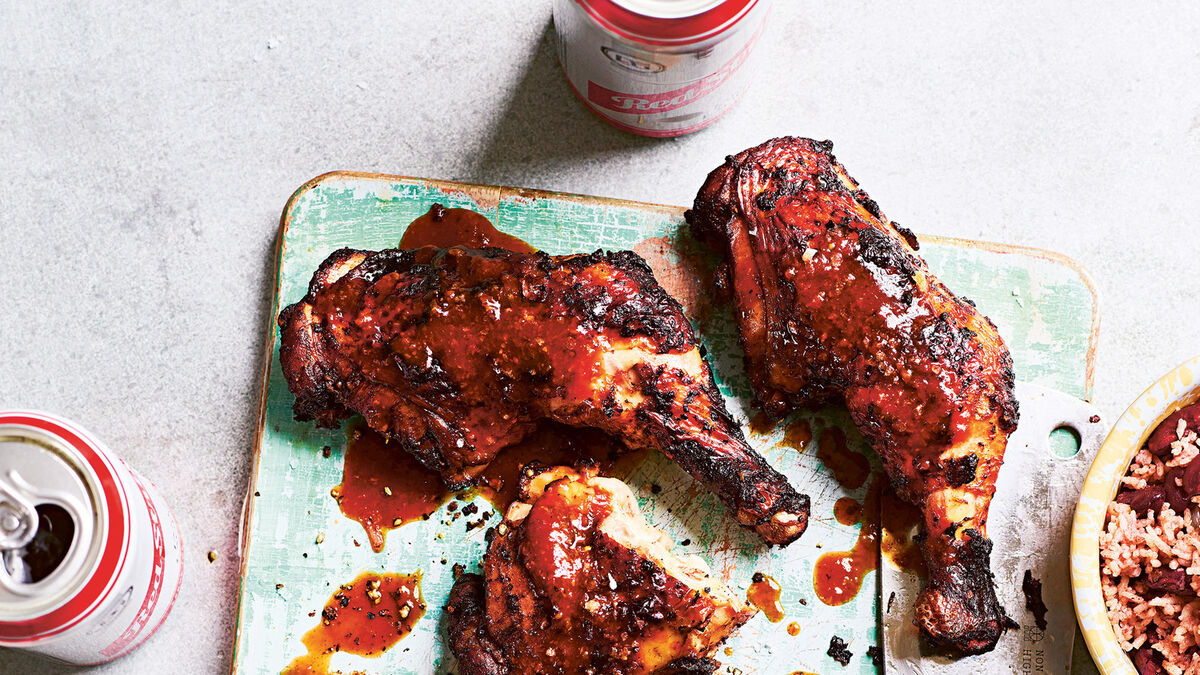
Barbecue jerk chicken
Cooking jerk chicken on the barbecue takes it to the next level, adding a new dimension of smoky deliciousness.
Servings
4Preparation Time
50 minsCooking Time
1 hours 10 minsTotal Time
2 hours 0 minsCourse
MainIngredients
8 skin-on chicken legs
350-400g wet jerk marinade
1tbsp all-purpose seasoning
2 large handfuls of pimento leaves, soaked in water for 1 hour
3tbsp pimento (allspice) berries, soaked in water for 1 hour
200ml Jamaican lager
For the lager-spiked honey jerk ketchup:
250g ketchup
200ml Jamaican lager
150ml chicken stock (reduced sodium)
200g honey
Juice of 1 lime, plus zest of ½
1-2tbsp leftover jerk marinade
For the wet jerk marinade:
2tbsp pimento berries
1 cinnamon stick
1 whole nutmeg
1tsp whole black peppercorns
7 spring onions
1 medium onion
2 Scotch bonnet peppers
10 garlic cloves
10 sprigs of fresh thyme
6 dried pimento leaves (optional)
3 dried bay leaves
4tbsp dark soft brown sugar
2tbsp honey
2tbsp white vinegar
2tbsp minced fresh ginger
1tbsp flaky salt
1tbsp ground allspice
1tsp black pepper
5tbsp dark soy sauce
4tbsp fresh lime juice
4tbsp fresh orange juice
3tbsp olive oil
2tbsp Worcestershire sauce
1tbsp browning
Method
Make the wet jerk marinade: The first thing you want to do is toast your pimento berries, cinnamon stick, whole nutmeg and peppercorns in a pan over medium-high heat for a few minutes or until fragrant. By doing this you intensify the flayvas! Now you want to grind your toasted spices until coarse. If you don’t have a spice grinder, you can simply add all of these ingredients to the blender, minus the nutmeg. You’ll need to grate in the nutmeg before blending. Now add all the remaining ingredients to the blender and blitz until smooth. Transfer to an airtight container and store in the refrigerator for up to two weeks. You can also freeze this in cubes and defrost when ready to use; however, it will lose some potency.
For the jerk chicken: Pat the chicken legs dry, then poke carefully with a knife to create some holes. Season with the wet jerk marinade and all-purpose seasoning, carefully separating the skin from the legs to get it all up in there! Cover and leave to marinate in the refrigerator for at least 24 hours or up to 48 hours.
Remove the chicken from the refrigerator and allow it to sit at room temperature for 30 minutes.
Prepare a charcoal grill (with a lid) for indirect cooking – this means you want your coals on one side and the other side to have no coal under the grates where your meat will sit. You’re looking for a temperature of 150-160°C and the majority of your coals should be white. You can cook at a higher temperature, but I personally prefer more of a low and slow method. You don’t want too much coal as you will ‘bun up the chicken’, as my grandad would say. You can add coal later to maintain the temperature.
Now oil your grates. Opposite the coals you want to create a layer using two-thirds of the soaked pimento leaves and a few of the pimento berries; it’s fine if some fall through the grates. You essentially want the leaves as a bed for the chicken. Shake off the excess marinade from the chicken and place skin-side up on the leaves. Close the lid and leave to cook for 15 to 20 minutes. You want your top vents completely open and bottom/side vents half to two-thirds open.
While the chicken is cooking, spray it with lager every 15 to 20 minutes to keep it nice and moist.
To prepare the larger-spiked honey jerk ketchup, put all the ingredients in a pan, bring to the boil and simmer over medium heat until it can coat the back of a spoon.
Open the BBQ lid, rotate the chicken pieces so that the ones closest to the coals are now on the opposite side. Check if you need to add more coal to maintain the heat, then place the remaining pimento leaves on the hot side of the grill – it’s going to get smoky! Close and cook for another 15 to 20 minutes.
Now rotate the chicken again, give it another spray of lager, dash your remaining berries directly onto the coals and cook until the thickest part of the chicken has an internal temperature of 80°C.
Once the chicken is at 80°C, spray it once more with lager and place directly over the coals to gain some colour and char. You’re going to want to turn the chicken regularly because it is cooked at this point. Once the chicken reaches an internal temperature of 84°C and has gained some nice bits of char, pull it off the heat. You can also leave the chicken on the indirect side with no coals if you want to keep it warm. Some people like to brush their chicken with some of the lager-spiked sauce at this point, but that’s optional.
Allow the chicken to rest for five to 10 minutes before chopping your legs into four to five pieces with a cleaver. Serve with plantain, rice and peas, coleslaw and lashings of your lager-spiked sauce.
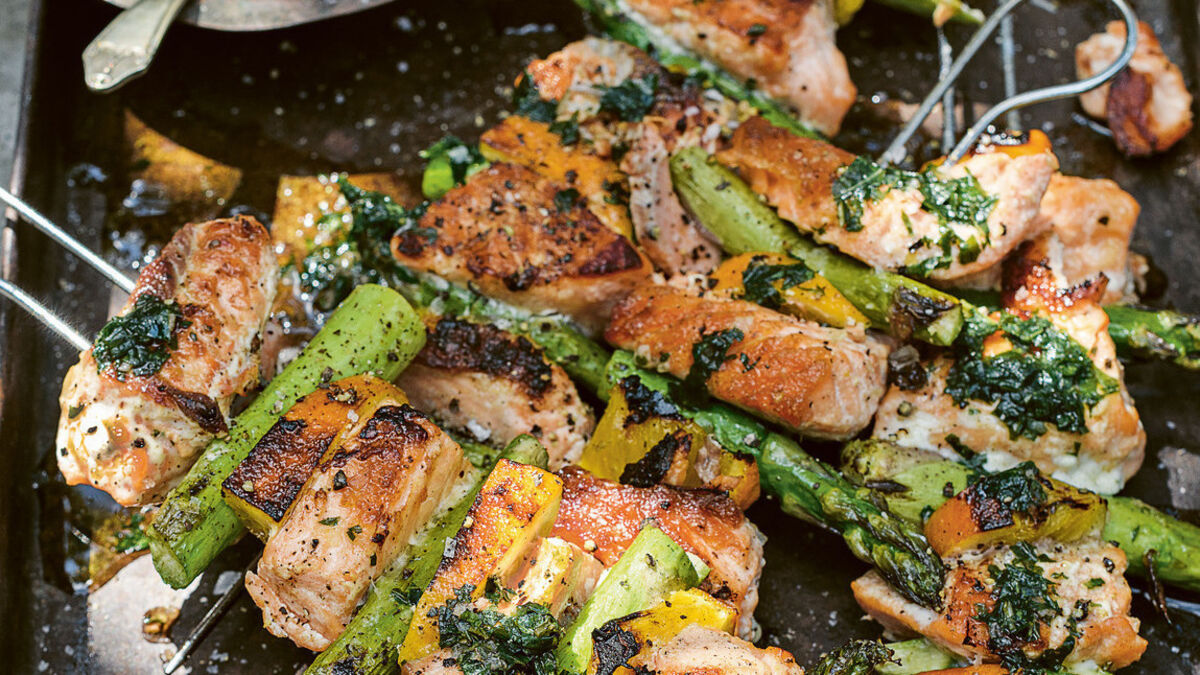
Barbecue trout with asparagus and orange
If you normally cook salmon on the barbecue, this summer swap it out for trout instead.
Servings
4Preparation Time
20 minsCooking Time
10 minsTotal Time
30 minsCourse
MainIngredients
500-600g chunky trout fillets, skinned
200g asparagus, washed and trimmed
1 orange
2tbsp olive oil
Flaked sea salt and freshly ground black pepper
For the mint garlic oil:
A good handful of mint leaves, about 15g, finely chopped
100ml olive oil
1 garlic clove, crushed to a paste
1-2tsp red wine vinegar, to taste
You also need 8 metal skewers
Method
Dice the trout into three-centimetre chunks. If you have thinner sections on one side of the fillets you can stack them to make thicker pieces. Cut the asparagus into similar-sized lengths. Leaving the skin on, slice the orange in half, then into quarters and cut into little wedges.
Thread everything alternately onto metal skewers, double skewering if you can to make life easier for yourself. Drizzle generously with the olive oil and season all over with salt and pepper. At this point you can slide into the fridge for a few hours until you are ready to cook.
Fire up the barbecue ready for hot direct grilling, letting the coals fully burn, and set a grill tray over the fire to get hot. Scoop the mint leaves into a small bowl. Stir through the olive oil, garlic and red wine vinegar and season with salt and pepper to taste. Set aside.
Take the skewers to the grill and set on the hot grill tray. Cook for a couple of minutes each side until the trout is golden and crisp. Try to avoid turning the skewers until the crust has formed to minimise the chance of sticking.
Serve drizzled with the mint oil, and don’t forget to nibble the orange flesh off the skin as you eat.
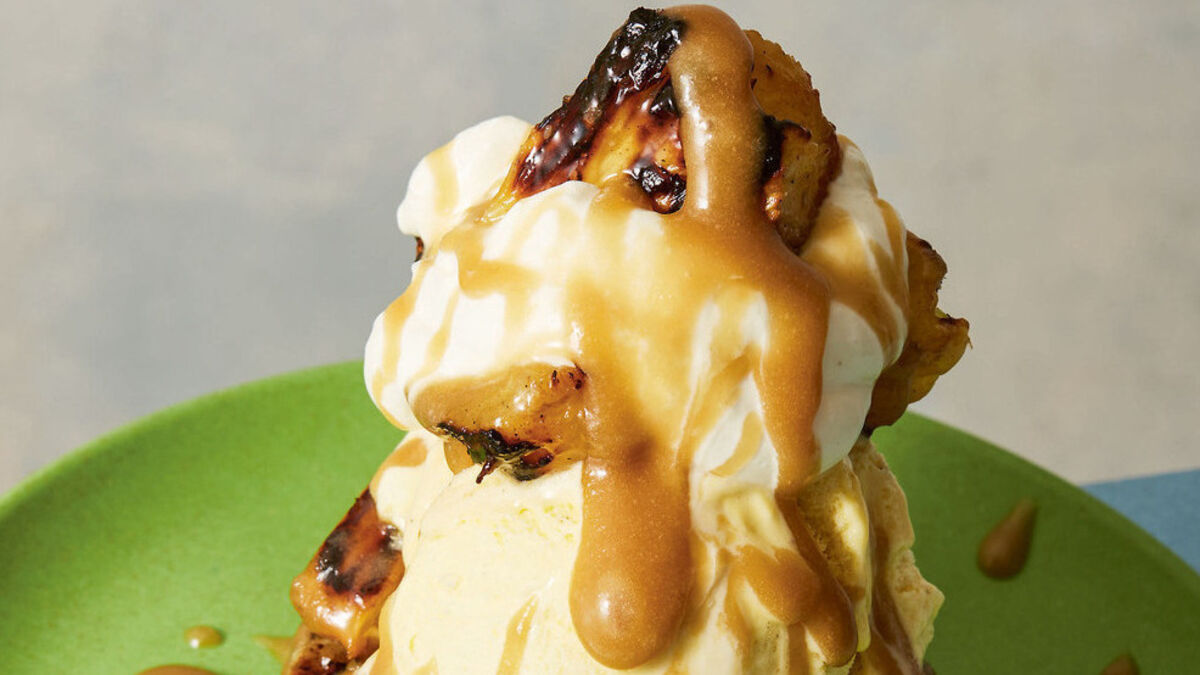
Barbecue crumpets with charred pineapple and caramel dessert recipe
If you’ve never cooked dessert on a barbecue now’s the time to try.
Servings
8Preparation Time
15 minsCooking Time
20 minsTotal Time
35 minsCourse
DessertIngredients
For the crumpets:
150g unsalted butter
125g caster sugar
1½tsp vanilla bean paste
1½tsp ground ginger
8 crumpets
For the pineapple and caramel:
1 ripe pineapple, trimmed
60g unsalted butter
100g soft light brown sugar
50g maple syrup
2tbsp dark rum
1tbsp double cream
Pinch of flaky sea salt
For the lime cream:
300ml double cream or whipping cream
Grated zest of 1 lime
Pinch of ground ginger
1tbsp caster sugar
To serve:
Vanilla ice cream
Method
Prepare a barbecue for two-zone cooking, with medium heat.
Slice the pineapple into quarters lengthways then peel and remove the core. Chop each section in half widthways, then slice into three long wedges per section.
Combine the butter and brown sugar in a frying pan and heat for two minutes over a medium heat until bubbling. Stir in the maple syrup and cook over a medium heat for about five minutes until thikened. Stir in the rum, cream and salt. Set aside.
Whip the cream, lime zest, ginger and sugar in a bowl with an electric whisk until soft peaks form. Keep chilled.
Melt the butter for the crumpets in a frying pan over a medium heat and stir in the sugar, vanilla and ginger.
Briefly grill the crumpets over direct heat on both sides until lightly toasted only (as they will be cooked again). Dunk them in the butter and sugar mixture, then return to the grill on the cooler side. Cook briefly again, until caramelised on both sides.
Grill the pineapple wedges for a few minutes over direct heat until charred on all sides. Add the pineapple to the caramel.
Serve the crumpets topped with a scoop of ice cream, the pineapple, the caramel sauce and a dollop of the cream.