Pride will replace pain over time

After four weeks when it was virtually impossible to go without meeting someone from home, the streets were deserted. The Irish team were preparing for their return journey and even my media colleagues were abandoning ship.
The worst part of a global tournament such as this is the immediacy of sudden death. One minute you’re on the cusp of greatness, the dizzy heights of a possible first World Cup semi-final to contemplate and the next — it’s all over. The morning after a night experienced by the Irish players in Wellington’s ‘Cake Tin’ last Saturday night yields nothing but regrets, emptiness and a hollow feeling that lingers for a long time.
For the players, things will only get worse when they see familiar foes take the field again next weekend in a stadium that provided a career highlight for so many of our greatest heroes against Australia.
Saturday’s disappointment must be put into context, however. After four consecutive wins in a World Cup tournament for the first time, there is much to be proud of. The way the players carried themselves, interacted with the travelling supporters and endeared themselves to the locals, was wonderful to witness, especially when one considers the antics of their English counterparts.
There were aspects that went well and areas that need to be addressed if Ireland are to maintain their ambition of a top four IRB ranking.
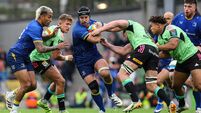
First the positives. Ireland’s set-piece, and the scrum in particular, was superb and provided the platform to perform. The front row trio of Cian Healy, Mike Ross and especially Rory Best, who played through the pain barrier last Saturday night, were superb throughout. However, Ireland badly need to find meaningful cover for Ross at tighthead. Tony Buckley has had numerous chances but has never grasped the opportunity. His progress with Sale in the Aviva Premiership will make or break him.
As always, Paul O’Connell and Donncha O’Callaghan gave everything, with the Cork man playing superbly despite learning of his cherished grandmother’s death on the eve of the Wales game. As always he gave his all despite being temporarily knocked out by Jamie Roberts early on.
Individually, Ireland’s back row were a revelation with Sean O’Brien now a household name in the world of rugby but, at the business end of competition, the real value in having a true openside was graphically displayed. When Heinrich Brussow was lost to the Springbok cause after just 20 minutes against Australia on Sunday night, the mercurial David Pocock single-handedly kept the Wallabies in the match.
Against Ireland, Sam Warburton showed the true value of an out and out seven and the Irish back row suffered. New Zealand have Richie McCaw — need I say more. Ireland need a better balance to their back row and with David Wallace at the end of a great career the search must start immediately for such a groundhog.
Behind the scrum, Ireland had their moments, most noticeably that explosive period after half time against Italy in Dunedin when they tore Nick Mallett’s side to shreds. The problem, however, is that in an attacking sense, Ireland have become predictable. The lack of decoy runners to hold opposition defences has become a problem and the inventive streak that characterised our play a few seasons ago is gone. Even our ability to conjure line breaks from set plays has disappeared.
With Alan Gaffney now departing the international set up after years of great service to Irish rugby there is an opportunity to address this issue with some fresh ideas. The solution may even lie within the existing set up. Les Kiss has always impressed me with his lateral thinking and has been superb in his role as Irish defence coach. Perhaps the time has come to broaden his role and he should be given that opportunity in the Six Nations.
The most disappointing aspect of the defeat to Wales revolved around Ireland’s uncharacteristic softness in defence, a very poor kicking game and aspects of our decision making. One of the principal reasons for starting Ronan O’Gara was to convert pressure into points. Ireland had plenty of opportunities early on in the Welsh 22 but failed to build a score by taking the kickable penalties on offer. That was a mistake. We will never know how this young Welsh outfit would have reacted had they been required to come from behind. Ireland left a potential nine points after them in that opening half alone.
My final thoughts today, however, are with the Irish players and more specifically Brian O’Driscoll. Like those players, we all dared to dream that the unlikely was possible, that not just a semi-final but passage to a World Cup final was within our capacity. One of the principal reasons for entertaining such thoughts was O’Driscoll.
It was my pleasure to spend more than an hour in his company in the midst of that August campaign when despite nursing injuries to his shoulder, he could think of nothing but achieving for Ireland on the biggest stage of all. For him, getting knocked out of the tournament would not be an issue so long as his team expressed themselves and did themselves justice.
Last Saturday night in Wellington, he did everything in order to make that happen but came up just short. As a captain, a leader of men and the totem pole of this team he could not have done more — that decisive early hit on Leigh Halfpenny with a two-man overlap outside him, the off-load to Rob Kearney that sent him scurrying up the middle of the field, the interception that thwarted yet another Welsh attack, the trademark Pocock-esque turnover at the breakdown that has defined so much of his career.
I was privileged to be there at the outset when the great one began to make his mark. I had the best seat in the house for that hat-trick in Paris and for his incredible performance and 50m try for the Lions in Brisbane in that memorable win over Australia in 2001. New Zealand has not been a happy hunting ground for Brian over the years with the infamous spear tackle in 2005 the low point. Over the past few weeks, however, the New Zealand public have finally begun to appreciate what a genius he is.
He may not have left with the prize he cherished most but he has departed with his dignity intact, his reputation enhanced — if that was possible — and a respect that now permeates throughout this rugby mad country.
In fact, those attributes can be applied in equal measure to the entire Irish squad and management. Being Irish in New Zealand these last few weeks has been special. Perhaps we should start feeling good about ourselves again.


CONNECT WITH US TODAY



Be the first to know the latest news and updates