Warm, sunny and breezy


At Kenny’s level of income there is not that much pain in a pay cut

Monday, October 13, 2008

WOULD I have advised Enda Kenny to take a pay cut, all by his little self? Are you kidding? I’d have stayed a mile away from the suggestion, partly because his colleagues were inevitably going to be asked if they’d do likewise and fail to be thrilled by the possibility, but mainly because I know his wife.

Fionnuala Kenny is a warm and charming and direct woman. I would be fearful that suggesting she manage on a smaller budget as a symbolic gesture of solidarity with a pressured nation might make her less warm and charming and a lot more direct.

What was funny about the Kenny pay cut was the way the announcement happened. It’s unique in Irish history: the only political promise ever released by accident AFTER it had already been delivered on.


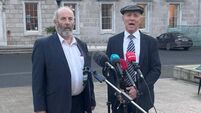
RTÉ’s David McCullough asked a "Put up or shut up" question about pay cuts and Kenny, in response, admitted he’d already told the relevant authorities to throttle back on his wages. The two men on either side of him, clearly gob-smacked by this admission, were jump-started into saying they’d do likewise. The sharper tools in the Dáil shed turned off their mobile phones lest they be similarly jump-started. And Kenny went to ground.

"Typical," one journalist muttered. "Like the time he pulled the truck off the woman. Has no idea how to make the most of stuff."

Truck? Woman? The journalist wasn’t desperately sure, but was convinced that the leader of Fine Gael had at some stage pulled a crashed truck off a woman or pulled a woman from under a truck (this was news to me) and then refused to talk about it, (which would explain why it was news to me).

To the journalist, keeping truck-lifting a secret was an example of egregious failure on Enda Kenny’s part to meet the reasonable and legitimate needs of media, and you have to agree. The least Kenny could have done was replay the event for the cameras, hair a little tousled, biceps straining. But apparently the old adage about PR being all about doing good and getting credit for it has passed him by. Show him a woman under a truck and he’ll miss the implications for his image. He must drive his PR man nuts.

He was wise to cast his pay cut as only a symbolic gesture, though, because it’s not going to actually kill the leader of the opposition to take a 5% salary cut. At his level of income tax there’s not that much pain in a pay cut, just as there’s not much joy in a pay increase, unless that salary increase is ginormous. Although you might think otherwise, listening to the responses of some RTÉ stars to the suggestion that the national broadcaster might reduce their income somewhat, in these straitened times.

Gerry Ryan, for example, was quoted as saying he makes millions more for RTÉ than they pay him. Now, I would never want to fight with Ryan, not least because he once said on radio that I looked like Lady Penelope from Thunderbirds. (I’ve never, before or since, seen this Thunderbirds thing, but I think it was meant as a compliment.) But the fact is that when Gerry goes off on his summer holliers and someone less famous and immeasurably less well paid takes over, the world doesn’t come to an end and the listener figures don’t drop beyond the point of recovery. Independent radio stations manage to build up solid audiences without poaching RTÉ guys and without paying their presenters (with a handful of exceptions) that much.

Anybody in showbusiness, as is Ryan, needs to realise that there’s always someone coming up behind you who could do the job cheaper and maybe (hush, little broadcaster, don’t you cry) even better. When Eamon Dunphy left Today FM and Matt Cooper slid into his chair, an initial die-off of committed listeners was turned into a steady gain. Mary Wilson has brought listenership to Drivetime up, despite the programme’s long-term identification with its earlier presenter. Broadcasters who reject any possibility, in a dire recession, of the State saving a little money on their salaries are not going to be in a great position to thump the Minister for Finance and others for their refusal to share the public pain. And if the Government does decide to share the public pain by taking pay cuts, then it’s going to be plain embarrassing for the interrogators.

WHAT puzzles me is that, in so many businesses currently under pressure, the first port of call, when it comes to making savings, is getting rid of bodies. Companies which relatively recently recruited young graduates eager to go places are being helped to go places they never intended by employers who want to cut their salary bill. Never mind that those young people may not easily get another job, in the present climate. Never mind that they may have to default on their mortgage and hand back the keys to their negative-equity home. Last in first out. And statutory redundancy for people on €30,000 a year for only a couple of years isn’t that costly.

In many cases, the strategic cost-cutting plans are drawn up by top executives who are paid perhaps 10 times what the lower orders are on. They could save the jobs of perhaps two youngsters apiece by halving their own salary — and their own take-home pay, courtesy of the income tax variation, would be considerably more than half what it was.

It never occurs to them. Maybe there’s a CEO or a bunch of deputy CEOs out there who have cut their outrageously high salaries and are keeping it a secret, but I beg leave to doubt it. The pseuds in business who warble to the effect that "our people are our greatest asset" are precisely the folks who are comfortable taking home salaries eight or 10 times what lesser mortals on their team take home. Because they’re worth it, they tell themselves.

Sorry. I just don’t believe that. For example, while the day my ticker turns nasty, I want to have a good cardiac surgeon do the operation, I don’t see any reason why they should be assisted by a theatre nurse paid less than €30,000 a year and be paid nearly €500,000 a year themselves. Without the theatre nurse, they couldn’t operate. The theatre nurse is as essential to the process as they are. The theatre nurse enables them to do what they do. The extra skill, risk, concentration and years of study entitle the surgeon to be paid twice as much. Three times as much. Four. Even five times as much. But 10 times? No.

The day that top managers in the public and private sector make a symbolic gesture of solidarity with the rest of the recession-hit population will establish the birth of a great new era and be marked by a blue moon.

While we wait for it to happen, somebody should buy Enda Kenny a pint. Just don’t mention the paycut to him. Or the truck.


a d v e r t i s e m e n t