Storm clouds gather over Bertie, but it’s Cowen who needs to take cover
By Ryle Dwyer
Saturday, December 01, 2007
Indeed, should Cowen be worried? After all, Bertie anointed Albert Reynolds for the presidency in 1997.
He actually encouraged him to run, but a great many people within the party were convinced he was really supporting Mary McAleese. Did he lead Reynolds up the garden path?
IF IT were not for the advent of the tea bag, people might now be reading tea leaves for some insight into Bertie Ahern’s future.

There are distinct signs of political clouds gathering on the horizon. When did you last hear anyone protesting that he was no a friend of a Taoiseach?
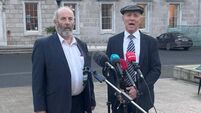
Ned O’Keeffe bolted Fianna Fáil this week. He should now be able to claim the €39,000, tax-free, from the party leaders’ fund along with the other five independents. That could make his kind of independence look very attractive.
Political popularity would seem to be rather transient in 2007, even with the most popular of politicians.
Tony Blair was one of the most popular prime ministers in British history, but he seemed to come unstuck over Britain’s involvement in the Iraq war. The same thing happened in Australia. John Howard was already the second longest serving prime minister in Australian history. He had been in office for 11 consecutive years, But Howard came unstuck this day last week. His party lost power, and he even lost his own seat in parliament.
Bertie Ahern does not have to look beyond our own shores for parallels. He has already served more than 10 years as head of government, which is longer than any of his 11 predecessors, with the sole exception of Eamon de Valera’s 16 continuous years from 1932 to 1948.
De Valera and Jack Lynch were the only Taoisigh to achieve overall majorities. There has been a tendency to compare Bertie Ahern with Jack Lynch. Bertie never won an overall majority, but he has already been Taoiseach for longer than Lynch, who won the largest majority in history in 1977, the year Bertie entered the Dáil. Little over two years later, however, Jack got the bum’s rush from his own party.
On the night of the 1977 election count, Geraldine Kennedy happened to be standing beside Charlie Haughey, who had never concealed his ambition to be Taoiseach. She remarked that Lynch’s victory had put paid to those ambitions, but Charlie confidently contradicted her assessment.
All the new people were his supporters, he said. They were people like Bertie Ahern, Albert Reynolds and Charlie McCreevy. "Now I know I will be leader," Haughey said.
Interviewed on RTÉ that night, Lynch seemed strangely subdued. He said he would have preferred a smaller majority, because such a big majority could cause problems. Fianna Fáil had essentially bought the election with lavish, irresponsible promises, like the removal of motor taxation. By 1979 people had begun to realise they were victims of a confidence trick, so the party fared dismally in the European elections of that year, winning only five of the 15 seats. Its 34.68% of the first preference vote was the party’s worst showing ever. Last weekend’s public opinion poll had the party even lower at 32%, so nobody should be surprised at the gathering clouds.
Like the present Taoiseach, Jack Lynch had let it be known he did not intend to lead the party into another general election. He hadn’t yet told anyone, but he intended to step down in January 1980 at the end of Ireland’s term in the European presidency. By the autumn of 1979, however, there were already distinct moves to get him out as soon as possible.
A petition calling on him to stand down was circulated among the party’s Dáil deputies. More than 20 signed.
In November, Lynch planned to go to the US as a kind of last hurrah. Before he left he took an active part in two Cork by-elections. One, in Cork North-East, was to fill the vacancy caused by the death of Fianna Fáil’s Seán Brosnan, who had headed the poll in 1977. Brosnan’s son, John, was expected to win the seat, if only on a sympathy vote.
The other by-election was to fill the vacancy caused by the death of Labour’s Pat Kerrigan in Lynch’s own Cork city constituency, where Fianna Fáil already held three of the five seats with a preference vote of over 58%.
This was the highest vote in the country in 1977, so it should have been the easiest seat to win, especially when Lynch spent four weekends campaigning there for the Fianna Fáil candidate.
The morning after the by-elections, Lynch flew to the US where he received the devastating news that Fianna Fáil had lost both of them. It was the people of Cork who gave Jack that kick in the groin, but for some reason they blamed Charlie Haughey.
Unrest within the Fianna Fáil ranks grew in the following days, especially after a Washington press conference where Lynch appeared to contradict an earlier statement he had made to the Fianna Fáil parliamentary party about British aircraft not being allowed to overfly the border.
If he said what he was reported to have said in the US, then he made a false statement to the party. "When he returns," Clare deputy Bill Loughnane said, "I am going to demand that he comes clean and tells the truth." Loughnane essentially accused the Taoiseach of lying, and Lynch reacted by demanding the Clare deputy’s expulsion from the party. But George Colley and the other Lynch lieutenants were unable to remove the whip from Loughnane. It was obvious that Lynch was in trouble within the party. Colley and company should have realised they were in even more trouble, but they were out of touch with reality.
They persuaded Lynch to step down immediately in the belief that Colley would catch Haughey on the hop. Lynch announced his resignation on a Wednesday and called the meeting to select his successor for that Friday.
BY THE time they realised they were in trouble, it was too late. They had outsmarted themselves. Haughey was much better prepared, and he won the ensuing leadership contest.
Tom McEllistrim jnr one of the Gang of Five behind Haughey’s campaign, was later adamant that he was not opposed to Lynch. His father had proposed Lynch for Taoiseach back in 1966, but McEllistrim was bitterly opposed to Colley, especially after he tried to introduce a 2% levy on farmers in the 1979 budget.
Bertie Ahern has already virtually anointed Brian Cowen as his successor, but will Biffo run into the kind of budgetary problems that plagued Colley? Indeed, should he be worried? After all, Bertie anointed Albert Reynolds for the presidency in 1997. He actually encouraged him to run, but a great many people within the party were convinced he was really supporting Mary McAleese.
Did he lead Reynolds up the garden path? He was true to his word in voting for Reynolds at the meeting to select the party candidate. He actually showed Reynolds his vote before depositing it.
Reynolds nudged Brian Crowley who was sitting beside him and told him what the Taoiseach had done. Crowley — who was convinced Bertie was supporting McAleese — concluded that the Taoiseach was so sure the whole thing was sown up that his own vote was not needed. In shock, Brian Crowley reportedly exclaimed, "Albert, you’re f**ked!"
Bertie was "the man," Charlie Haughey told the press. "He’s the best, the most skilful, the most devious and the most cunning."
Cowen will forget that at his peril. There are interesting times ahead.
a d v e r t i s e m e n t
This appeared in the printed version of the Irish Examiner Saturday, December 01, 2007