Warm, sunny and breezy


When it comes to politics, we need to get out of poll position

Friday, October 28, 2011

TODAY we should find out who is our ninth president of Ireland. The opinion polls published last weekend suggested that Sean Gallagher, independent, would win comfortably.

Events on Monday and Tuesday suggested that Gallagher might not prevail. I’m not so sure and I’m not brave enough to call the likely result when the votes are counted today. Gallagher almost certainly lost significant support as a result of Monday and Tuesday’s events but enough to stop him getting first preferences?

Even if he lost a quarter of those intended voters, bringing his score back to 30% from 40%, he still stands a chance, although if half went to Higgins, who had been at 25%, then he would probably lose on transfers. The source of the allegations against him might even help in a perverse way to limit the losses. Many people may have seen this campaign as a Sinn Féin "black ops" play. His accuser Hugh Morgan may well have an accurate recollection of what happened — and have the cheque stubs for his contribution to Fianna Fáil — but his previous conviction for tax evasion — and suggestions that he has been close to other Sinn Féin figures — gives rise to legitimate questions as to his motivation. (That he paid the money is not in dispute but he could have posted it — the existence of cheque stubs proves nothing about the method of delivery).


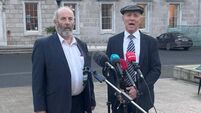
The ironies of all of this are many. One is that Martin McGuinness was prepared to engage in political assassination based on the word of an informer, a man who has admitted to a criminal conviction for tax evasion but who now, because it suits the narrative that many want to shape, is being regarded as a truth-teller. McGuinness has bridled at reference to his own history of even more serious criminal activity but was more than happy to castigate the non-criminal, if poorly judged, alleged behaviour of another candidate.

Gallagher may not be of suitable character to be president, although that might not stop him, but what he did, in canvassing and accepting political donations for Fianna Fáil, was not illegal. He has never been the mouthpiece for killers or acted as a terrorist. What may have caught him was the lie about the depth of his role in Fianna Fáil. Instead of honestly outlining what he did he tried to obfuscate and that, more than anything, hurt him.

It will be interesting to see if McGuinness polls better than the 13% that he obtained in last weekend’s polls. This is about the level where Sinn Féin has been scoring on a consistent basis in recent opinion polls (although some have put the party at a higher support). I suspect that McGuinness will do better, if not necessary around the 20% mark that I would have expected when he announced his candidacy. This should cause Sinn Féin to think deeply about its future in the south.

It suggests that the parachuting of candidates in from the North is not the way forward, no matter the ease with which Gerry Adams won his seat in Louth in the general election. The southern electorate seems to have a deeper antipathy to Sinn Féin than the party expected, is less forgiving of what Sinn Féin endorsed and helped and less sympathetic of explanations as to why it happened, possibly because the southern experience of the Troubles is so different. It may also be the case that Sinn Féin’s economic policies appear too left of centre for many southerners. But what really hurt McGuinness is much the same as how Gallagher got hit near the end: he dissembled when faced by the big questions. McGuinness struggled to condemn murder, while claiming peace, and appeared hypocritical when attacking the political morality of others.

Fianna Fáil will await the result today with great interest, I would imagine. It will want to gauge how significant the anti-Fianna Fáil backlash unleashed against Gallagher in recent days has been. If he wins he will be claimed as the unofficial candidate, a member in all but name. If he loses he will be distanced, but still have given hope to Fianna Fáil that there remains a substantial base that’ll return to the party at some stage in the future if it likes the candidates — and if, and this is the big if, the candidates can distance themselves enough from the past Fianna Fáil cock-ups and venalities. Fianna Fáil will also take joy from a performance from the candidate picked by the party with 75 Dáil seats.

It seems that Fine Gael made a monumental mistake when it picked Gay Mitchell as its candidate. He simply did not have the appeal required to win a personal popularity contest. His selection was motivated by petty internal politicking and by an arrogant belief that the achievement of the general election was more of an endorsement of Fine Gael than a deliberate hammering of Fianna Fáil by the electorate.

By the same token, if Michael D Higgins wins, or even if he comes close to doing so, Labour should not mistake this for some form of surge of support for the party. Far more relevant are the more recent opinion poll findings that have Labour less popular than Fianna Fáil. Just because one of Labour’s elder lemons is playing a starring role at present it does not mean that the long term, or even medium term, future for the party is bright, certainly not for as long as previously Angry Gilmore continues to implement the IMF deal to the letter. The presidential election race is not telling us too much about real party support.

Much of what has been written in this column makes reference to the political opinion polls, both prior to and during the election. But what has become increasingly obvious during this campaign is the nefarious influence of such polls on driving public opinion and compromising a free and fair election.

The polls may be accurate but they can be driven by knowledge of the previous poll. If the public sees, for example, Mary Davis or Dana, at a low level in the polls the perception forms quickly there is no point in voting for either of these women because they have no chance of winning. The first preference then transfers elsewhere. The same can apply to a candidate moving upwards in the polls. Some voters want to back the winning horse, or the outsider coming on a run. If there weren’t polls they might be more attentive to the issues and performances and make judgements based on those rather than the perceived popularity among others.

A previous effort to ban opinion polls for the duration of an election campaign failed. A Fianna Fáil/PD attempt to ban election polls failed when then Senator Shane Ross (now an independent TD) pointed out a flaw in the legislation. There was nothing in it to prevent a highly influential poll being published on the day of voting (even if broadcasters would be precluded from making any reference to it). Chastened, that government did not return with a reformed bill.

Too much newspaper space and broadcast airtime has been devoted to polls during the campaign. They are just marketing devices designed to get coverage in other media for the newspaper or sponsor who pays for the poll. The money spent on them would be better invested in investigative journalism. The pollsters can whinge all they like about this idea, but it would be beneficial to the political process.

Matt Cooper’s new book How Ireland Really Went Bust has just been released.


a d v e r t i s e m e n t