We can’t kick to touch when it comes to players’ head injuries
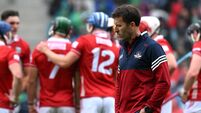
It goes like this: Ireland is in the last five minutes of the Six Nation’s game next March against France in Paris, the final game of the season. Ireland is within minutes of winning the Grand Slam but is facing a French onslaught which, if successful, will produce a match-winning try, costing Ireland its prize. Standing on the touchline beside Schmidt is his captain Brian O’Driscoll, who he had persuaded to play one more season. O’Driscoll had staggered off the pitch five minutes earlier after a bang to the head, unsure of where he was. But now he wants to go back on.
Would Schmidt decide that O’Driscoll’s presence would reinforce the defence to resist the French pressure? Or would he be at risk of making a mistake that could undermine it because of his condition? And would it be in his best interests to return, given his history of previous head injuries? Would Schmidt tell his captain, Ireland’s greatest ever rugby player, that he was not going to allow him onto the pitch for the sake of what might be his own long-term health and safety?
A very similar scenario faced Declan Kidney during his last home international as coach, against France in Dublin last month. The teams were level when O’Driscoll, following a blow to the head, was forced from the pitch. To everyone’s surprise O’Driscoll returned five minutes later. He received a hero’s welcome and, when the game ended in a draw, further ovations given that it might have been his last game at Lansdowne Road.
But should O’Driscoll have been left back onto the pitch? His uncle Barry O’Driscoll didn’t think so when I spoke to him on The Last Word last week. Barry is not just a medical doctor, but a former rugby international, and also the father of Gary O’Driscoll, the former doctor to the Irish rugby team, the British and Irish Lions and now to Arsenal football club. He loves the sport but understands the physical dangers better than most. He was also a member of the medical committee of the International Rugby Board until he resigned last year over the sport’s failure to deal appropriately with concussion injuries.
Dr O’Driscoll is particularly concerned with the new “five-minute” rule that is being trialed by the IRB at some levels. Previously a concussed player (or one suspected of a head injury) had to be removed immediately from the pitch and could not play for another three weeks at least, This was reduced so that a player, if he passed a number of cognitive tests to the same level as he had achieved pre-season, would be allowed to play again the following week. The new rule means that a player can rejoin a game if he answers a serious of questions within five minutes of the initial blow.
Dr O’Driscoll was stunned this rule was being implemented apparently to allow his nephew return to action against France, The five minute rule was not in use in the Six Nations. This raises questions as to whether it was technically correct for O’Driscoll to return to the pitch, but that is nowhere near as serious as concerns for his health.
O’Driscoll was not the only Irish player to be concussed and removed from play that day. It happened to debutant centre Luke Marshall too, It was extraordinary that Marshall and O’Driscoll were deemed fit to play against Italy a week later, but apparently both passed the required tests. Could that have had anything to do with the lack of available alternatives? Marshall suffered another blow to the head and was replaced after 28 minutes. He was given a couple of weeks off but was returned to the Ulster team for the Heineken Cup game on the first weekend of April. He was knocked unconscious in the 68th minute.
Ulster coach Mark Anscombe had this to say after Marshall’s third concussion: “Look, at the end of the day, you want to win these big games but first and foremost you look after the individual. I’ll never as a coach put a guy on the field that could risk his health, I can assure you that.”
Fair enough, but what if the player insists he is fit and what if other coaches, under pressure to deliver results, are prepared to take chances with a player’s health? O’Driscoll has played at times before when it may have been unwise for him to do so.
Donal Lenihan has written knowledgably in this newspaper previously about the cases of John Fogarty and Bernard Jackman, who both retired as a result of serious repercussions arising from many concussions. Fogarty has spoken of regularly suffering from blinding headaches and mood swings that include depression. Jackman reckons he may have suffered 20 concussions during his career.
They both gave up a game they loved because they realised the damage that was being done. Why did they leave it so long before acting? Players want to play games, often for financial reasons as much as anything else. They fear that if they are unavailable then their replacements will play well enough to get to keep their place. They lie to doctors about their symptoms and they deliberately underplay their cognitive abilities during pre-season tests so as to have a low base with which to compare if they are injured.
Rugby Union is way behind American football in dealing with this issue. Examples of former players suffering depression and even the early onset of dementia have come to light in that sport and the issues about concussion are being treated seriously now that some suicides have been linked to acquired brain injuries suffered by players.
DR BARRY O’DRISCOLL complains that when he made the comparison between American football and rugby union to the IRB he was told that it was a “different game” because American footballers wear helmets and have head to head collisions. But, as he emphasised, concussion is concussion.
All of this should be borne in mind when discussing the controversy that has emerged because of the decision not to take disciplinary action against Paul O’Connell because of his accidental kicking of Dave Kearney in last weekend’s Munster Vs. Leinster game, an act that knocked the unfortunate victim unconscious and required him to stay in hospital.
Schmidt and his Leinster captain Leo Cullen have been vocal in condemning the failure to cite O’Connell for a disciplinary hearing.
There are far too many instances of foul play, be it gouging, stamping, high tackling and spear tackling (whereby a player is picked up and driven head first into the ground) that need to be eliminated. That is what the citing process should be for, rather than getting too worked up about something that was clearly an accident.
But the much bigger issue of player welfare is dealing with the concussions that happen far too often, in circumstances far less obvious and more prosaic than the one in which Kearney was injured, and in ensuring that players do not continue to play when injured, or for a number of weeks afterwards.
It would be interesting to hear Joe Schmidt, if he becomes new Irish coach, speak out about that, but I imagine his new employers will be more interested in how he intends to win matches.
CONNECT WITH US TODAY



Be the first to know the latest news and updates