The macabre Gone Girl, the surprise US bestseller, has been criticised as misogynist, but its author Gillian Flynn's depictions of women eschew blandness for darker truths, says Suzanne Harrington
They are the most watched videos on Youtube. Now Sharon Crowe reports on research which found that looking at images of cute things, such as fluffy cats, can make you more productive at work
Byzantium, partly filmed in Ireland, is Neil Jordan's second film in the genre he has loved since Bram Stoker's home first spooked him as a child, says Marc O'Sullivan
Anne Doyle, 61, is thriving on all fronts since she retired as news reader from RTÉ at the end of 2011. Between volunteering as an ambassador for her native county, Wexford, writing short stories and travelling — last stop Jamaica — life has been “surprisingly easy”. She had a flu six months ago. “It was very sapping, and when I recovered I found I was a bit aimless and felt I had to get some structure on my day. But it must have been the flu, because it passed,” says Anne, whose long-term partner is former restaurant owner, Dan McGrattan.
Fianna Fáil leader Micheál Martin said he personally supports proposed legislation allowing abortion in limited circumstances, which he said is "consistent with the pro-life position".
British police arrested two more people yesterday in a hunt for accomplices of two British men of Nigerian descent accused of hacking a soldier to death on a London street in revenge for wars in Muslim countries.
It is believed the Minister for Finance Michael Noonan told the IMF that he will look to Contingent Convertible Capital (CoCo) Notes if the banks need additional capital buffers following the stress tests.
RABODIRECT PRO12 FINAL: Leinster v UlsterThe perception prior to Brian O'Driscoll's recent decision to add an extra year onto his stellar career was that a place on a victorious Lions tour was the only box left to tick after 14 long years, but it was never that simple.
Byzantium, partly filmed in Ireland, is Neil Jordan's second film in the genre he has loved since Bram Stoker's home first spooked him as a child, says Marc O'Sullivan
The latest addition to our stellar team of rugby writers reflects on the ups and downs of a magnificent playing career — and reveals the reasons why he's chosen to move to Paris to kick-start his coaching career.
Mice raised without bacteria in the gut showed distinctly autistic patterns of behaviour, choosing to interact with objects more than other mice, scientists at University College Cork (UCC) have found.
It's a story familiar to GAA people all over the country. A stormy annual general meeting, members walking out, transfer applications handed in afterwards.
The latest addition to our stellar team of rugby writers reflects on the ups and downs of a magnificent playing career — and reveals the reasons why he's chosen to move to Paris to kick-start his coaching career.
A man was killed and two others were taken to hospital with gunshot wounds today following a "serious incident" understood to involve a serving British soldier.
Leaflets criticising the TD who chairs the Dáil committee hearing opinion on legislating for the X case, and likening abortion to the Holocaust, are being sent to homes in Cork.
Try, try again pays off for Lynne and Irish women's rugby
Monday, March 18, 2013
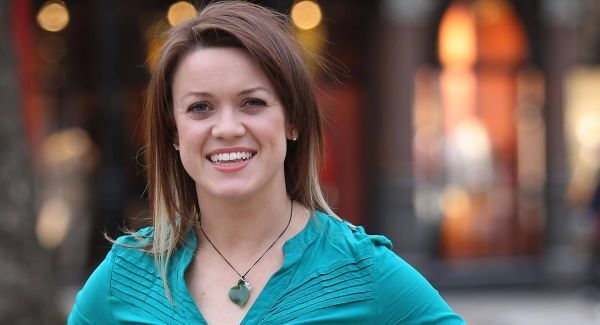
WITH ecstatic pride, player Lynne Cantwell summed up the historic success of Ireland’s women’s rugby team, Six Nations champions in 2013: “It’s the most incredible feeling in the world.
By Louise Roseingrave
We played like a family, everyone put their bodies and hearts on the line.”
Aged 31, the 5’3” Cantwell, who weighs ten stone, is Ireland’s most capped player. Vice-captain for the past four years, she earned her 78th cap against Italy on Sunday. For the past decade, Cantwell has endured the defeats of a team finding its feet.

Year after year, the squad learned tough lessons. Players left, pursued other interests, got married, had children. Cantwell stayed. Perseverance pays off.
“The friends you make, the bonds are incredibly strong, because you go through so much, such highs and lows, in such a short and intense atmosphere. It takes years to experience that kind of friendship. It’s really powerful and special,” she says. The intensity is reflected in the dedication. As amateurs, the players have jobs, sacrifice their evenings for training, give punishing performances on the pitch. Up until last year, players were paying for petrol to attend training.
Even now, with Six Nations glory, there is no let-up for the girls, who fly to Hong Kong tomorrow for the IRB Sevens World Series competition. From there, they fly to compete in China.
“Life is hectic at the moment, it’s overwhelming. There are fantastic opportunities, but it’s an incredibly hectic schedule for an amateur,” Cantwell says.
Dubbed ‘the women’s version of Brian O’Driscoll’, Cantwell’s schedule allows for just two weekends off between January and July. “It’s great, but its tough when you are trying to hold down a full-time job. It’s fairly crazy,” she says.
Originally from Rolestown in north county Dublin, physiotherapist Cantwell is based in London. She began playing rugby when she studied sports science at the University of Limerick. “Women’s rugby was becoming a big thing in UL. I’d never played before in my life. We were a pure football household before that,” Cantwell says.
Rugby has since dominated her free time. But for all the tears and the tries, the passion and glory, she wouldn’t change a thing.
“I feel unbelievably privileged to have experienced it, because you put in the hard work and you do it because you love it,” she says.
Cantwell became the first female recipient of a Guinness Rugby Writers of Ireland IRFU award in 2011. She’s played in various positions with Ireland: in the centre, on the wing and at fly-half. Her speed, agility and precision passing is ability coupled with four to five training sessions per week.
She hasn’t built up muscle bulk like some of her teammates. “Training is mixed. For 15s, it’s strength and power-based, 7s is more speed endurance, less emphasis on contact. I’m a little different by choice. I’m not one of these girls who wants to put on big muscle mass, definitely not at this stage in my career,” she says.
Cantwell values her time outside of rugby. She is as likely to be found glammed-up in heels as she is in a jersey.
“People can be shocked when I tell them I play rugby, but I’m quite proud of that, to be honest. Yes, I’m small and I’m a very feminine person. I’m also an athlete who likes to play competitively,” she says.
Cantwell has learned “incredible lessons” from more than a decade of rugby. “What’s quite scary about it, sometimes, are the intense highs and lows you feel, when you experience them as intensely as in an international sporting setting. Then, when you experience them in a work setting, or in a relationship, they are kind of familiar to you and you think, ‘right, this is the right way to deal with this’,” she says.
The squad has remained off the radar of mainstream media, until now. A record 3,100 supporters, President Michael D Higgins among them, turned out in Ashbourne on a recent Friday night to support the team’s 15-10 win over France. But Lynne is philosophical about the lack of coverage of women’s rugby. “Each year, we set our goals within the squad and we have been achieving them year in, year out. The type of achievements that are recognised by the public and the media are the ones they want to know about and they are the ones we have just achieved. Those smaller goals are what keep you going and, obviously, the love for the game. I genuinely didn’t know if I would have been around to see this day. I feel really lucky to have seen it, because there are plenty of girls that have gone before that have contributed as equally as I have and have not seen it,” she says.
Cantwell has been lucky not to have sustained any serious injuries during her iconic Irish career.
“I feel lucky not to have had any injuries that have made me stop. What I’ve definitely learned is that this game owes nothing to anybody and it doesn’t respect anybody.
“You never take for granted what you have and, as a result, you appreciate every game that you have, because you know some people ended their careers not based on their own choice,” she says.
One thing that has changed is the calibre of players, coming up through underage structures with a “good understanding of the concept of the game. You are starting to see girls joining clubs now that have been playing since they were 12 or 13, whereas we started at 18 and knew nothing, so that’s really good to see.”
Taking each game as it comes, Lynne’s not sure when she will hang up her boots.
“The one thing we have in common is that we do it because we love it, because we are all amateur. When the times comes that you can’t give everything to it, then you’ll say ‘right, it’s somebody else’s turn’,” she says.
Whatever the future holds for this Irish squad, their extraordinary success this year is testament to the power of belief.
There was no such thing as women’s rugby in the time of the German philosopher, Johann Wolfgang von Goethe, but his words ring true.
“Dream no small dreams, for they have no power to move the hearts of men.”