Gearing up for car-free transport
Problem is, however, that we are one of the world’s most car-dependant nations.
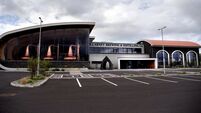
The viability of the large number of out-of-town shopping centres, for instance, is contingent on people driving to them. The downside is that the commercial heart is being ripped out of many towns and cities.
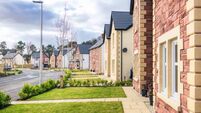
Urban sprawl, a dispersed population, and the fact many people live in the countryside, makes it impossible to provide affordable public transport, so the car becomes a necessity.
But, it doesn’t look as if motoring is going to get any cheaper, in the short-term at least, and this will put people under more financial pressure.
An Taisce is suggesting we must now turn away from the mistakes of the past and gear planning and development to the long-term interests of the public, advocating a return to thriving town centres.
Free parking is an important attraction in out-of-town shopping centres, in sharp contrast to the often high cost of parking in the centre of large urban areas.
But, An Taisce is calling on the Government to bring forward proposals to levy charges on out-of-town retail parking and for that levy to be passed on to car-based customers of those out of town centre.
“An Taisce’s proposal will help level the playing field between town centre and out of town venues,’’ it says.
“We must return to strong and vibrant town centres, which are currently under stress but which should provide a community where the majority of one’s needs are available within walking or bicycling distance’’, the organisation says.
That’s all fine in theory, but it calls for a sea change in our attitudes to transport and, in particular, our love affair with the car.
Up to now, planning for roads and retail development has been focused on facilitating the car as the primary means of transport. There are signs that is slowly changing, with the introduction bicycle schemes and even bicycle laneways, but much more needs to be done.
We could learn a lot from countries such as Holland, which has one of the highest levels of bike usage in the world and where the needs of cyclists are given priority in road design and planning in towns and cities.
CONNECT WITH US TODAY



Be the first to know the latest news and updates