The grass is always greener
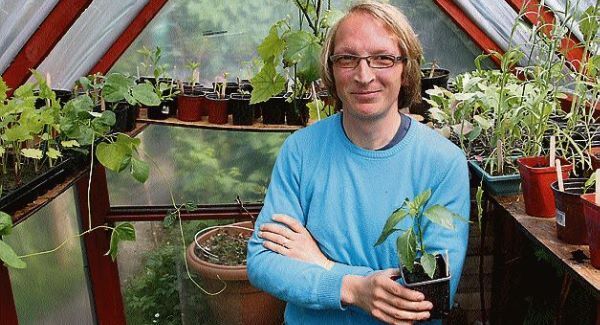
“‘Are you an eco-preacher or like one of those rainbow people?’ ‘Do you want us to go and live in a real hippy idealistic way?’” she says. Her students want to learn how to improve their lives. Financial advisor Eddie Hobbs was on one of her organic gardening courses. Ms Cahn asks her students what changes they want, and they all respond: healthier environment, less inequality and better care for people.
Bill Mollison’s intentions were the same, in the 1970s, when he coined the term permaculture — meaning permanent agriculture and permanent culture. It’s a design philosophy that encompasses gardening, architecture, horticulture, ecology, money management and community design.
Mollison developed it as a response to what he, and many others globally, saw as serious challenges to humanity’s survival. Mollison spent decades observing how ecosystems worked and discovered they were sustainable, and he posed the question “how can we be more like that?” Look at a forest, he would say, it has no hierarchy, it doesn’t produce any waste, and no matter what happens around it, it stays resilient.
Ms Cahn is running a course called permaculture skills exchange, for the unemployed and underemployed, which is being funded by County Wicklow Partnership. Students learn how to apply permaculture to vegetable production, bee-keeping, orchards and composting.
It’s the first course of this kind in Ireland, offering something to people who have skills and experience in other areas. “There’s a lot of possible exchanges that could be happening, especially in learning, because we have all these skills that we could swap with each other, but it’s not happening because they don’t have a monetary value, but economic activity can still can take place in the absence of money,” says Ms Cahn.
Permaculture is more than organic gardening. If we look to the forest again, we will see that nobody digs and sows, plants and weeds, or sprays bugs in a forest. Still, all those chores are taken care of, somehow; the forest grows and feeds its inhabitants.
So, for example, with a permaculture principle called ‘multiple functions’, you can place elements in a garden to mutually benefit each other. Dill can be used as a herb, the flowers attract beneficial insects, and add visual appeal to the garden. If builders leave a pile of rubble and rocks in the back garden, it can be turned into a rock garden and made into a feature, instead. The permaculture principle of turning problems into solutions is at the core of the philosophy: working with nature rather than against it. This can be applied to the rest of our lives, too.
Patrick Hunt studied hard, has three degrees and didn’t get the promised return of a good job. He participated in Ms Cahn’s first permaculture skills exchange course and, since then, in his rented house in Dundrum, he’s built a greenhouse, raised beds, planted apple trees, and week by week is doing more.
Mr Hunt has also collaborated with others, with whom he wants to buy land to grow communal food. Next, he’ll harvest rainwater; saving on water charges. “It’s a set of life skills that will allow me to have a comfortable life. Ireland is a brilliant place to be and there’s no reason to go anywhere. We have 28sq thousand metres, and with 4.6m people in the country, that means eight hectares per person,” says Mr Hunt.
Davie Philip, founder of the Cloughjordon eco-village in Tipperary, says Ireland has an opportunity to reexamine how it lives, and he’s excited. “It’s good for people, it’s good for the environment and it’s fair trade, one person isn’t super- rich. These are the ethics that underpin permaculture,” Mr Philip says. He says the economy is not most important. “The economy shouldn’t be bigger than everything else; the economy is destroying society and the environment. We have to start thinking about some sort of steady-state economic system that doesn’t demand that material throughput and for us to be just shoppers.”
At Cloughjordon, they have their own hostel, farm, internet, sewage and draining, even a forest with 17,000 trees, and a market square.
The houses are made from cob, timber, and hemp, and were community built. Edible landscapes are planted around the sites: there are fruit and nut trees — potentially, you could be going home for your dinner and be full by the time you get there. There’s no need for a Tesco or an Aldi: they have their own community farm, which will produce 19 vegetables this summer. They have the biggest solar-panel site in Ireland and there’s no need for fossil fuels, and so an increase in fuel prices is not an issue.
A permaculture design course is taking place this August in Cloughjordan, covering topics such as resilience thinking and local economics. It is fully accredited by the UK Permaculture Association. In Cork, Kinsale College of Further Education offers a FETAC-accredited two-year course in permaculture, covering topics such as food production and green building.
The course advocates that community leadership is a role everybody can temporarily assume, and not a position of permanent authority for one person.
Backing many of Ireland’s permaculturists is RTÉ TV presenter Duncan Stewart, who strives to make our environment resilient and beneficial for the future. Stewart embarked on the alternative route during the oil crisis of the 1970s, when he realised all the buildings he was designing were wrong “because they were dependent on fossil fuels”. He walked into his lecture in DIT and told his students that they were starting the curriculum all over again. Now, he has just finished filming his tenth series of his RTÉ show Eco Eye, which has 300,000 viewers weekly.
Tell a politician they can solve some of the world’s problems in a community garden and they might laugh, but to Stewart this is no laughing matter. He says we can get out of our economic woes by integrating more with nature, and we’ve been doing the opposite.
“Nature has an incredibly important value when it comes to our economy. When the focus in on the short-term and everyone is competing for the same market share, then people cut corners and the environment gets compromised. This is when you get problems,” Stewart says.
In America and in the UK, permaculture is expanding throughout city communities, where groups collaborate and buy land outside the city that they pay to be run like co-operatives.
London is booming, with 15 volunteer-run city farms in green spaces and the US has 13,000 community-supported agriculture farms, also known as CSAs, where people can buy local, seasonal food directly from a farmer. Unlike Ireland, the US produces about 70% of its own food, which makes the Americans a whole lot more self-sufficient than may have been thought. Whereas, Ireland imports 70% of its food.
In the US, Obama recently congratulated a permaculture campus movement, saying, “ultimately, good government policy will only go so far”.
What’s needed, Obama said, is the commitment of individuals to be social entrepreneurs and improve their communities. After congratulating the students, Obama’s wisest advice was, “learn from your failures, adapt and continue on,” the president said. “I know you have that grit.”
Many people in Ireland are showing we have that grit, too.


CONNECT WITH US TODAY



Be the first to know the latest news and updates