Dry and cloudy with spells of sunshine

Find a...

Date Job Car Home


We are not amused ...
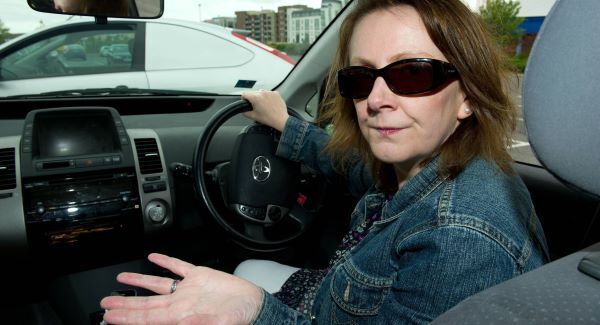
Rudeness abounds, in caparks, shops, and online. Yet manners are the mark of civilisation,says Helen Moorhouse

DOING the weekly shop, I cruised for parking along the designated parent-and-child section. Halfway, a frazzled woman was packing the last bag into her car. She then hauled two tired children into their car seats. There’s a common sign language: she waved to acknowledge me, I waved back to say ‘I know what it’s like’.

Then the beeping and flashing commenced. In the 30 seconds it took that mum to pack up, reverse out and for me to take her space, the young male in the car behind me engaged in a display of son et lumiere worthy of the Olympic opening ceremony. He acted like I was lying on the road blocking an ambulance of injured kittens, yet he had time to make obscene gestures at me in front of my two children.


How rude. I say that a lot. Chatting with friends, I’m more shocked by each anecdote — queue-jumping; pushing; insults; a mother approached in a cafe by a random stranger demanding to know what was wrong with her child when it whimpered for a bottle; and my favourite — the sales assistant who, when asked what documentation was needed, replied: “It’s not my fucking job to tell you.” True story.

Every generation laments the fact that manners, etiquette and politeness are disappearing down the tubes.

It’s probably a good thing that the Victorians never invented a time machine, because after a glance at 2012 they’d all have to lie down with the vapours, and might never have managed the industrial revolution.

So, maybe I’m getting cranky with age, or I’m feeling vulnerable because I have kids, but I think there’s a lot more impoliteness these days.

So much of our culture has become about �being assertive’, ‘getting what you want’, ‘having it all’ — and that’s fantastic. What isn’t, however, is how we go about it: when assertiveness or determination cross the line from getting a point across to making others feel uncomfortable, upset and threatened.

That’s just plain rude.

The workplace is a hot-bed. A photographer friend recently told me how she frequently gets text-message enquiries, sometimes late at night, worded in such a way that if they were verbalised they would be little more than a series of grunts. Three weeks later I received my own, at 11pm on a Friday evening. No ‘please, or thank you, sorry for disturbing 30 Rock.’ No vowels, either, come to think of it.

Part of the problem is that in the age of Facebook, instant-messenger, skype and iphones, we are always ‘on’. That provokes a sense of entitlement to an immediate response and we comply because we’re all so afraid to be ‘off’ — to be perceived as not on the ball, or as out of touch. So we answer the call, or reply to the email or give a sheepish ‘LOL’ of acceptance even though it’s really time that we were taking our kids swimming or getting some sleep.

Rudeness thrives under the protective blanket of the internet. What should be a tool for instant response and correspondence, for praise, constructive criticism and discussion is, instead, used as a forum for mud-slinging, name-calling and insults by people called ‘Spitonmedickie99’ or ‘Angryslutforevah’, who wouldn’t dream of picking up a pen and paper or even putting their name to whatever bile they’re spewing.

Why are manners so important? Because they make civilised society civilised.

Good manners, exercised appropriately, are barely noticeable, but they’re what separate us from the animals. (Although, I’ve yet to see a spaniel text a fawn in the middle of the night to demand a free sample). Rules are meant to be challenged — fair enough. Wouldn’t it be better all round, however, if people put their energy into challenging actual injustice? Into questioning idiotic bureaucracy and unfairness, instead of getting into a frenzied strop because someone has asked them not to eat with their mouth open? If changing society by being rude actually worked, then punks would be in government since the 70s — and even Johnny Rotten is advertising butter these days.

Unfortunately, rudeness is perceived to get people places — Michael O’Leary and Simon Cowell are poster boys for that sad fact. Yet a glance at the list of the world’s most admired people of the last 100 years shows that it’s topped not by ruthless billionaires or ‘get what I want’ business types. It’s topped by Mother Theresa — a woman who embodied politeness and humility.

And a glance at some Victorian guidelines for good manners reminds me that while it’s not essential anymore not to open the piano before the host arrives, it’s very good advice to ‘learn to govern yourself and be gentle and patient’. After all, you catch more flies with honey. Home

More from the Irish Examiner