Singing from the same songsheet
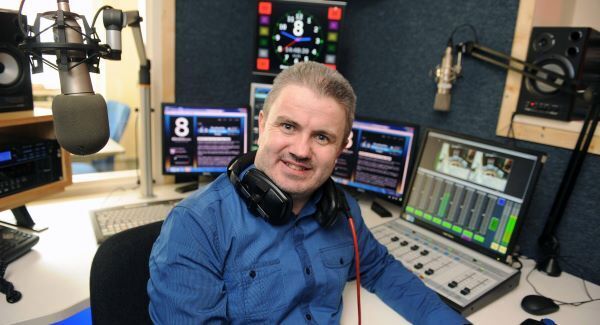
WHEN Simon Maher left his beloved Phantom FM radio station two years ago, there was a lot of ‘moping and swearing’ about what he’d do next.
The radio entrepreneur readily admits he had no choice but to leave when he did.
Having started his career with pirate station Coast FM in the 1990s, from a shed at the end of his parent’s garden in Dublin’s Ballybrack, he finally ‘made it’ with the birth of indie music station Phantom.
But when Denis O’Brien’s Communicorp decided to invest in Phantom, Maher felt duty bound to vote against it. “I just didn’t think it was the right thing for the station, so a month after we moved into their Marconi House [which also houses Newstalk and Today FM], I got my marching orders.”
He left with about 10-15% of his original investment in Phantom but, along with other investors, he had pumped almost €1.5m into the start-up, so it wasn’t exactly a great money-spinner.
“There were a lot of clouds hanging over my head after that, but when they eventually cleared, I knew I still wanted to be involved in radio.”
So he set about his next project — the FM/online radio station 8radio.com which launched at the end of March.
While it broadcasts online 24/7, Maher secured an FM licence to broadcast in Cork (106.7), Dublin (94.3) and Limerick (105.5) at the weekends, until Jul 7.
“It’s really just a phase to test the water and we always said we’d give it a year and see how it went.”
The tagline — ‘Playing the music we like’ — says it all: “I really wanted to get back to making radio that was fun again. The fun had gone out of it.”
Phantom, he says, started out with a group of friends playing their favourite songs and 8radio emulates those early days of Phantom — but with a lot of contemporary music mixed with both indie and mainstream classics.
The online element of the station brings huge potential — even if the broadcasting licence isn’t renewed, there are always the options to seek a place on digital and cable TV/radio platforms, and Maher says the app is already proving popular.
“We get much more response now via social media and email than on the texts — it just shows how things have moved on.”
As a part-time lecturer in radio and digital media at Ballyfermot Senior College, Maher was able to canvass his students about how they listened to radio today.
“One of them told me he listened to a station in Australia when he went to bed, and nobody really had what we’d call a radio ‘set’ anymore — it was all on their smartphones.”
But in general, he discovered, they listened to very little talk radio and preferred, instead, to listen to their MP3 players, or streaming services ‘on shuffle’.
“That’s it,” I thought, “how about a radio station that mirrored listening to your music on shuffle with a human deciding, rather than a machine? You might get the odd song you don’t like, but in general, you’d be going ‘Wow, I love this one!’”
He says the format is a mix of JackFM in the US and BBC 6 Music, and the audience they are attracting are in the 20-50 age group — which is a very broad range in radio terms.
A typical playlist could mix Kate Bush with Stevie Wonder, and OK Go with Tears for Fears. The online presence, especially with an audience accessing the station via its own app and other radio apps, means 8radio can see exactly who is listening and when. “I make a conscious decision not to watch that when I am on air,” says Maher. “It can be very distracting when you play one song and it goes up 5%, and it falls 5% for the next one!
“But I like the fact that we can now be driven by what the people like, rather than by what research tells us the people like.”
CONNECT WITH US TODAY



Be the first to know the latest news and updates