14-17C
Some bright spells are possible in the south and east.

Find a...

Date Job Car Home


Too much too young

The Specials broke up acrimoniously after hitting big with Ghost Town in 1981. Now they’ve reformed, says Ed Power

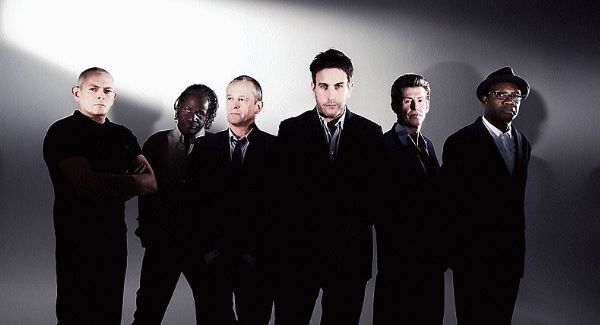
The Specials have known each other since their teens. Only Jerry Dammers has not returned to the fold..

LIKE many of the bands that have reformed in recent years, the reunion of English ska-punk legends The Specials has involved ‘group therapy’. If ever there was a band that had wounds to lick, it was The Specials, who split up acrimoniously in the summer of 1981.


The seven-strong Coventry outfit had formed just four years previously, and had enjoyed only a two-year recording span, but their impact on British culture was already massive.

With the 2-Tone music genre, they had ushered in a new, racially diverse youth movement in Britain, while hits like Gangsters, Too Much, Too Young, and the seminal Ghost Town, addressed the ideological conflicts of a British society mired in strife.

This was an era when rioting was rife in Britain. Famously, The Specials’s own live shows were often engulfed in mayhem.

Given that The Specials were all men in their late teens and early 20s, it seems no surprise that events took a toll on relations. In Jun 1981, as Ghost Town sat atop the British charts, Terry Hall, Lynval Golding, and Neville Staple left to form Fun Boy Three.

The remaining members, led by Jerry Dammers, the band’s founding member and its chief songwriter, ploughed on for another album, but The Specials were effectively over.

Time has facilitated a much-needed reconciliation. Six members of the classic line-up reformed the band in 2008 and have been touring successfully, on and off, since 2009.

As they prepare for their gig at Live at the Marquee in Cork next week, The Specials’s frontman Terry Hall says that repairing these old ties has meant everything to him.

“We’ve proved to ourselves that we can be friends again,” he says. “And I think that’s the most important thing for us, really. And that the music that we grew up with was valid. So it’s not closure, because that would be an extreme term, but it has helped us out personally.”

Over the course of a long and varied career that has included stints with Fun Boy Three, The Colourfield, Nearly God (with Tricky), and an underrated stint as a solo artist, Hall has gathered a reputation for being taciturn.

Yet, on the topic of The Specials’s reunion, he is positive and even disarmingly candid about how personal it has been.

“The most important thing for me is to communicate again with the people I grew up with,” he says.

“Some of the band I’ve known since I was 14 or 15 and, because of the nature of the split, we fell out. It was really unfortunate. You reach a certain age and you want to put things to right. In a funny way, it reminds me of me trying to put the stuff with my father to right before he died. Do you know what I mean? Trying to just even things out and say: ‘this is what I meant by this’ and ‘this is what I meant by that’. And we’ve done that, and we’re friends again, which is really lovely.”

It reveals a great deal about his feelings for the band that Hall can draw an analogy between his return to The Specials and something as intimate as the death of his father.

“Yeah, but that’s how it felt,” he says. “And the timing was horribly right. Two of us from the band had quite serious illnesses five years ago and it was a wake-up call, really. When you do get seriously ill, you start reflecting and that’s what we did. We sort of look after each other now and we’re very close again, which is great.”

If the story of The Specials’s reunion is one of redemption, there is one significant wound yet to be healed.

Since the reunion was first announced, in 2008, Dammers, the creative lynchpin of the original line-up, has been a sorely absent figure, with recriminations flying around about why he was not in the loop.

Is there now so much bad blood between Dammers and the band that his return to the fold will never take place?

Hall says that a return is not impossible.

“I’ve never understood the ‘bad blood’, because it’s never come from me,” says Hall. “Me and Jerry have said stuff about each other in the press over the years, but it’s only a joke.

“It’s like niggles, really, but there’s nothing ever serious. We were talking about this just last week, actually. We’ve got something like the closing ceremony of the Olympics coming up. It’s not that I consider that in itself to be a great event, but the idea of playing with Blur and New Order in a park and it being called ‘British Music’ is quite important, really. But why not come and do that with us? But I can’t work Jerry out, and maybe I’ve given up trying, really.”

Despite Dammers’s absence, The Specials’s live shows have been roundly celebrated. It’s notable, too, that their old songs remain resonant in an era when the class and racial lines in Britain are hardening again. This was much in evidence last year when, as the riots spread throughout the nation, Ghost Town became a convenient go-to song for media coverage.

“I felt very sad and I felt very weird about Ghost Town being used to soundtrack it,” says Hall, “because I live near some of the troubled spots, like Hackney and Tottenham, and it was just kids setting fire to their own places. It was really upsetting.”

One unavoidable element of the riots last year was that, unlike the riots in Britain in the heyday of The Specials, it seemed as if the marginalised youth had no coherent concept of revolt to express, and no coherent means of expressing it. The impression, instead, was of a spontaneous yet markedly impotent show of rage.

“I agree,” says Hall. “You can go online now and Google ‘riot’ or something, but, before, it was a very organic thing. It was something that was felt in communities — especially in ours — when our friends or relatives were made unemployed.

“That was what was important about the advent of punk rock. It gave you the tools to try to change stuff. And it wasn’t even really about making music. It was about being part of something and having a voice.”

Certainly, The Specials will always be regarded as one of the most monumental voices of the post-punk era.

The Specials play Live at the Marquee on Monday. Home

More from the Irish Examiner