A poet who is down to earth
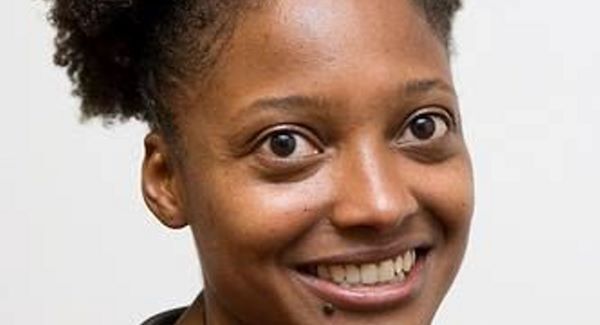
Smith, who won the 2012 Pulitzer Prize for poetry, for her third collection of poems, Life on Mars, has been selected to read, on Apr 27, by the Cork World Book Fest’s guest curator, Paul Muldoon.
Brooklyn-based Smith, aged 41, teaches at Princeton University, and is writing a memoir of her relationship with her mother, who died of cancer when Smith was 22.
“Revisiting that relationship has been very rewarding. Obviously, some of the material is difficult. I loved my mother. We had a really healthy relationship in lots of ways, but there were things we were never able to talk about; things to do with religion and even race. As a kid, I was a little afraid to really dig into her past.
“My mother grew up in the south, during a period when racism was much more overt. Writing the memoir is really informative. I’ve learned a lot about language and how different the animal of prose is to poetry.”
Smith says she initially found it hard to open up, “to let the sentences bear more and more weight and to allow digression to come in. I really had to resist the kind of compression that characterises a poem.”
Heaney is one of Smith’s most formative influences. She attended workshops that the Nobel laureate gave at Harvard while she was a student there. “He was fantastic. As everyone said, he was so generous, helping to guide us towards a sense of our own voices. He shared the poems he loved with us and got us to think about how we might begin to borrow certain things from other writers and utilise them in pursuing our own material,” she says.
At the time, Smith’s life was in turmoil, as her mother was ill. “I was trying to process that and I felt the weight of it on my shoulders. I remember going to Séamus Heaney and sitting in his office, and just hearing him encourage me. He said everything would be okay and that if I wanted to be a writer, I could be one.”
Life on Mars is an elegy for Smith’s father, who died in 2008. He ended his working life as an optical engineer on the Hubble space telescope. In grieving for her father, Smith wanted to satisfy herself about where he had gone. “For me, that meant tinkering with the sense of God and the after-world I had grown up with, and the sense of science that was there from the images of the Hubble. I felt it would be wonderful if I could find a way of marrying belief in the persistence of the spirit with the vast mystery of space.”
Referencing Bowie, of whom Smith is a big fan, made sense. “I’ve been a lover of his work for a long time. I wanted to believe there’s a certain kinship, in terms of the gaze the book was trying to employ about culture and society, and the themes that emerge from Bowie’s song, ‘Life on Mars’?”
For Smith, Bowie’s Starman figure “is beautiful and liberating. I love the way that Bowie has shape-shifted over the course of his career. It’s what I think any artist should do. You don’t want to just repeat yourself,” she says.
Winning the Pulitzer Prize has given Smith the impetus to push herself. “There’s something about working in different directions. I’m going to be working with a composer on an opera next year. It’s very daunting, but I feel encouraged by the award.”
CONNECT WITH US TODAY



Be the first to know the latest news and updates