Savita’s husband ‘has trust and faith in justice system’
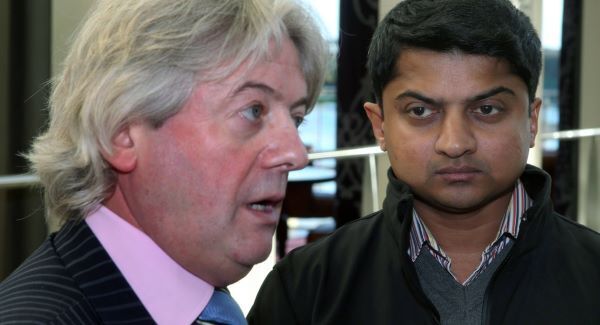
Speaking at Galway courthouse yesterday after the preliminary hearing of the inquest, he underlined the difficulties he had sitting through the first hours of her inquest.
And he also confirmed that Ms Halappanavar’s family had voiced concerns to him about the delay in the inquiry reaching this point.
“The first thing Savita’s mom asked about was the law. As a mother she’s concerned that what Savita and the family went through we don’t want any other woman or someone else’s family to go through the same trauma we did and they are concerned about the progress as well it took us three months to get here.
“It is not easy to sit there in the court to see all the proceedings. I believe I am getting that strength from somewhere.
“Of course I believe it is coming from Savita, she was that kind of a person. She was always there for me so I hope I am getting that strength from her.”
Ms Halappanavar died in Galway University Hospital on Oct 28 from suspected septicaemia after complications during her pregnancy. Mr Halappanavar claims his wife asked several times for an abortion to be carried out prior to her death.
Coroner Dr Ciaran MacLoughlin opened the preliminary inquest by underlining his intention to carry out the hearing in “a solemn, courteous way”.
Dr MacLoughlin said: “It is my duty as coroner to ensure that the inquiry shall be independent, effective and prompt, that the procedures are open, transparent and accountable and are subject to public scrutiny.”
The first day of the inquest will be held in Galway Court House on Apr 8 and is expected to run for at least one week.
Dr MacLoughlin will be calling five expert witnesses, including Dr Peter Boylan, former master at the National Maternity Hospital; Dr Susan Knowles, consultant microbiologist at the National Maternity Hospital; Dr Peter Keelehan, a retired consultant paediatric pathologist at the National Children’s Hospital; Dr Grace Callagy, who conducted the autopsy; and Dr Frans Colesky, a consultant pathologist with expertise in placenta pathology.
To date, 48 statements have been obtained from staff who dealt with Ms Halappanavar, with a further eight still to be completed.
However, concerns were raised by Mr Halappanavar’s barrister, John O’Donnell, about two further statements from hospital staff members, who have provided the coroner with confidential information as to why they have been unable to furnish their statements.
Mr Halappanavar’s solicitor, Gerard O’Donnell, said it was a surprise to hear the two staff members could not give their statements at this time.
Declan Buckley, senior counsel for the hospital, its staff, and the HSE, said it was “not helpful” that information from confidential statements made by hospital employees had been leaked to the media.
“This has caused significant distress and upset. They [GUH staff] feel that statements given to you and your office were on a confidential basis. Passing on of this information is causing significant concern on our part. We have eight or nine weeks until the inquest and the focus should be on the truth coming out. We don’t want a drip-drip of misleading information being disseminated.”
Dr MacLoughlin agreed, saying: “Statements are made voluntarily to assist you in you preparation for the hearing. They are only statements, not depositions and they are given on the understanding that they are used to help in the preparation of the case to establish the who, how and why death occurred.”
CONNECT WITH US TODAY



Be the first to know the latest news and updates