Coping with the worst of summers
I have long associated these daytime vampires with warm humid weather. He was smaller in size than other years, I thought — nevertheless, the first of the season.
I would later Google horseflies and summers on the internet, but could find no direct connection between their arrival and a change in the weather.
However, I now have an event fixed in time to measure the weather over the next seven days against, which may or may not prove something about horseflies and summer weather.
Meanwhile, farmers continue to try to cope with this worst of “summers”.
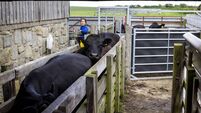
The reality for farmers with stock, be they dairy or beef, is that if they haven’t had to be permanently housed, they are being fed outside.
I housed 60 heifers for over a week, leaving them back out last Saturday afternoon, having attempted to ease the burden on the land and give the grass time to recover.
Fields that I hit with 50 units of nitrogen three weeks ago continue to look a pale shadow of the rich green they should be.
I also brought in some of my heavier cattle two weeks ago, and after two nights inside, decided it made more sense to sell the fittest of them.
With a price negotiated, I loaded them early last Monday week and waited to see if my suspicions on the effects of the weather were borne out.
They were good heavy Friesian types, 630 to 700 kilos, that I suspected had possibly been in better order a month before.
By that I mean that a month previously they were “warmer”, fuller, better rounded.
They died well however, 349.1 kilos cold weight, but the grading saw some fall from potential Rs to O pluses, and others from Os to P+ fours.
While I’m no fan of mechanical grading, I think that this time the weather cost me some of their previous condition, which in turn dropped them back between a third and half a grade.
Moving to my cereal enterprise, I at last succeeded in getting the head spray done last week.
Ground conditions, as you can imagine, were not the best, and could be judged by the amount of wet clay collected on the steps up to the cab of the tractor, and by the brown splashes everywhere else when my sprayer man returned for his second fill. The wheat which I planted in the heavier ground is coping as well as can be expected, but some of the headlands are in a bad way from the water.
As a result, I expect that upwards of four of the 30 acres will be a total loss.
The barley which was planted in drier, freer-draining ground looks well, apart from one four-acre paddock. It was the last of the heavy ground ploughed, and as it had gone too late to put wheat in it, I decided to chance barley, but half of it is now stunted and yellowing. Given the year, I would gladly accept these losses if the remainder of the crop can be harvested. That said, I expect yields to be reduced.
On a far happier note, last Saturday night saw me join the birthday celebrations for Ita Lacey, wife of well-known local agricultural contractor Sean Lacey.
Ita had arrived like myself a few weeks previously at what I called at the time a “significant age”.
Of course, as we men know well, age in terms of years for a lady does not apply past 29.
Her brother Kevin summed it up nicely when he said, “It’s not about years, but milestones reached”.
And with that the entire company sang ‘Happy birthday’ and forgot all about the weather.