Investors fearful of run on troubled banks
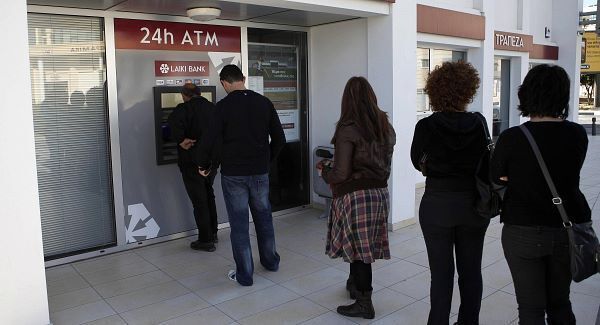
Cypriot account holders have been blocked from moving money from their accounts over the weekend and will have the “tax” automatically withdrawn before being able to access them again, possibly tomorrow morning.
The money from the EU rescue fund will be €10bn but another €7bn was required to rescue the country’s two major banks and the state. The balance will come from the deposit levy, increased corporation tax, and privatisation of state enterprises. As with Ireland, the cost of the bailout will be borne mainly by the taxpayer as the senior bondholders and those holding sovereign debt are untouched.
Deposits of less than €100,000 will be levied with a once-off 6.75% tax, while sums over that will be levied at 9.9% and will receive bank shares instead. The unprecedented taxing of deposits has sparked fury in many quarters. Sharon Bowles, the chairwoman of the European Parliament’s economic committee, warns that the events could lead to court action as the shutdown of accounts could amount to capital control banned under the EU treaty. She described taxing deposits as “a mockery of the guarantee”.
But the move was defended by the Dutch finance minister Jeroen Dijsselbloem, who chairs the eurogroup of finance minister and is very close to Berlin. “As it is a contribution to the financial stability of Cyprus, it seems just to ask for a contribution from all deposit holders,” he said.
About 30% of the €68bn on deposit in the banks comes from outside Cyprus, mainly Russia, while the balance belongs to Cypriots and the high number of people who have moved there to retire — about a fifth of the 1.1m population. The tax is expected to raise about €5.8bn.
The Irish authorities, while sounding positive about the rise in the island’s corporation tax rate, will be even more alert in future as to any implications it could have for tax as a sovereign issue. Finance Minister Michael Noonan on Friday said it “created a floor” of 12.5% for corporation tax.
It is understood the increase from 10% to 12.5% was one of a menu of measures offered by the troika in a bid to generate an extra €180m a year, and chosen by the Cypriots to reduce job loses and pension cuts. The country’s economy is in recession, and is set to fall by around 3.5% this year.
Cyprus is the fifth eurozone member to seek a bailout as the haircut on private holders of Greek debt last year cost the Cypriot banks €4.5bn, leaving them with assets and liabilities worth close to €120bn, more than seven times the island’s annual GDP.
For weeks, the IMF has made it known it could not be party to a deal worth €17bn as it would increase the country’s debt to an unsustainable 140%. This deal estimates it will be 100% in 2020.
The parliament was due to meet in Nicosia yesterday to vote on the deal but the president put this off until today amid signs he could not be assured of getting a majority of the 56 seats.
President Nicos Anastasiades had said he would not accept losses for depositors during his election campaign. He is now saying that failure to accept the deal would effectively mean Cyprus leaving the euro and going into default.
Today is a bank holiday in Cyprus but the markets will be watching when the banks reopen tomorrow.
Some commentators say the levy on deposits amounts to about 14-24 months of interest from the banks, which have been paying the relatively high return of 5% on deposits, and point out that Iceland taxed unsecured depositors when its banks collapsed.


CONNECT WITH US TODAY



Be the first to know the latest news and updates