15-18C
Mostly cloudy

Find a...

Date Job Car Home


  • NEWS
  • Martin wades into abortion debate

    As the Dáil committee hearings continue on the abortion bill, Archbishop of Dublin Diarmuid Martin has waded into the debate saying it is important that Christian believers "be, and seen to be, on the side of life, especially when life is most vulnerable".

  • Payment cuts see families pay rent shortfall

    Limits on rent supplement payments set by the Government are forcing thousands of families to make undeclared top-up payments to landlords to secure places to live.

  • WORLD
  • Anger as North Korea launches another missile

    North Korea fired a short-range missile from its east coast, a day after launching three more of these missiles, a South Korean news agency said.

  • How Star Trek predicted the future

    WHEN Star Trek creator Gene Roddenberry first dreamed up the concept of a television show based in the unexplored universe of Outer Space in 1964, the world was a very different place.

  • BUSINESS
  • Warnings over future of eurozone

    The eurozone is heading towards a break up unless there are moves towards much closer political and fiscal union, according to chief economist with State Street Global Advisers, Chris Probyn.

  • Bruton defends corporate tax rate

    Ireland will be able to maintain its current corporation tax code in the face of international pressure to prevent multinational corporations avoid paying their fare share of tax, Minister for Jobs, Enterprise and Innovation, Richard Bruton said yesterday.

  • SPORT
  • Mayo’s statement of intent

    Galway 0-11 Mayo 4-16 Five minutes to go in Salthill yesterday and James Horan was still cajoling his men to sew it into Galway.

  • Wilkinson inspires Toulon to glory

    ASM Clermont Auvergne 15 Toulon 16 Not for the first time this season, a matchday performance and the result have made a mockery of the statistics.

  • LIFESTYLE
  • What Lenny Abrahamson did next

    LENNY Abrahamson has directed three feature films: Adam & Paul, Garage and What Richard Did.

  • Why do women love to dress up?

    Trying on clothes, said Ewart, produced "sensations which bring deep peace and perfect contentment" to the female mind.


Chats with robots 'not far off'
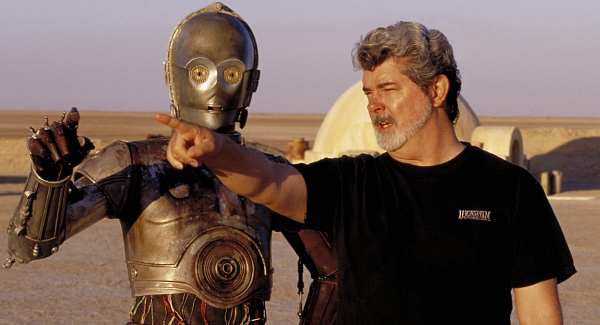
Robots and computers could soon be having meaningful conversations and even arguments with humans.

A new research project will develop systems that allow men and machines to debate decisions.

It opens up the possibility of human operators discussing action plans with robots and, if necessary, ordering them to break rules.

For their part, the computers would be able to argue in favour of decisions or inform their operators that certain tasks are impossible.

Early versions of the software could be available in just three years.

Lead researcher Dr Wamberto Vasconcelos, from the University of Aberdeen, said the aim is to increase human trust in intelligent technology.

"Autonomous systems such as robots are an integral part of modern industry, used to carry out tasks without continuous human guidance," he said.

"Employed across a variety of sectors, these systems can quickly process huge amounts of information when deciding how to act. However, in doing so, they can make mistakes which are not obvious to them or to a human.

"Evidence shows there may be mistrust when there are no provisions to help a human to understand why an autonomous system has decided to perform a specific task at a particular time and in a certain way.

"What we are creating is a new generation of autonomous systems which are able to carry out a two-way communication with humans."

Talking computers with the ability to converse with humans have long been a mainstay of science fiction. Examples include Hal, the deadpan-voiced computer in the film '2001: A Space Odyssey', which goes mad and sets out to murder the crew of a spaceship.

The system Dr Vasconcelos is developing will communicate with words on a computer screen rather than speech. Potential applications could include unmanned robot missions to planets or the deep sea, defence systems and exploring hostile environments such as nuclear installations.

A typical dialogue might involve a human operator asking a computer why it decided on a particular decision, what alternatives there might be and why these were not followed.

"It gives the human operator and opportunity to challenge or overrule the robot's decision," said Dr Vasconcelos.

"You can authorise the computer system to break or bend the rules if necessary, for instance to make better use of resources or in the interests of safety.

"Ultimately, this conversation is to ensure that the system is one the human is comfortable with. But the dialogue will be a two-way thing. The supervisor might not like a particular solution but the computer might say: sorry, this is all I can do."

One factor that has to be taken into account is ensuring the computer's responses do not seem threatening, rude or confrontational.

"That's something we're going to have to look at," said Dr Vasconcelos. A psychologist has joined the team to help with this aspect of the research.

Conversing with robots would actually make humans more accountable, since failures could not conveniently be blamed on computer error, Dr Vasconcelos added.

"With power also comes responsibility. All these dialogues are going to be recorded, so there is a name to blame if something goes wrong. It's a good side-effect."Home

More from the Irish Examiner