WHEN Star Trek creator Gene Roddenberry first dreamed up the concept of a television show based in the unexplored universe of Outer Space in 1964, the world was a very different place.
The latest addition to our stellar team of rugby writers reflects on the ups and downs of a magnificent playing career — and reveals the reasons why he's chosen to move to Paris to kick-start his coaching career.
By Mary Regan, Political Correspondent in BostonThe Taoiseach, Enda Kenny, has been applauded by prominent members of the Irish community in Boston for what was described as his "courage" in standing up to religious institutions.
A deadly new drug, dubbed "cocaine of the poor", which burns the internal organs of users and has a cheap street value, has alarmed health authorities in Greece.
As the Dáil committee hearings continue on the abortion bill, Archbishop of Dublin Diarmuid Martin has waded into the debate saying it is important that Christian believers "be, and seen to be, on the side of life, especially when life is most vulnerable".
Limits on rent supplement payments set by the Government are forcing thousands of families to make undeclared top-up payments to landlords to secure places to live.
WHEN Star Trek creator Gene Roddenberry first dreamed up the concept of a television show based in the unexplored universe of Outer Space in 1964, the world was a very different place.
The eurozone is heading towards a break up unless there are moves towards much closer political and fiscal union, according to chief economist with State Street Global Advisers, Chris Probyn.
Ireland will be able to maintain its current corporation tax code in the face of international pressure to prevent multinational corporations avoid paying their fare share of tax, Minister for Jobs, Enterprise and Innovation, Richard Bruton said yesterday.
The latest addition to our stellar team of rugby writers reflects on the ups and downs of a magnificent playing career — and reveals the reasons why he's chosen to move to Paris to kick-start his coaching career.
It's a story familiar to GAA people all over the country. A stormy annual general meeting, members walking out, transfer applications handed in afterwards.
More than 300,000 people have left Ireland in the past four years. Tempting as it is, Ruairí McKiernan is prepared to stay to help make the country a better place
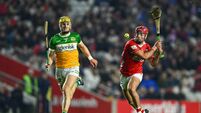
Cork 5-14 Tipperary 0-24 The Cork senior hurlers bagged five goals on the way to a five-point win over Tipperary in a challenge match at Cloughduv last night.
I love yoga but I don't love the yoga image, the squeaky clean yogi whose practice of yoga has led to a more highly evolved state of being than your average mortal.
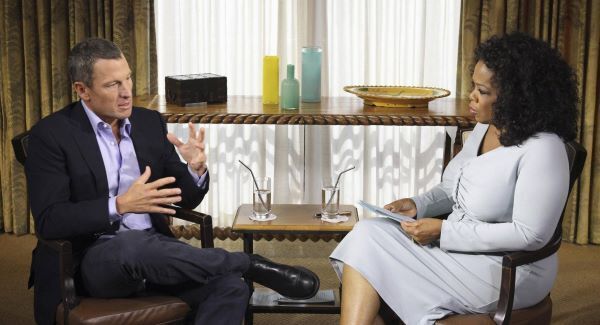
Lance Armstrong has confessed to using performance-enhancing drugs during all seven of his Tour de France victories, saying: "I view this situation as one big lie."
After years of denials, the 41-year-old American told Oprah Winfrey in a much-anticipated television interview that during his record run, from 1999 to 2005, he used blood-boosting agent EPO, blood doping, testosterone, cortisone and human growth hormone.

Armstrong, who was last October stripped of all results dating from August 1, 1998 and banned from sport for life, denied doping during his comeback from retirement in 2009, when he finished third in the Tour, and 2010 and refuted suggestions he paid off cycling's world governing body, the UCI, to cover up a positive test in 2001.
In hindsight he wishes he had co-operated with the United States Anti-Doping Agency investigation which proved his downfall.
"This story was so perfect for so long," Armstrong, who confirmed his doping in a series of answers to yes-no questions, told Oprah.
"I try to take myself out of this situation and look at it: you overcome the disease, you win the Tour de France seven times, you have a happy marriage, you have children.
"It's this mythic, perfect story and it wasn't true."
The myth of the cancer survivor turned serial winner, which Armstrong perpetuated, captivated millions.
Asked if it was hard to live up to that image, Armstrong said: "Impossible. The story is so bad and so toxic, a lot of it's true."
In the interview with talk-show host Winfrey, recorded on Monday in his home city of Austin, Texas, Armstrong was asked why he chose to confess now.
"I don't know that I have a great answer," he said.
"This is too late. It's too late for probably most people and that's my fault.
"I view this situation as one big lie, that I repeated a lot of times. It wasn't as if I just said no and I moved on.
"While I've lived through this process, especially the last two years, one year, six months, two, three months, I know the truth, the truth isn't what was out there. The truth isn't what I said."
Asked whether he felt it was possible to win the Tour seven times in succession without doping, Armstrong said: "Not in my opinion."
Armstrong's drug use began in the "mid-90s", he said.
"I suppose earlier in my career there was cortisone and then the EPO generation began," said Armstrong, who won the world road race title aged 21 in 1993.
"I didn't invent the culture, but I didn't try to stop the culture. The sport is now paying the price because of that."
Armstrong's decisions were based on a "ruthless desire to win" and, he said, did not feel wrong to him at the time.
During an era where doping was prominent, Armstrong viewed his drug-taking, which began before his cancer diagnosis, as "a level playing field", rather than cheating.
Armstrong was able to bypass the testers by clever "scheduling".
He felt, due to his successful battle with cancer, he could excuse his use of testosterone.
He said: "My cocktail, so to speak, was only EPO, but not a lot, transfusions and testosterone, which in a weird way I almost justified because of my history, with having testicular cancer and losing (a testicle): 'Surely I'm running low'.
"There's no true justification for those (blood transfusions)."
Until now, Armstrong was vehement in his repeated denials and fought any allegations made, winning numerous lawsuits; his admission now opens him up to possible counter suits.
Armstrong's defence long relied on the fact he had never tested positive - a stance he maintains.
"I didn't fail a test," he said. "Stuff was retroactively tested. Technically, retroactively, I failed those. The hundreds of tests I took, I passed them."
Asked about the 2001 Tour of Switzerland and reports he paid off the UCI to cover up a positive test, Armstrong said: "That story isn't true. There was no positive test. There was no paying off of the lab.
"There was no secret meeting with the lab director. I'm no fan of the UCI. That did not happen."
Asked why he made a donation to the UCI, he said: "Because they asked me to."
"It was not in exchange for any cover-up," he added.
"I have every incentive to sit here and tell you 'yes, that's right, they're all crooked'.
"There are things which were a little shady. That was not one."
Armstrong announced his refusal to co-operate with the USADA investigation last August and was punished by cycling's world governing body, the UCI, in late October.
Armstrong denied USADA chief executive Travis Tygart's claims that the United States Postal Service team's doping programme was the leading one of its kind, believing the East German regime to be 'better'.
Given the opportunity again, he would take part in USADA's investigation, which was based on sworn testimony of witnesses and followed a two-year investigation by the United States Department of Justice which was dropped early last year.
"I'd do anything to go back to that day," he said.
"I wouldn't fight, I wouldn't sue them, I'd listen. I'd do a couple of things first."
He said he would have called his family, mother, sponsors and the Lance Armstrong Foundation (Livestrong).
"I wish I could do that, but I can't," he added.
Armstrong insists he is willing to co-operate with the authorities in future.
"If there was a truth and reconciliation commission, if they had it and I was invited, I'd be the first man through the door," he said.
Armstrong retired after his 2005 Tour win and believed his doping may never have been uncovered had he not made a comeback in 2009.
But he was adamant he did not dope or perform blood transfusions in his comeback seasons - 2009, when he finished third in the Tour, or 2010 - despite evidence to the contrary in the USADA report.
He said: "It's the only thing in that whole report that really upset me; the accusation and the alleged proof that I doped after my comeback is not true. The last time I crossed that line was 2005."
Armstrong was sporting a yellow Livestrong band on his right wrist. The bracelets were worn by many people during his era of dominance, but recently many have been defaced to read 'Lie-strong'.
He said: "I see the anger in people. And betrayal. It's all there.
"I will spend the rest of my life trying to earn back trust and apologise to people.
"I made my decisions. They are my mistake. I am sitting here today to acknowledge that and to say I'm sorry for that. I deserve this."
The second part of the interview will be broadcast tomorrow.